EKIP– Expert Club for Economics and Politics A Different Opinion
Lyubomir Martinov
Six years after Kosovo declared its independence, we are once again having to redraw the map of Europe. Who would have thought that, with the upcoming referendum on the separation of Scotland from the United Kingdom this fall and separatist sentiment in Catalonia, the object of the new border redrawing would be Crimea? The West and Russia have traded blows in the geopolitical ring, with the signing of the political part of the agreement on the association of Ukraine with the EU and the accession of the peninsula to Russia, respectively. We have yet to find out who made the winning move.
In declaring its independence from Ukraine, the Autonomous Republic of Crimea referred to the Kosovo precedent and the decision of the UN International Court of Justice, according to which Kosovo's unilateral declaration of independence did not violate international law.
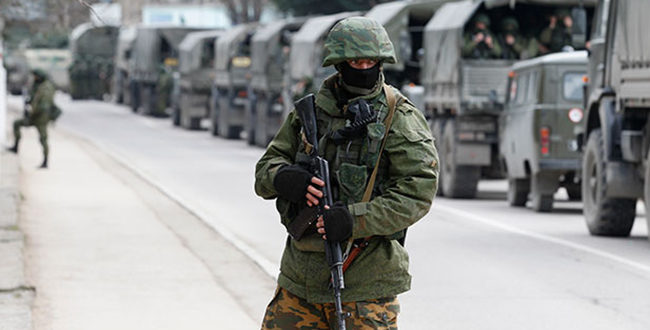
The Crimean crisis has brought into conflict two important international legal principles – respect for the territorial integrity of every sovereign state and the right of peoples to self-determination. The former in the Ukrainian context is guaranteed by the Budapest Memorandum of 1994, when Ukraine acceded to the Treaty on the Non-Proliferation of Nuclear Weapons. In exchange for the destruction of Ukraine’s nuclear arsenal, Kiev received a guarantee from the five permanent members of the UN Security Council, including the Russian Federation, that they would respect Ukraine’s independence, sovereignty and existing borders. Russia was accused of violating this memorandum by sending 16,000 troops to the territory of the Autonomous Republic of Crimea – an act that prompted Western media to speak of a Russian invasion, and the Visegrad Four countries to remind the world in official statements of the Soviet invasions of Hungary (1956) and Czechoslovakia (1968), respectively. Since this memorandum has not been ratified by the Russian parliament to date, this means, from the Russian perspective, that the document is not a legally binding international agreement and that there are no means of enforcing it. Quite Jesuitically, after a long silence on the Ukrainian issue, Vladimir Putin declared at a press conference that after the “coup” in Kiev, a new state had emerged with which Moscow had not signed any treaties. The Russian president has completely forgotten the principle of legal succession, according to which, upon its creation, a new state inherits the rights and obligations of its predecessor.
As for the right to self-determination, the West can hardly be angry with the nearly 60 percent Russian-speaking population that is eagerly waiting to throw away their Ukrainian passports in the trash in hopes of a better life once it becomes part of Russia. On the other hand, the concerns of the US, the EU and Kiev regarding the organization of the referendum in the presence of Russian military and pro-Russian militias who are “watching over” security in Crimea are extremely relevant. The very way the referendum questions were formulated – joining Russia or returning to the broad autonomy of 1992 – made it clear that preserving the current status quo, which part of the Crimean population, including the Crimean Tatars, would probably advocate, is not on the agenda, and the status of Crimea will be changed regardless of the results of the vote.
In Kiev, power has not been in the streets for long since Yanukovych fled. Although secular leaders like Yatsenyuk have nominally been given government posts, in practice their voices are rarely heard. In the chaos following Yanukovych’s fall and alongside the progressive polarization of Ukrainian society, the role of the nationalist Svoboda party in the Verkhovna Rada has increased, and the voice of the Right Sector formation, which played a major role in the violent actions that ultimately led to Yanukovych’s overthrow and the deaths of over 100 people on Independence Square and Hrushevsky Street, is increasingly being heard. Kiev has been engulfed in an information blackout as a whole, once the actions spread to Crimea. Disturbing videos have appeared sporadically in which the deputy chairman of the Verkhovna Rada’s freedom of speech committee, together with other members of the Svoboda party, attacks the director of Ukrainian national television and forces him to sign his resignation because he was... “a Moscow scum who served Putin.” How do the hundreds of thousands of people from the Maidan who really wanted their country to get closer to the EU feel now, watching European leaders reluctantly partner with the new government in Kiev, which has given Russia ample reason to call it illegitimate, a coup d'état, and fascist? The good news is that this situation will only last until presidential and parliamentary elections are held, when Ukrainians will probably send nationalists Oleh Tyakhnybok and Dmytro Yarosh where they belong – as far away from power as possible.
With his actions in Crimea, Putin has presented his opponents with a fait accompli, which has made his approval rating at home twice as high as Obama's in the US. The jubilant crowds in the squares of Simferopol, Sevastopol and Moscow speak unequivocally that the date of March 18, when the Russian president signed the document accepting Crimea as a republic within the Russian Federation, subsequently approved by both chambers of parliament, is historic.
Russia and the West exchanged a list of sanctions, including asset freezes and visa restrictions for officials, and US Senator John McCain expressed deep regret that his spring vacation in Siberia was being ruined because of the sanctions. Moscow carried out a legal and institutional blitzkrieg in Crimea - three days after the referendum, Putin submitted for ratification to the State Duma a treaty on the accession of the Republic of Crimea and the city of Sevastopol to Russia and a hastily drafted federal constitutional law that regulates the status of the new subjects of the Russian Federation. The lower house of the Russian parliament and the upper house - the Federation Council - approved the regulatory acts with lightning speed.
Why did everyone pass over the leaked YouTube conversation between Estonian Foreign Minister Urmas Paet and Catherine Ashton? Who ordered the snipers in Kiev on February 20? The answer to this question will also give us an answer to who is to blame for the cataclysms in Ukraine over the past month – for the deaths of protesters, for the infiltration of radical elements with influence on the government, and for the annexation of Crimea.
Russia swallowed Crimea in just a week, without firing a shot...almost. Putin acted so quickly and ruthlessly that he left Western leaders waving their hands helplessly like swamp waterfowl in search of the right sanctions to dissuade him from further aggressive actions against Ukraine. Let's hope the Crimeans did their math well, because this was probably their last referendum. Within Russia, the population of the peninsula is unlikely to have the opportunity to seek concessions from the central government, let alone broad autonomy, their own constitution, or independence.