EKIP– Expert Club for Economics and Politics A Different Opinion
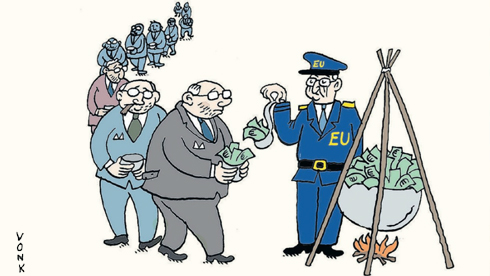
After analyzing in our previous article what public projects were funded during the summer, here we will focus exclusively on the projects launched, financed with money from European grants during the months of June, July, and August.
Overview
In June, July and August, 311 projects were launched with public funding for a total of BGN 181,952,493. The majority of this amount was paid under grant programs. The state participated in co-financing projects in June, when it provided 45% of the funds for public projects (or BGN 67,731,987).
During the period under review, a small number of operational programs were subsidized with European funds. Among them are: "Administrative Capacity", "Development of the Competitiveness of the Bulgarian Economy", "Human Resources Development" and "Technical Assistance". The allocated funds are as follows: 30,602,644 BGN, 133,980,024 BGN, 12,910,493 BGN and 4,459,332 BGN. Overall, during the three summer months, the number of projects decreased. One of the reasons for this is the fact that funds under other operational programs - for example, OP "Environment" (frozen in November) and OP "Regional Development" (in June) - were frozen and then irretrievably lost. Also in the middle of summer, two other operational programs - "Transport" and "Competitiveness" were threatened with suspension.
The different level of absorption of funds under the programs during the period under review is striking. For example, for the quarter, the largest share of subsidies was allocated to projects under the OP "Development of the Competitiveness of the Bulgarian Economy" - 133,980,024 BGN (67,731,987 BGN of which were co-financed by the state), all of which were spent under the priority axis "Increasing the efficiency of enterprises and promoting the development of a favorable business environment". The violations in the distribution of funds noted in the previous article are also valid when it comes to European subsidies. It is the operational program "Development of the Competitiveness of the Bulgarian Economy" that is among the evidence of the ongoing problems with fraud and the unequal treatment of applicant companies (i.e. the redistribution of funds to related companies).
At the end of May and in June, after signals, including to the State Agency for National Security and the Prosecutor's Office, contracts for 96 million leva were not concluded. At that time, the Director of the "European Competitiveness Funds" at the Ministry of Economy and Finance indicated that these were "violations of the principle of equal treatment and internal rules, which lead to a change in the ranking." Also in June, the European Court of Auditors conducted an investigation into the problems under the OP "Competitiveness" due to the violations committed in and under the procedure. The same criticisms are a frequent refrain in the EC reports, which state that the unequal treatment of candidates and the advantages of related parties (i.e. nepotism and bribery) continue to be a significant problem. This is also evidenced by the fact that last year Bulgaria was in the top 3 countries with the most detected frauds - 97. The real cost of fraud for the economy is already present and is expressed in an increase in budget liabilities and a growth in the budget deficit. By the beginning of September, it became clear that due to the mistakes made and the lack of transparency, the Bulgarian taxpayer would have to pay an additional BGN 750 million for the OP "Environment" and OP "Regional Development" alone. The total burden on the budget for these two programs before the end of the third quarter reaches BGN 1.3 billion.
The ongoing practice of distributing part of the funds under some operational programs without prior notice is also extremely suspicious. This practice was also present during the three summer months. There is no information on the priority axes under which funds were distributed, as follows:
- for the month of June: for OP "Administrative Capacity" and OP "Human Resources Development";
- for the month of July: for the OP “Human Resources Development”
- for the month of August: for OP "Technical Assistance".
As BizConsult also points out in their report, the lack of this information is an obstacle to conducting a qualitative analysis of the programs. Here again, we must repeat the criticism that the orders are not carried out through electronic auction, despite the requirement in the law that at least 30% of them be allocated through online competition. This fact is also a prerequisite for ambiguity regarding the awarding of contracts and for concealing ties between state institutions and certain companies.
Unlike the procurements financed by the state budget, when distributing the European grants, there are no clearly defined major beneficiaries in the transactions. On the other hand, it is worth paying attention – especially in the projects agreed under the OP "Development of the Competitiveness of the Bulgarian Economy" – that the funds are provided without a real assessment of the positive or negative effects on the economy. Also, the goal of absorbing 100% of the allocated money under the "Administrative Capacity" program does not in itself mean the generation of mandatory positive results for the economy; i.e., absorption is observed for the sake of absorption itself, and not spending the funds as a result of a strategic analysis of the greatest needs for the funds allocated by the EU.
Conclusion
Some of the serious structural problems - most notably the entanglement between institutions and their affiliated companies and the opacity of the procedure for awarding subsidy contracts - are inherent not only in the allocation of projects financed with funds from the state budget, but also in public projects financed with EU grants. The statistics on reported fraud from last year, as well as the violations registered since mid-year under the OP "Development of the Competitiveness of the Bulgarian Economy" and other suspended operational programs, prove that progress in this area is extremely slow. As a result, fiscal stability has suffered due to the high increase in the budget deficit, and taxpayers, who will pay the price of irregularities and fraud with these programs, have suffered.
EKIP and BizMonitor continue their work on monitoring and evaluating public procurement and EU structural funds.
See more on the BizMonitor website: http://bizmonitor.bg/category/evropeiski-struktruni-fondove/spisuk-proekti-po-operativni-programi/