EKIP– Expert Club for Economics and Politics A Different Opinion
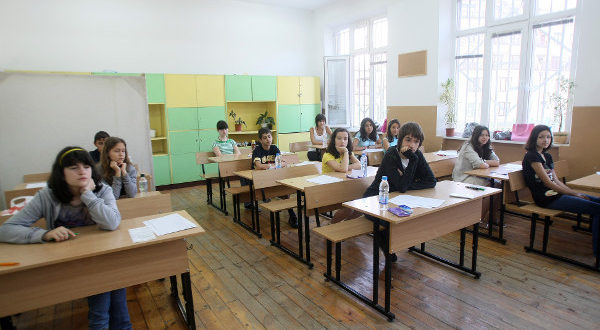
The Bulgarian Ministry of Education has one important (at least according to it) administrative function – the preparation and enforcement of annual curricula and programs, according to which schools in the country must organize the teaching process. This system of “regulation of the educational process” should be more related to the general following of state educational requirements, with a kind of general recommendations, but in its essence it represents micro-management of the work of teachers, students and principals down to almost the smallest detail.
A reading of the documents from the Ministry of Education and Science introduces us to the exact schedules for how many hours of English can and should be taught in a language school or how, according to the standard (in Music for first grade), children are taught “to distinguish between sound and noise, organized and unorganized sound environments.” Also, the ministry’s offices determine [1] not only which literary works or which historical events are “mandatory,” but whether “A Farewell” should come before or after “To Chicago and Back,” whether to read during the first or second term, and so on.
The curricula and programs are also closely related to the painful topic of textbooks for many people. In fact, the peak of centralized decision-making in the field (as a way of thinking) was reached when Minister Klisarova from the ill-fated Oresharski cabinet directly proposed that there should be only one textbook for each individual subject. This was supposed to eliminate any diversity in the presentation and (in certain cases) analysis of the educational content. Fortunately, such an idea went away with the BSP and MRF cabinet.
As with any system of administrative control and central planning, in Bulgarian public education it is absurd to talk about innovation, testing of new programs, initiative of participants in the educational process, introduction of good practices from abroad and, in fact, about any fundamental positive change. Even more important – the very idea that with a certain unified educational approach we can contribute to the development of all children simultaneously is completely wrong. As one of the world leaders in the search for educational models for the 21st century, Ken Robinson, says: “The answer is not to standardize education, but to personalize it and adjust it to the needs of each child and each community. There is no alternative. There never was.” When a student cannot find himself in the closed and rigid scheme of our educational system, he remains cut off from his true interests and abilities in order to follow someone else’s bureaucratic plan.
Educational reform does not mean buying tablets for all students, absorbing European funds or changing the plaster in the school building. The real change is the opportunity for teachers, students, parents and principals to take responsibility for the process of learning and growing up into their own hands, without the political office of X interfering with them. A change would be for the participants in the process to have the opportunity to choose from the hundreds of models for the development of their children: at home or at school, with a focus on a certain science/occupation or without, democratic or with a classical structure, etc. If one can paraphrase and supplement John Taylor Gatto, there is no one right way to grow up and it is unlikely that they will be given it by the Ministry of Education and Science inspectorate.
The question often arises here: well, if there is no one to "impose strict control", how can we be sure that the final product will be of high quality?
Fundamentally, this is a question with a wrong formulation. The only people who need to be sure (and have the right to ask this question) are the participants in the process themselves – the students and their parents. What education they receive is entirely their prerogative. As for the essence of the topic, it has two dimensions – who monitors and imposes quality at the moment and what are the alternatives to it.
In the current situation, the main mechanism for ensuring the quality of the product created by the state education system is the matriculation exams, especially those after the 7th and 12th grades. But there is hardly any need to point out how low the criteria of the exam tasks themselves are or the fact that copying and buying answers is completely accessible and possible. Moreover, even those who do not copy and get high grades are additionally prepared through various private courses and lessons. In fact, getting a good enough score for one of the “elite” schools (where entry is much more difficult than elsewhere) is almost impossible without this kind of activity outside the official system.
At the same time, everyone who has considered applying abroad is familiar with the most famous private knowledge assessment systems. These are services such as the TOEFL English language comprehension test (administered by the private NGO Educational Testing Service), the SAT (owned by the College Board company) and the ACT (ACT Inc.), which are used to apply for undergraduate programs at American universities, as well as the GRE (again Educational Testing Services) which is used to enter master's and doctoral programs. To these we can add a variety of certification systems for language knowledge, specialized diplomas to prove knowledge in a given professional field, such as ACCA (for accountants, administered by an association of the same name) and CFA (for financial specialists, from the CFA Institute). In addition, there are numerous organizations that evaluate the knowledge of children who studied at home, such as the Pennsylvania Homeschoolers Accreditation Agency and the American Council on Education.
The introduction of these diverse systems for assessing knowledge even in our country is no coincidence. Since a transcript from a public school/university and a high school diploma rarely have any particular value in front of the people and institutions to whom we want to prove a certain level of knowledge, it is quite natural to look for another, more secure method of signaling.
The desire for diversity in educational forms is completely natural, as in any other sphere of human life – we read different books, we are interested in different topics, we can do different things. It is a myth that learning/teaching is difficult to change because it is a “conservative system” that “gives a product slowly” – this is simply one of the spheres where the state monopoly has held its ground the most and left school in the 19th century (when it was imposed). The way forward is to let students, their parents and teachers be educational entrepreneurs and make their own choices about how best to learn. And let’s leave aside the political-bureaucratic micro-management.
[1] At least the final decision is there.