EKIP– Expert Club for Economics and Politics A Different Opinion
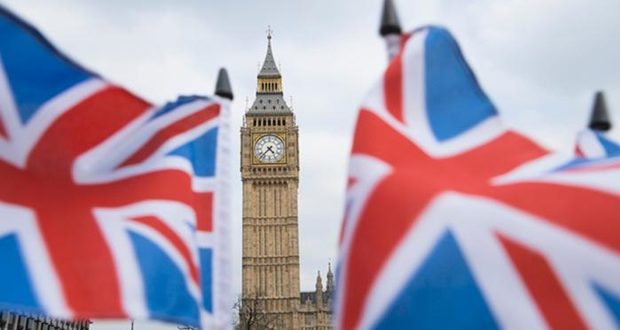
The UK election has come as yet another surprise to pollsters. Just a day before the vote, they predicted that the Conservatives and Labour would achieve a very similar result, and some analysts even drew scenarios in which there would be new elections in a few months. However, the reality turned out to be the opposite – the Tories managed to secure a comfortable majority of 331 seats in the House of Representatives, which would allow them not only to form a government, but to do so without needing the support of any of the other parties.
And while it is clear that incumbent Prime Minister David Cameron will retain both his leadership position in the party and his prime ministerial post, the unexpected election result will most likely lead to significant changes in the British political scene.
Changing of the guard
The publication of the results triggered a flurry of resignations from the leaders of the other parties. The first leader to resign was Ed Miliband, whose Labour party suffered a major blow in the vote. Miliband took responsibility for the loss in an attempt to allow his party to come out clean.
A simple change of leader, however, will not allow the left to move forward and regain lost ground. During their campaign, they tried to make a sharper leftward turn towards tax increases and emphasized the slower than promised recovery of the country's economy. However, this led to the loss of many centrist voters. Labour suffered its heaviest defeat in Scotland, where it lost traditional "left strongholds" to the Scottish National Party (SNP).
These circumstances are forcing the left to redefine its political goals and platform. In the near term, its focus will likely be on regaining its position in England, while the loss in Scotland will have to be swallowed. To win back voters, Labour would need to return to a catch-all approach of more moderate policies, a clear statement of the party’s pro-European stance, and a differentiation from the Conservatives.
The biggest blow in the general election was suffered by Nick Clegg's Liberal Democrats. While in the previous election they had assumed the position of a power broker who made it possible to form David Cameron's cabinet, today they have shrunk back to the position of a marginal party that will have no real influence on the political process.
The parliamentary elections also dealt a heavy blow to the United Kingdom Independence Party (UKIP). In last year's European elections, Nigel Farage's nationalists came out on top, and many declared the beginning of the dominance of the far-right in British politics, but today they received fewer parliamentary seats than the Liberal Democrats.
The big winner in this election was the SNP – out of 59 seats in Scotland, they lost just 3. This is a sign that despite the failure of the referendum to leave the UK last year, the nationalists led by Nicola Sturgeon continue to enjoy the support of most Scots and will continue their push for more and more independence from London. Their success will most likely eventually lead to another referendum, the result of which could lead Scotland out of the United Kingdom.
Normalization and Euroscepticism
SNP aside (whose total dominance in Scotland is largely a sign of separatist sentiment and Labour’s poor showing, combined with a complete intolerance of the Tories), the election results represent a normalisation of British politics. It has always been dominated by the age-old struggle between Labour and the Conservatives, and the motley landscape of more than two significant parties that emerged in 2010 was more of an anomaly.
Another question is how long the Tory control will last. One of the key issues facing Cameron during his new term is redefining the relationship between London and Brussels, and it could make or break his success. A referendum on whether to remain in the EU is due by 2017. If voters vote yes, we are entering uncharted waters for which there is no mechanism, and the outcome will have huge economic and political consequences that cannot be predicted even approximately. Cameron will have to balance maintaining good relations with the EU administration, but also negotiating enough concessions to keep his voters’ support and prevent a renewed surge in UKIP support.
The economy, stupid
Slightly paraphrased, Clinton's popular slogan worked for the Conservatives as well. A successful economic recovery after the crisis was the focus of Cameron's campaign, and rightly so. GDP growth is now among the highest in Europe, employment in the country has been growing since 2010, and inflation has been falling during this period.
The economic policies promised by the Tories for the next term, however, leave at best mixed feelings. On the one hand, Cameron does not intend to increase taxes and, at worst, plans to keep VAT and social security contributions at their current levels, as well as raise the thresholds for some taxes, which will ultimately leave more money in the pockets of taxpayers. As for budget policy, the Tories plan to maintain a surplus.
At the same time, however, their promises include generous investments in a number of areas - over the next 5 years, the NHS health system, for example, expects an additional funding of eight billion pounds, and the opening of many new state schools and nurseries is planned. Cameron also promised "the biggest infrastructure development program since the 70s", which includes new roads, highways and railways. Measures in the field of improving the environment will also receive funding of about 3 billion pounds.
The main source of funding for these generous programmes will be cuts to the scope and volume of welfare state payments, which should free up over £12 billion. However, it is questionable whether this is possible, as implementing such a reform in a timeframe that would allow the promised spending to be financed without new borrowing would be very difficult.
On the other hand, the possibility of freeing up such a massive resource in the welfare system without committing political suicide is a sign that shrinking the state, even in countries whose populations have a very long tradition of living within a strong welfare state, is far more possible than left-wing politicians would have us believe. However, the Tories' promises should be taken with a certain amount of skepticism.