EKIP– Expert Club for Economics and Politics A Different Opinion
It is very difficult to define and specify what culture and cultural policies are, but one of the most clearly defining things about culture is that it is different and specific in different places. Attempts to equate, level, unify and create general cultural policies in different places actually destroy it. Every society, no matter how small – a town, a village, a neighborhood – has its own specific culture and if a policy exists, it should be aimed at ensuring the freedom of these societies to develop these specificities.
A few days ago, EUROSTAT published processed data on what percentage of the population of European countries participated in “cultural or sporting activities” in 2015. Of course, this statistic caused quite a bit of negative comments, as Bulgaria was in one of the last places. Is this scary and how can it actually change?
What the data actually shows
First of all – it is not just about “theaters and museums”, but about culture and sports in general. The statistics also include visits to Ludogorets matches – but also to Barcelona, Real Madrid matches, etc. That is, from the point of view of “pedantry”, the nihilism that we are last should also be directed at visiting sporting events.
According to statistics, which cover only the population over 16 years of age, 32% of Bulgarians have visited a cultural or sports event at least once in 2015. The average rate for the EU is 67.3%. The only EU country where this rate is lower is Romania – 29.6%. The statistics also cover countries that are not EU members – Macedonia is the only one of them, with a lower result than Bulgaria with its 31.7%. Countries such as Greece and Italy are also “at the bottom”.
Such statistics – undoubtedly interesting and curious – cannot be viewed absolutely and uncritically. The fact that certain countries are lower in the ranking does not mean that their culture is less developed, that they are less intelligent, or even that they have less exposure to culture. When talking about “culture” (and sports), it should be known that it is an extremely complex sphere, with countless differences and specificities. The analysis of the data itself is also controversial.
We can ask ourselves, for example, whether it is better to watch a concert of the best musicians in the world on television, or to attend a live concert of a third-rate philharmonic orchestra? Or is visiting a third-rate orchestra better than participating in the neighborhood folk dance troupe? Is attending a football match more valuable than daily jogging in the park (if we are going to talk about the “sports” part)? The examples that the “consumption” of culture and sports is not limited to the physical attendance of an official event are countless.
The perception of culture itself is different in different countries, and these statistics can show us both the attendance rate and the different way of perceiving “what culture is”. All southern countries, for example, are below the average percentage – Portugal, Spain, Cyprus, Greece, Italy, Croatia, Serbia… And these are countries with quite different “cultural policies”, economic potential, population, etc. from those in the north.
Who (and what) are the leaders in this ranking?
Although geographical, economic, and other generalizations are quite bold – precisely because the perception of culture is different everywhere – we can take a look at the trend at the top and which countries have the highest attendance rates at cultural events.
There is no stable correlation between personal wealth and the percentage of people who have attended a cultural or sporting event. The richest country (according to GDP per capita for 2015) Luxembourg is only in eighth place in the ranking. Norway, the second in terms of economic indicators, is third in terms of attendance at cultural events, but Ireland, the third, is only 13th in the cultural sphere. Low in the ranking in terms of GDP per capita, for example, is Latvia (the “poorest” country in the EU after the trio Bulgaria, Romania, Croatia), which, however, has exactly the EU average percentage of attendance at cultural and sporting events – 67%.
It can certainly be said that the richer people in a given country are, the greater the chance they have of attending a cultural or sporting event. However, this does not mean that they do it – if at the end of the month, after paying your rent, water, electricity, telephone and internet bills, you have no money left, the chance of attending a cultural event is negligible. If you do have some money left – it is not necessary to go to the theatre – you can go on holiday to Morocco or Sweden (and visit a theatre in Sweden and raise their statistics). That is, these statistics are too flexible and susceptible to too many factors to be analysed so easily and simply (if they can be analysed meaningfully at all).
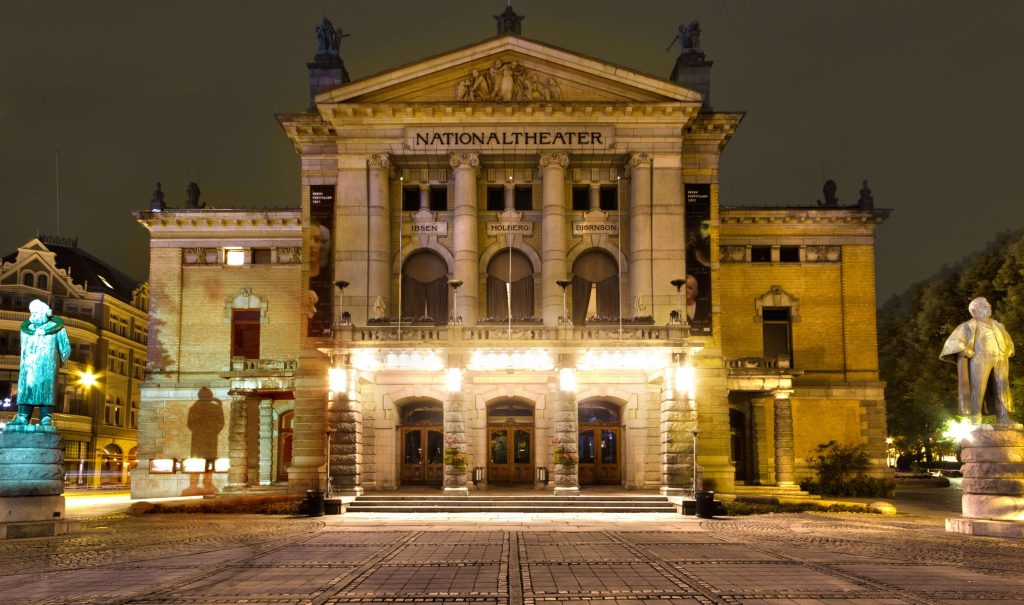
Yet, at the top of the ranking (a bit paradoxically) are three countries that are not in the European Union – Iceland, Switzerland and Norway. What they have in common is the fact that in all three , cultural policies are defined and decided at a low and local level, very close to consumers– both in terms of product and funding.
Iceland is among the countries that spend the most on culture. In another EUROSTAT statistic, which covers other segments (culture, sports and religion), Iceland was the absolute leader, allocating 3.2% of GDP. When commenting on Iceland, we must nevertheless keep in mind the scale - it is a country with a population of 330,000, that is, the size of Plovdiv or Varna. Without going into a detailed analysis of Iceland's cultural policy in the field of "culture, sports and religion", it is clear that it is decided at a much more local level than in Bulgaria.
The key differences between the leaders in the ranking and Bulgaria
The second country in the ranking of visits is Switzerland, which is much larger, but decisions on the allocation of funds for culture there are also made at the local level – even on a much larger scale. In the country of 8 million, only 10% of the money for culture is allocated at the central level. A little less than 40% is allocated at the cantonal level (with an average size of 300,000), and the remaining just over 50% is allocated at the municipal level (the majority of municipalities have a population of 500 to 5,000). By the way, it is not uncommon for local referendums to be held on issues related to their cultural institutions (for example, whether to allocate any funds for a new opera house).
 В България мнозинството общини– поради силно централизираната структура на държавните власти в страната – рядко имат възможност да отделят свободно средства за култура, а в огромното болшинство от случаите става въпрос за „държавно делигирани дейности“ – тоест общините са просто изпълнител на предварително решени на централно ниво дейности. Ефектите от тези структурни разлики са очевидни. В класацията на Евростат за бюджет за култура като процент от БВП, Швейцария отделя повече от два пъти по-малко от България. А процентът посещения на културни мероприятия е тройно по-голям.
The situation in Norway is not much different. Although as a percentage of GDP, Norway allocates significantly less funds than in Bulgaria (and less than the average in Europe), the participation rate is much higher. Over 50% of the funds are distributed at the local level (counties and municipalities). Norwegian municipalities, which decide on about 45% of the funds for culture, are also about half the size of Bulgarian ones – an average size of 12,000 people.
Incidentally, of the three countries, only Norway has its own Ministry of Culture. In Switzerland, the subject is handled by a sub-office under the Department of Internal Affairs, while in Iceland the ministry is joint with the Ministry of Education and Science.
What can be done to climb the attendance rankings?
As we specified above, richer people have more opportunities for culture. Whether they will take advantage of this is a separate question, but this opportunity – and this is a completely economic question – is mandatory. If we count on people who do not have money for bread to go to the theater (even if there is such), we will not move from the bottom of the ranking in question. So the first thing that needs to happen is simply for Bulgarians to get rich. I have no particular pretensions to invade the field of economists, but again, according to statistics, this will happen most easily in three ways – a secure environment for business (judicial, bureaucratic, institutional), low corporate taxes to attract these businesses, and low taxes for workers, who will have more money for theater instead of for the state budget.
The second important factor is related to the “products” themselves. It is ridiculous to think that if the Capital decides to open a theater in every town, attendance will skyrocket. It is important for the people in the respective places to decide for themselves whether it is worth it and they can afford a theater in their town or whether they prefer to afford a cinema, museum or community center – or simply to have a stage on which upcoming events can take place. Opening a theater, cinema, etc. in every municipality, to fulfill the insanely populist goal of “equal access to culture”, would increase the state budget for culture tenfold. And whether these sites will then be visited at all is a separate question.
The chance that dozens of theaters will open in dozens of towns and they will be deserted is huge. But, let us emphasize – the fact that these people do not go to the theater does not mean that they are not consumers of culture. They may have a folk dance troupe or a community center choir. It is not theater – it is not the Sofia or Plovdiv idea of culture – but it is the own idea of culture of the people of the respective place. Of course, they will like a single visiting theater performance or a movie screening, but this does not mean that this can be carried out constantly by full-time local performers.
State policy should not interfere with consumer freedom
If there is a “state policy”, it should be aimed at ensuring creative freedom for artists and freedom for consumers – not imposing centralized solutions from above, but evolving decentralized solutions “from the bottom up”. Instead of expensively building low-quality (due to mass size and lack of staff) theater, opera, ballet, cinema, puppet theater, etc. in Gabrovo, Troyan, Pleven and Lovech, let each municipality decide for itself and endure – relative to its own budget – what it thinks it can endure.
So – in this specific, slightly anecdotal example – instead of 4 weak theaters, there will be one quality theater in Lovech, which will be visited by people in the entire vicinity or will go on tour. This is the policy of the leaders in consumption (and creation) of a cultural product – and besides being the most honest and dignified, this is clearly also the way to include the most people in the cultural sphere.
Image source: Wikipedia.org, Pinterest.com, Dartsnews.bg