EKIP– Expert Club for Economics and Politics A Different Opinion
Author: Bill Wertz, vocaleurope.eu
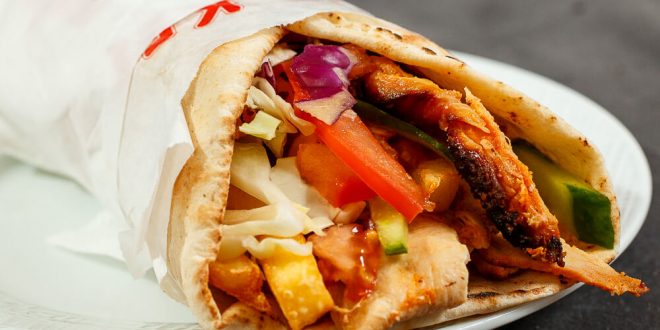
The latest move by the Social Democrats and Greens in the European Parliament has called for a gradual phasing out of phosphates in doner kebabs. Or at least that's what the headlines were saying until the Social Democrats' wing came out with the claim that this was actually fake news.
The popular Turkish dish has become the subject of heated discussions among the representatives of the European Parliament in the Environment Committee. In principle, the use of phosphates is not allowed in the EU, but at the same time, there is an increasing number of exceptions to their use. The deputies rejected the request for full legalization of the specific product, arguing for it with its negative impact on the health of citizens. Thus, once again, the lobbyists for the ban show that they attach little importance to making policies based on real facts.
The proposal to ban doner kebabs is not based on facts
Having lost the battle over the widely used herbicide glyphosate, which has been repeatedly proven not to pose a risk to consumers’ health, it seems that the same lobby that supports limiting consumer choice now intends to find a new victim. Despite the fact that the Social Democrats currently deny that they want to ban düner, German MEP Tiemo Wölken pointed out that “alternatives to phosphates may exist” and members of the specific committee “will wait for further research” on the issue.
In the pursuit of introducing new and new bans, restrictions and regulations, the least attention is paid to the facts. The European Food Safety Authority defines as harmless the consumption of phosphates up to 4200 mg. per day. The average phosphate content in one doner is equal to 134 mg. This means that in order to exceed the safe dose of phosphates per day, more than 30 servings of this type of fast food must be consumed. Only in this way can you really get closer to the situation in which you should start worrying about your health. Also, if we have to be completely honest - in a situation in which you consume more than 30 servings of doner per day, it is probably not the phosphate in this product that should be your biggest concern...
German center-right MEP Renate Sommer also brought something else to the forefront: “The average German citizen’s annual consumption of doner kebabs is equivalent to the phosphate content of a 1.5-liter bottle of Coca-Cola.”
A ban on the use of phosphates in doner kebabs would inevitably lead to the bankruptcy of thousands of doner kebab shops across the continent. This would happen because there is currently no alternative that does not use pre-frozen meat in these fast food establishments. Germany has a significant Turkish population and 80% of this population is employed in the production of the meat used for doner kebabs in the EU. A rough estimate shows that a ban would cost over 100,000 jobs. The reckless absence of evidence-based legislation could ruin the lives of countless families. Not to mention that many of these families are on low incomes. Is this really the vision of progress for the European Parliament?
An unfounded attempt to limit consumer choice
Let's ignore for a moment the economic devastation of ill-considered food bans. When it comes to restricting the use of a product, it's about restricting consumer choice. In this case, the issue is also about the extent to which European consumers can be allowed to make their own choices, and thus the extent to which the Union is enforcing some form of permanent paternalism.
On the other hand, the behavior of member states in this case is no better than that of the EU. France and Ireland recently decided to introduce new paternalistic taxes on sugary drinks, effectively forcing low-income families to meet the needs of their radical public health agenda.
Another example of such paternalistic policies aimed at protecting public health is Denmark. The Danish “fat tax” can teach us a lot about the disastrous nature of these so-called “sin taxes”. Denmark initially introduced a special tax on fat in consumer goods. But 15 months later it repealed it by the same majority as it adopted it. The tax not only proved to be an additional burden on people on low incomes, but also encouraged consumers to choose cheaper products in supermarkets, while at the same time maintaining fat consumption. The tax introduced has no positive impact on people’s health and only a negligible one on consumption. It simply makes it more expensive.
Whether it’s about implementing outright bans or “sin taxes,” we need to pay attention to the facts. We shouldn’t judge rules and regulations by the intentions they try to achieve, but by the results they will produce. Before we do that, however , the first and most important thing is to get to know the facts. Those who criticize the “post-truth era” should stick to fact-checking when they dare to make political statements.