EKIP– Expert Club for Economics and Politics A Different Opinion
There comes a time in every person's life when he or she must decide for themselves which values will be the compass with which they will choose their direction of movement. Inevitably, this also applies to larger organisms, and here let my analogy abruptly shift to companies and countries. Lately, many different pictures have emerged as examples of a vaguely defined compass or the absence of one at all. You will surely understand me if I express myself much more clearly and simply ask you: have you noticed the terraces of apartment buildings littered with garbage, as if someone decided to get rid of the "problems" by hiding them from themselves, but making them completely obvious to everyone else?
With every decision we make and every direction we choose, we inevitably face two things - how long-term can I set goals for myself and how far do I believe I will be able to go based on my own judgment and capabilities. These decisions must be made every day, and our ability to be consistent and stand behind the same values "brings" us to certain results in our movement forward.
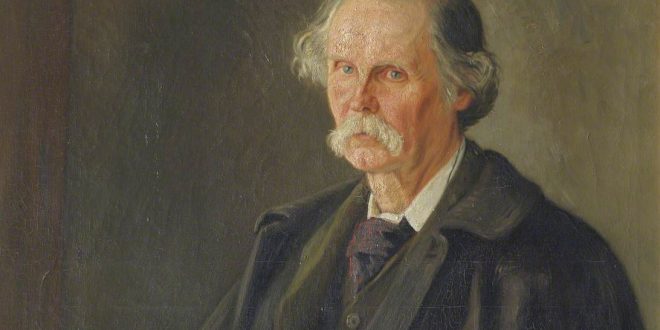
Why is Alfred Marshall my favorite economist?
When I was taking the initial steps towards forming my own economic doctrine, because let's be honest, our choice to support one author or another overlaps somewhat with the beliefs and convictions that we have already built or those that we have just begun to build within us, I settled on Alfred Marshall as my favorite economist. I admit, he is not a libertarian, but I could not help but support one of his less well-known theses, that we should strive for progress, not growth.
Reading "Principles of Economics" after the devastating consequences of the 2008-2009 financial crisis, his ideas sounded relevant, especially when comparing the choices of then (and now) politicians. The focus on moving forward (the progression of human development, in other words) was shifted from the creation of wrong initiatives and the blind search for economic "growth" and increased macro-indicators. Every libertarian would like to avoid creating such an economic environment that hinders human development. You will be surprised how a neoclassical economist was put in such an environment of self-affirmation, an attempt to fight the arguments that "predetermine" human progress, trying to "sell" his mathematically based and reasonable science to people rejecting purely qualitative and reasonable arguments. So, let's answer the question of this article - who is Alfred Marshall?
Who is Alfred Marshall?
Alfred Marshall was born on July 26, 1842 in London. He came from a wealthy and religious family. His father was a bank employee. He took care of the upbringing of his children with ascetic firmness. At the age of nine, Alfred entered Taylor's school, after which in 1861 he was admitted to St. John's College, Oxford. There he was mostly engaged in studying mathematics. In 1865 he was enrolled as a postgraduate student in molecular physics. At the same time, he became a member of the debating "Groot Club". During this period, under the influence of the discussions in the club, a turning point occurred in Marshall's spiritual development - he turned to studying a number of philosophical problems related to theology. He even intended to become a missionary of the church in distant countries and preach the principles and ideas of Christianity. A change in his worldview occurred in the 1860s, and then he began systematic studies of ethics and sociology.
However, when he became acquainted in detail with John St. Mill's book "Fundamentals of Political Economy", he turned his attention to economic theory. This ultimately turned out to be his calling, to which he remained faithful for the rest of his life. His desire to read Kant's works in the original took him to Germany. During his stay in Dresden, in addition to Kant, Hegel's work "Philosophy of History" had a great influence on his worldview. In the same period, in 1868, he became very familiar with the works of German economists. Two years of continuous reflection (1867 - 1868) led him to the conviction that he should devote himself to the study and explanation of economic processes and phenomena.
Marshall's talents and early career
Marshall is a versatile personality. Devoting himself to research in the field of political economy, he is at the same time a mathematician, a philosopher and one of the best connoisseurs in England of the German historical school, especially the theoretical constructions of W. Roscher. In his life Marshall is a supporter of humanism, but at the same time he studies economic phenomena and processes absolutely impartially.
From 1868 Marshall taught at St. John's College until his election as head of the Department of Political Economy at Cambridge University in 1885. At the college, Marshall gradually formed his economic views and theories, but did not publish them. In 1875, Marshall spent four months in the United States, mainly at Harvard and Yale Universities. The main task he set himself during his stay in the United States was the study of protectionism, both in economic theory and in economic practice. His stay in the United States and the study of the economic life of the country had a beneficial influence on his further economic research.
Marshall as a social critic
Having chosen economics as his profession, Marshall devoted himself entirely to it. According to this great economist of noble and ethical character, economics should be directed towards the achievement of material well-being for all and that its task is to clarify the interdependence of people's economic interests and thereby solve the problems of material relations in society. Throughout his life, Alfred Marshall fought for the separation of economics from historical and moral sciences. The lectures he gave were aimed at clarifying economic categories in a consistent historical plan.
His mathematical knowledge helped him to penetrate with scientific impartiality the essence of economic relations, especially in industrial branches. This explains why he so often expressed the opinion that all people should strive to be "gentlemen", which means to acquire higher standards for themselves. At the end of the 19th century, Alfred Marshall fought against the predestination of people, the division of classes and the identification of human abilities with the origin of the particular individual, rather than the reasonable conclusion that everyone can grow to the level of a "gentleman" by applying reason and the right economic decisions and behavior in their lives.
Contribution to economic science
To understand the courage that Marshall displayed, it is necessary to see the state of economic thought at the end of the 19th century. By this time, two leading trends in the theory of value had already established themselves: on the one hand, the two variants of the theory of factors of production, and on the other hand, the theory of marginal utility. With the general rejection of the Marxist theory of labor value, representatives of these trends put a lot of effort and polemics into trying to prove the advantages of their theories. Marshall's "Principles of Economics" radically changed the further development of economic thought. It is no coincidence that Marshall's ideas, by their significance and influence, are defined by economists as revolutionary: by analogy with the Keynesian revolution of the 1930s or the monetary revolution of the 1970s.
Alfred Marshall touches to some extent on the traditional polemics of that time around the problems of value. Marshall's key idea is the following: in the work of bourgeois economists, to shift attention from the discussion of the problems of value to the study of the interaction and regularities between supply and demand and, on this basis, to the formation of a theory of market prices, parallel to the theory of value. Alfred Marshall is credited with the statement: “Even a parrot can be made an educated economist if he learns only these two words: “Demand” and “Supply”.
Another of Marshall's innovations, which received wide recognition, was the idea of elasticity of demand and supply with respect to prices. The price theory proposed by Marshall constitutes the part of economics called microeconomics. The approaches, principles and conceptual apparatus introduced by Marshall were largely used in the development of macroeconomics, which examines the problems of change and the interrelation of indicators of national income, savings, consumption, etc. The founder of this section - J. M. Keynes - relied on the theoretical foundation laid by Marshall.
How Marshall remains relevant today
It is interesting to note that modern criticisms of Keynesianism by representatives of monetarism and “supply-side economics” also rely to a significant extent on Marshall’s theoretical heritage. Therefore, he is considered the founder of modern economics. Examining the interrelationships and regularities between demand, supply and prices, Marshall raises many new approaches, concepts and categories characteristic of modern economic theory.
First, he includes the time factor in the analysis of price, noting the different relationship between production costs and price in the short, medium and long term. Second, he reveals the mechanism of quasi-rent, which begins to operate when demand significantly exceeds supply within a short period and describes the reactions of market forces to short-term fluctuations in demand and supply. The third scientific idea that he raises is about the elasticity of demand and supply depending on price and income, creating the basis for the analysis of the regularities in their movement. These three of his developments have permanently entered modern Economics.
Alfred Marshall believed that “Economics” deals with the study of how people exist, develop and what they think about in their everyday lives. But the subject of research of this science, according to him, is mainly those motivating motives that most strongly and most persistently affect human behavior in economic life. The theory of evolution, according to Marshall, does not prohibit, but on the contrary - requires a change in some of the economic concepts of the representatives of the classical school.
The Intertwining of Evolution and Economics
According to Alfred Marshall, it is the theory of evolution that shows that there are many unoccupied “scientific economic niches” and that the diversity is potentially greater than has been observed so far. Here, rational standards will be determined by the evidence of everyday experience and the results of scientific knowledge. Alfred Marshall also sees that irrationally minded people ignore truths that are inconvenient for them. In a world where irrationality dominates, there is no place for reason. Raising the thesis of gradualism, of evolution in the material world, he claims that with perseverance and patience, a rational way of thinking can be learned by anyone.
Therefore, with perseverance and tenacity, Marshall creates a true economic science. According to him, not everything can be clear, not everything is scientifically and precisely justified in economic theories, which is why economic phenomena are often considered with the logical clause "other things being equal". What worries Marshall is that often those who apply economic science promise people salvation from material poverty. But these promises are not always feasible, and therefore Marshall recommends showing the choice and the necessary economic knowledge for it, so that later people can choose for themselves and the responsibility to help themselves and reach the level of "gentlemanship" is transferred to them.
The meaning of the concept of "marginalism" in economics
For example, through his methodology, Alfred Marshall presents a different theory of value than that of the classical school, deriving it from the relationship between competition and production costs; he derives wages, rent, and profit from various factors such as the propensity to save, demographic and climatic differences, unequal fertility of the land, and differences in the direction of capital by entrepreneurs and managers.
He introduced the concept of marginalism into his scientific reasoning. For example, firms produce a certain type of shoe until the revenue from each pair of that type of shoe equals the cost of producing each subsequent pair. Or a machine-building company produces tractors until the revenue and cost of producing them are equal in a sequential order. Marginalism has many applications in economics, and Alfred Marshall discovered many of them, although he himself was not among the discoverers of this theoretical approach.
Marshall and the main idea of economics
Unlike economists - representatives of the classical school, who seek the meaning of natural laws for economic processes, Marshall seeks this meaning in evolution, which is in practice his marginalism, which he applies to economics. Both the entrepreneur and the consumer do not make sudden leaps, but gradually and cautiously adapt to changing prices. Winning firms survive, losers leave the game.
By applying the marginal approach, Alfred Marshall sought and pushed forward new directions in the development of microeconomics. He saw people behind economic processes. Marshall noted, “therefore, the main subject of economics is human beings, who are forced, for better or for worse, to change and progress. The main idea of economics, even when only its basics are discussed, should be the vital force and movement.”
Where are you headed?