EKIP– Expert Club for Economics and Politics A Different Opinion
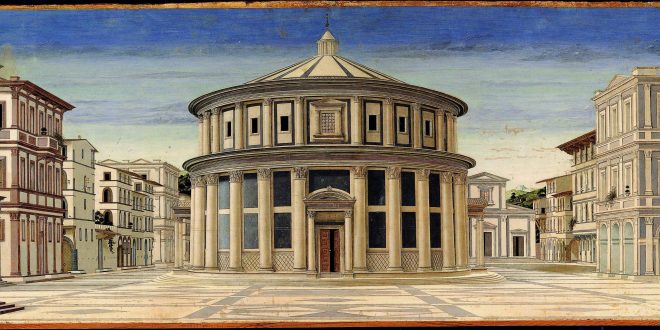
The dream of the perfect city is almost as old as civilization itself. Whether city planners dream of parallel and perpendicular straight streets, radial streets intersected by smaller and larger rings of "rings," or some other variation, proto-urbanists' attempts to create the ideal urban environment have been around for centuries.
Older than them, however, are the cities themselves. Cities that arise, grow, create bizarre crooked streets, houses, squares and gardens, without any Leviathan looking down and drawing boulevards and saying who can build how high a tower. And alongside these turbulent, lively cities, in the constant clash of ideas, thoughts, contradictions and discussions, civilization also develops.
The ideal of the perfect city originated somewhere in Antiquity. Hippodamus, who lived in the 5th century BC, is considered the father of urbanism. His plan for a city with straight streets that intersect at right angles, with a centrally shaped market square called the "agora", became popular in the Greek world, but left its real mark during the Roman Empire - the greatest city builders in the ancient world.
Central planning can never overcome the natural order
History, geography, and human action, however, show that this unified plan is impossible. With the exception of newly built cities on bare ground, such as the North African imperial city of Timgad, the ideal is rarely achieved - a central city planner must take into account many other things - the past and history of the city, geography, etc. Rome itself is a seemingly chaotic labyrinth of crookedly intersecting streets, in which, viewed from an airplane, we see no logic. Philippopolis - today's Plovdiv - was also rebuilt according to the Hippodamian scheme, but nevertheless, because of the Three Hills, the streets and city walls are winding, even in the lower part, the major entrance arteries do not enter at right angles, etc.
In fact, this “problem” with the heritage of a city and its geography will continue to appear two millennia later. New York, for example, is famous for its straight streets intersecting at right angles, but this could only have happened when the original zoning was first introduced. Any attempt at new central planning in a new way threatens the city’s historical values – places that have been established over the centuries and that the local population has come to expect to be exactly as they are, and not to be changed by politicians and bureaucrats.
Tradition is the most enduring thing in urban planning – the theme of the work of the influential urbanist Jane Jacobs, about whom we told you some time ago. A tradition that has been created by centuries of actions of citizens who walk down a given street, shop on another, attend religious services at the end of a third. Any attempt at centralized change, which by definition will not respond to the needs and actions of citizens, but to the utopia of the planner, breaks this natural resilience and leads to problems.
Looking at the drawings of the “beautiful” ordered Roman neighborhoods (insulae, in Roman terms), we imagine an orderly city in which everything is predictable and arranged along straight intersections. However, the reality is different – in these insulae, especially in larger cities, such as Rome itself, and later in Constantinople, where hundreds of thousands of people live, tall, multi-storey (up to 7-8 floors) apartment blocks are often built, which are only a few meters away from the neighboring block. The streets are forever plunged into darkness, as are the lower floors. The living conditions in them are unpleasant and by no means “orderly” as they appear on a drawing and map. The idea that legal regulations would fix these problems existed back then. The result is no different from today – usually the wealthy construction investors who built these apartment blocks were senators or from senatorial families, and the laws were made to suit them.
The "ideal city" has always been just a utopia
After the Roman Empire, the idea of the ideal city was reborn during the Renaissance in what is now northern Italy. Even in this period of dreams and belief in the ability of man to do anything, it was clear that the “ideal city” was a mere utopia. Of course, various decrees and small city regulations appeared - from the despotic Duchy of Urbino to the freedom-loving Republic of Siena. In the central square of the latter town, the city council decided that all buildings should be of the same height, and from an aesthetic point of view - all windows of private homes should have an appearance identical to that of the city municipality.
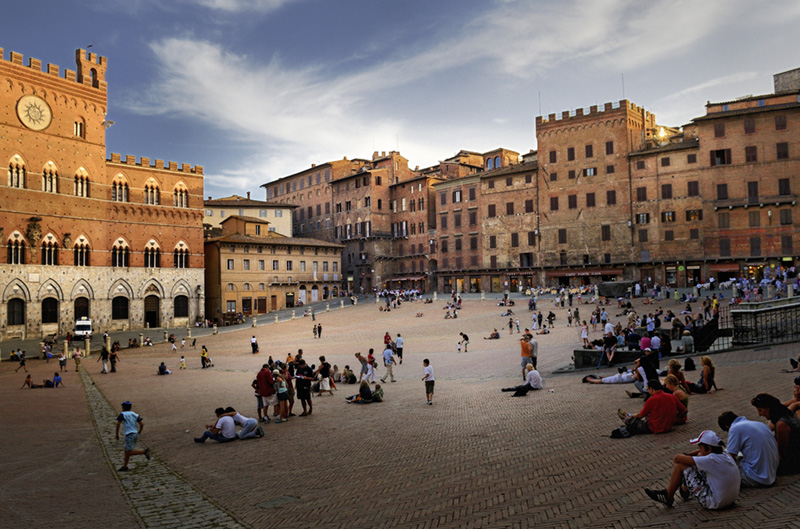
And just like in the ideal plans of the ordered insulae in Rome, if we read documents and drawings, we will be left with the impression that this order has been achieved. However, a look at reality shows that the square of Siena is neither of the same number of floors nor of the same number of windows – these regulations have not stood the test of time. And despite this unbridledness demonstrated by the citizens of Siena over the past 800 years, their central square is majestically beautiful, impressive and successful from an urban planning point of view.
A look at any of these late medieval and Renaissance cities in Italy shows that they are all a crazy jumble of crooked streets, crooked buildings, and crooked squares. The idealistic vision painted by an unknown artist in Urbino, so reproduced in every Renaissance painting, is nowhere to be found. Even the powerful popes of the sixteenth century failed with their grandiose plans to reorganize Rome with great streets converging on the Vatican. Prepared with legislation similar to today's "expropriation," they failed to get their streets straight - the more "eternal" a city is, the more alive, resilient, and difficult to reorganize it is. It is the traditional, resilient cities that are uncontrollable by a central planning authority.
And cities are beautiful and interesting because they are different. A small detail indicative of the value of private property in Florence can be seen in the famous Palazzo Rucellai. It was built by one of the richest families, close to the Medici. At the far right, however, it can be seen that it is not finished. The stone facade and arches end unnaturally in the neighboring building. The plan was to have another axis of windows. However, the modest neighbor never sold his property to Rucellai. These small details on the unfinished facade of Palazzo Rucellai are indicative of the supremacy of the protection of private property, which made Florence - Florence.

The utopia of creating an “ideal city” lived on in the following centuries. Of course, in some places central planning came from the drawings on the real world – not everywhere it remained only in unrealized dreams, as with the Roman magistrates and popes. Paris is often given as an example with its straight and wide streets, designed by Baron Haussmann. The plan was implemented according to the idea of Napoleon III – who was initially a president, elected with populist promises to eradicate poverty, but later became emperor.
Under the guise of “modernization” and hygienic considerations, the main idea of the plan was actually to design the city in such a way that new revolutions would be impossible and that patrician military actions would be more easily destroyed by a well-organized imperial army. The thought of urban spaces that were convenient for people, if they existed at all, was secondary. And the fact that is rarely mentioned in the comments about Baron Haussmann is that he actually regretted his work. For a number of reasons, including political ones, he was dismissed from his position after about 20 years of work. The urban planner mentions that his biggest mistake was that he tried to impose his idea on Parisians who had become accustomed to his habits over the years, and with his plan he turned Paris upside down. And here we are not even mentioning the huge public funds thrown at these reconstructions.
Cities are beautiful because they are different.
Paris is changing at the same time as another city known for its straight streets – Barcelona. The urban planner of the impressive system of octagonal neighborhoods with internal gardens is Ildefons Cerda – a Catalan, who was appointed by the Spanish government despite a competition organized by the city administration. Of course, local architects are watching his work closely and criticizing his plan for its monotony, uniformity and even political lines. Cerda himself is a socialist who tried to push the ideas of equality for all with his plan. However, people’s natural tendency is to compete with each other. The result – everyone who has a plot of land in one of these squares is trying to build their house, “higher than their neighbor’s”, according to an anecdote told by Salvador Dali, “so that I can pee on his roof”.
Barcelona – like Paris and London in the 19th century – was a city where life was hard, dirty, unhygienic. But that was true of many cities in the industrial revolution. Today, Barcelona and Paris are often cited as examples of places where the rebuilding of these cities by a central planner led to improvements in life. The truth is that the processes that led to increased life expectancy, reduced disease, and so on are happening everywhere in the Western world, whether the city is rebuilt with straight streets or simply develops along its natural course.
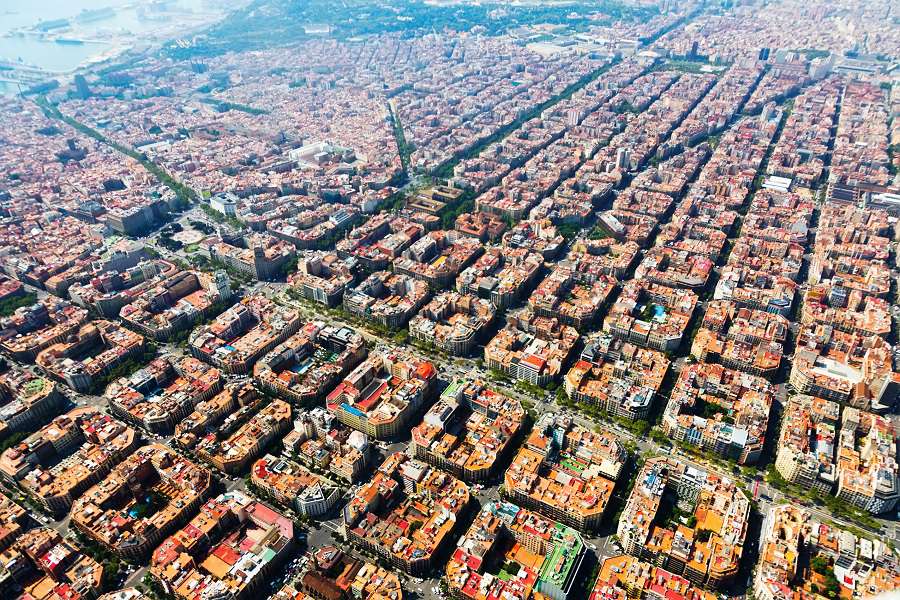
The paradox in this case is that, unlike the first decades, in which the new plan of Ildefonso Cerda was received with a knife, today Barcelona has become accustomed to its new look and is a wonderful city to live in. People are accustomed to this look, it is no longer revolutionary, but has become a tradition - except that it is the unique look that makes Barcelona recognizable, different and interesting, compared to any other city in the world. And if someone today tries to change the natural order established after 150 years, he would be a harmful revolutionary. And the other paradox is that if you turn from the Sant Antoni district into the neighboring El Raval or Barri Gothic, in which there is no trace of this rectangular network structure, but only memories of the medieval city and its endlessly crooked narrow streets, life flows calmly and happily, with many impressive views, surprising squares and everything a person needs. In other words, life in the neighborhood with the rectangular streets is not much different from life in the medieval chaotic neighborhood.
The historical truth is that cities are a beautiful, complex and uncontrollable system. Any external intervention – expropriations, restrictions on building types, height, appearance and function, would be harmful to the local population, even if it seemed, in a populist way, correct. The majority of processes in cities cannot be controlled, because people are different, families are different, societies, generations, classes or however you want to divide the population – are different. No matter how great the desire, capabilities and powers of a central planner, he can never overcome the natural order in which a city functions. Thus, a city is all the more successful and comfortable, meeting the needs of the population, when the spaces in it are the result of freely agreed traditional roles. That is, when it is built from the bottom up, from small human actions, from the private to the public, and not the other way around.