EKIP– Expert Club for Economics and Politics A Different Opinion
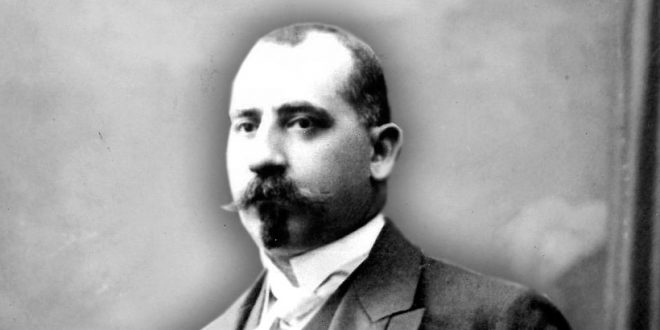
The words in the title are a quote from a parliamentary speech by the Bulgarian Prime Minister from 1926 to 1931, Andrey Lyapchev (1866-1933). They are an expression of the life credo that one must remain true to one's convictions and not change them according to the requirements of a specific historical situation. It is well known that excessive flexibility is a characteristic of the political elite, especially in the conditions of parliamentary democracy. In this sense, the words and most of Lyapchev's deeds do not fit into the image of a populist who is ready to go against any norms and rules in order to get the necessary number of votes.
Loyalty to principles is not a sufficient virtue in itself. It is important that they are meaningful and their application benefits society. And the Lyapchevs turn out to be such.
Biographical sketches from Lyapchev's life
Andrey Lyapchev was formed as a personality in the relatively liberal environment of post-liberation Bulgaria and Europe from the end of the 19th century. He was born in the town of Resen, present-day Macedonia. He studied at the Salonika Bulgarian Gymnasium and in Plovdiv. He became a volunteer in the Serbo-Bulgarian War of 1885 in defense of the Union between the Principality of Bulgaria and Eastern Rumelia. He then studied economics and history in Vienna, Berlin, Zurich, London and Paris. He did not receive systematic university knowledge and did not have a diploma for completed higher education. According to the memoirs of his contemporaries, he was influenced by the classical economists Adam Smith, David Ricardo and John Stuart Mill.
After his return to Bulgaria, Lyapchev joined the struggles for the liberation of the Macedonian Bulgarians and became an active member of the Democratic Party. Its leader at that time was Petko Karavelov, who, despite its shortcomings, was a supporter of classical English liberalism and believed that its adaptation to Bulgarian conditions was among the guarantees for the country's prosperity. Lyapchev's joining the Democratic Party is indicative of his personal preferences and attitudes towards economic and socio-political life.
At the beginning of the 20th century, Lyapchev already had a noticeable role in the history of Bulgaria. In 1908, he became Minister of Trade and Agriculture, and later Minister of Finance in the Democratic Party government with Prime Minister Alexander Malinov. Lyapchev is credited with the peaceful settlement of the problems between Bulgaria and the Ottoman Empire in connection with the declaration of Bulgarian Independence on September 22, 1908. Lyapchev's next ministry was in much more dramatic conditions. In June 1918, when it became clear that Bulgaria was losing the First World War, a cabinet was formed again headed by Al. Malinov. Lyapchev was Minister of Finance, but his main contribution was as the leader of the delegation that negotiated the Thessaloniki Armistice. With it, Bulgaria exited the war. Lyapchev spoke in the National Assembly about the need for Tsar Ferdinand to abdicate from the Bulgarian throne.
Andrey Lyapchev became Prime Minister in 1926 in a “sick time”. Bulgaria was shaken by populism, a coup, a communist uprising in 1923, assassinations, emergency legislation, attacks by bandit groups, the invasion of the Greek army into the country in October 1925, etc. His rule marked important successes. The domestic political regime was softened, persecutions for political reasons were greatly reduced, foreign capital was attracted, important for economic development, and the prestige of the parliament was increased. Last but not least – Lyapchev resigned from his post after losing the parliamentary elections in 1931. At first glance, there is nothing unusual in this. However, there is only one other similar example in the political practice of Bulgaria from 1879 to 1944.
The principles that are "not pasta"
Lyapchev's remarkable behavior is based on some of the most important principles of classical liberalism. He states and defends them in his numerous parliamentary speeches.
His main concept in economic policy is to protect the interests of consumers. This is evidenced by his words: "It is in the state interest for the consumer to be satisfied; and he is satisfied with both increased production and production that is sold to him cheaply." The quoted words seem to be a banality, but in order to understand them, one must also understand what is not mentioned. Lyapchev is not saying that Bulgarian economic progress should be achieved with privileges, tax breaks and other similar means. According to him, the most important thing is not to hand out special benefits that benefit a limited circle of people, but to conduct such an economic policy that benefits everyone in their role as consumers. Additional emphasis on the principles that motivated Lyapchev is given by his words that since "the government cannot cure everything," its main task is "not to hinder anyone." They clearly reflect the classic liberal skepticism towards the ability of state power to directly intervene to solve complex problems and remedy all social ills through legislation.
Lyapchev lives and works at a time when a critical attitude towards capitalist profit is preached from the rostrum of parliament and spread among the public. Led by a misunderstood patriotism, a number of politicians, journalists and businessmen view foreign investments in the Bulgarian economy as a “sell-out” and “robbery” of the country. From the position of Prime Minister, Lyapchev refutes and rejects such opinions. According to him, profit is by no means a universal evil. He has nothing against private profit from state properties by giving them to concessions, because “the country will also benefit from the concessions”. Foreign concessions and creditors are not hostile, on the contrary, they are able to implement the rational use of otherwise dead Bulgarian wealth. Lyapchev reminds the people's representatives that after the First World War, Walter Rathenau made an attempt to organize the exchange in Germany in such a way as to eliminate the intermediaries who work for profit. The attempt ends in failure because, in the words of the Bulgarian Prime Minister, "the officials who organize this work with their slowness and all that is human flaw will cost more than the profits."
In terms of financial organization, Lyapchev is a supporter of the gold standard, which limits the ability of politicians to interfere in the economy. He is an opponent of state intervention in credit by manipulating the interest rate. Interest rates on loans should be determined freely, in accordance with the principles of supply and demand. The spread of usury and high interest rates on loans can only be cured by the entry of foreign capital. The presence of foreign capital could increase the supply of loans and thus reduce their price. Lyapchev reminds the social democrats, who most actively defend the position of state intervention against usury, that the economic situation is far from always in favor of creditors. A few years before he took office as Prime Minister, Bulgaria experienced severe inflation, which benefited debtors and punished creditors.
His attitude to public finances is of interest. First of all, he upholds the idea that “We do not work with insincere budgets”, i.e. there should be no hidden and unclear elements in the state revenues and expenditures voted by the National Assembly. In his role as head of the Bulgarian state, Lyapchev stubbornly avoids imposing new tax burdens on the Bulgarian population. This is done not only because excessive taxation hampers economic life and entrepreneurship. In 1920, in a speech before the National Assembly, Andrey Lyapchev stated: “…these taxes that you want will come, but unfortunately, like all taxes in the world, these come not to alleviate the situation of the taxpayer, but to take even more from him, to worsen his situation even more” [my emphasis - P.P.]. Apparently, Lyapchev accepts the general proposition that all taxes, regardless of what is received in return for their payment, worsen the situation of the taxpayer.
Lyapchev's understanding that "any punishment is criminal if it continues when it is not necessary for society" helps overcome the extremes in the country's political life.
Closing remarks
As a politician, Lyapchev was not without his flaws. His liberalism was limited and he failed to withstand the Great Depression that affected the Bulgarian economy from the end of 1929. Lyapchev repeatedly stated that he was not a supporter of laissez-faire. Despite his desire to limit state intervention in the economy, he was forced to take actions that did not exactly correspond to his ideas. His positive attitude towards cooperatives, many of which were highly politicized and dependent on state financial support, also distanced him from sound economic principles. However, some justification for their incomplete application was the extremely complex situation in which he governed and the very low popularity of classical liberal principles in Bulgarian society.
The general assessment of the Lyapchev Principles and their application in real life is primarily positive. It shows that classical liberalism is able to successfully deal with difficult problems even in the extraordinary conditions of the period after the end of the First World War.
P. Penchev