EKIP– Expert Club for Economics and Politics A Different Opinion
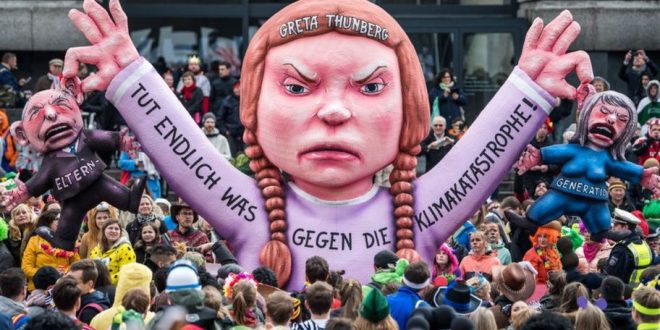
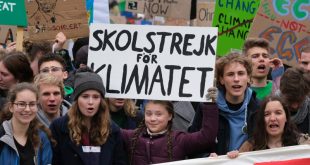
The climate change movement and the fanaticism of most of its supporters are not new, but they are starting to become more and more widespread, gaining more and more airtime and gaining more and more influence.
Don't use straws, throw away separately, don't eat meat, don't reproduce. Every day we hear a different recommendation on how we can save the planet. Most of these calls are still on a voluntary basis, but the fight against climate change is increasingly going through legislative initiatives that change our way of life more and more radically, and which have a significant impact on the taxpayer's pocket and business.
And while environmental and climate issues are real and need action, most of these initiatives are often poorly thought out and have questionable effectiveness. Sometimes the results are disproportionate to the efforts made, sometimes no results are achieved at all, and sometimes the results actually take us further away from the goal. The reality, however, is that very few of them are the result of deep thought - a problem that stems from... ignorance of human nature.
The very idea of "saving the planet" becomes the meaning of life for many people, and reliance on mass movements and the expansion of state powers for its implementation is mandatory. Here it is time to remember the work of Carl G. Jung "The Hidden Self", in which he develops the thesis that the future of humanity depends on our ability to resist mass social currents. He expresses his concerns about the fact that people do not know themselves, which makes them susceptible to destructive tendencies: fascism, radical nationalism, communism, fanaticism.
In it, Jung also states that people must understand their unconscious inner nature and, with this self-knowledge, protect themselves from the temptation of ideological fanaticism. He contrasts ideas of massness with the concept of individualization of society.
Although his writing is intended for the ideologies of the twentieth century, we cannot help but notice how relevant it is to the growing mass movement of climate fatalism - people who believe that nature is dying irrevocably, the planet is collapsing, and the human species will not live until 2050.
These powerful suggestions are increasingly beginning to absorb the "religious powers" of people, and it is uncertain what would happen if their well-wishers were given real power. For now, most of their actions remain in the sphere of lobbying and civic initiative, but we are increasingly seeing political figures who are committed to the cause. And why wouldn't they be?
"The infantile state of rapture in the mass man, however, is so unrealistic that he does not even think for a moment about who actually pays for this paradise. The settlement of the account is left to the superior institution, which accepts it with a cheerful heart, because this demand increases its power, and the more this power increases, the more defenseless and weaker the individual becomes."
The "infantile state" of a person in question is his tendency to run away from responsibility, to take refuge in the mass movement, in which everyone has reached a consensus, and no one has to think individually. Thus, he is freed from the need to take care of himself, to build his own life, and gains the opportunity to devote himself to the seemingly greater idea of "saving" the planet.
"Isn't he someone who leaps over his shadow to zealously pursue an idealistic program that promises him the desired alibi regarding his own shadow?"
This cover-up is also evident in the astonishing lack of arguments from members of such movements. Beyond the high-flown slogans, it is difficult to come up with a reasonable explanation of what exactly is happening to the planet, how much people are to blame, and what is the most appropriate way to overcome this problem. Because the movement perceives certain understandings as the only truth and has developed them into something short and easily digestible to keep the masses excited.
"What the multitude believes is surely the truth; what the multitude desires is surely worth the effort; it is even necessary and therefore good; in the desires of the multitude lies the power that allows one to achieve the fulfillment of desires; the most wonderful thing, however, is the easy and painless immersion in the land of childhood, the return under the parental wing, in carelessness and irresponsibility. After all, from above they think and take care of everything."
But the most interesting thing is that the members of the movement choose to see man as just another animal species, no more valuable than the others. On the contrary - he is simply a pest who has brought the planet to its current state. He is not the creator, but the destroyer.
Thus, climate fatalists choose to ignore its potential to solve these problems, and on the contrary - they try to turn it back in its development, to prohibit it from multiplying, to get rid of it. And this, according to Jung, is again due to the ignorance of one's own Self - because, although man is the initiator and discoverer of all development, he himself "remains a mystery to himself."
"Yes, he knows what distinguishes him from other living creatures in an anatomical and physiological sense. But as a conscious, self-reflective, and language-endowed being, he lacks any criterion for self-evaluation."
So very often man himself does not realize his potential and chooses not to rely on himself as an individual to solve his problems. In this specific case, he does not realize that saving the planet goes through human progress - the one that relies on the individual and his abilities. Not through mass policies of prohibitions, of restriction, of regression - but namely through the realization of human potential, far from the oppressive and destructive force of the mass movement and the power that stems from it.