EKIP– Expert Club for Economics and Politics A Different Opinion
Author: Vladislav Panev
The Bulgarian energy sector is the sector with the least real market and the only way to explain the processes in it is with a strong influence of the backstage. The Varna TPP, for example, was an absolutely unnecessary asset while it was owned by CEZ. After the Czechs sold it to the former minister Danail Papazov (later it went to Ahmed Dogan), the company became very suitable to receive tens of millions per year for cold reserve, instead of the state-owned Maritsa East 2.
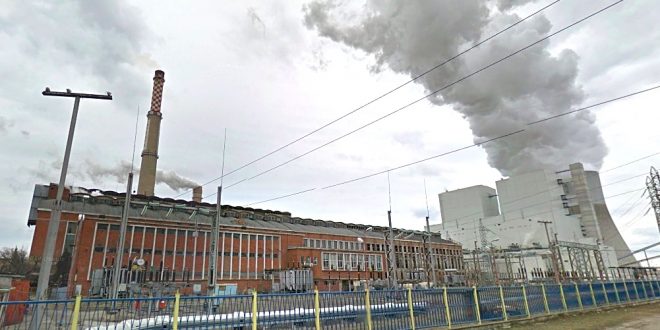
The presence of a player like Hristo Kovachki in the sector is also legendary enough. Last week, photos emerged of yet another brutal pollution of the Galabovo region by Brickel, a company that produces briquettes, heat and electricity. And contrary to common sense and the general opinion about the heavily subsidized green sector, it turns out that this polluting enterprise is subsidized with huge sums and yet operates at a loss.
For many people, it must be strange how Europe, which is fighting climate change, allows the support of what is probably the dirtiest plant in the country. In fact, there is no such thing. Even Brussels has informed the government that subsidies for cogeneration are unauthorized state aid and should not be tolerated, at least in this form. If it comes to sanctions, we may have to pay billions, and a number of district heating companies (including the Sofia one) may finally go bankrupt.
What is the scheme with cogeneration? Well, this is highly efficient production of steam and electricity, with the latter being purchased preferentially to support cheaper heating for citizens. Not very market-based, but whatever. The idea is that (as is the case with large district heating companies) the main business is steam or something else, and most of the electricity goes to this main activity. And only the surplus is sold at preferential prices. This is exactly where the catch lies. Years ago, it was found that Vidachim existed solely so that the thermal power plant at the plant could sell expensively to NEK. This subsidized activity was 99% of everything the company did. On this principle, the purchase was stopped.
It is very similar at Brickel. Revenues from the sale of heat energy are less than 1% of the total (573 thousand leva out of a total of 84 million) for 2018. The rest is expensive energy (70%) and briquettes. This year there will be growth, because the price set by the Energy Regulatory Commission for the purchase of electricity from the factory is 17.59 cents per kilowatt-hour excluding VAT, 24% above last year. And much higher than the prices of American thermal power plants, new wind power plants, not to mention the prices achieved in auctions in a number of countries for new solar power plants. That is, with the same physical volumes, the sale of electricity from Brickel will be for over 70 million leva. Given that the price set by the regulator is at least double the market price (the question of how much the market price on the electricity exchange is is another matter, but we have no other reference point), it turns out that the subsidy that the state pays annually to the owners of Brickell to poison pigeons is over 35 million leva. And this is to fulfill the social role of selling heat energy for... half a million. A big function, no less.
So I have a suggestion. Since it's for 500 thousand leva, let the taxpayer cover the entire heating bill for all 7,000 residents of the town of Galabovo. Let them switch to electricity for heating and hot water and have it for free. It will cost us all a maximum of a million. And people will stop being poisoned. Let the state also cover the salaries and insurance of the workers in Brickell (25 million leva for 2018) while they are not employed. Again, it will be cheaper for all of us than the current scheme of subsidies plus soot. Although it is unlikely that these people will remain unemployed for long.
Plus, much more market will be introduced into the energy sector. This is what the sector suffers from, which is why there are no new investments, except for the heavily subsidized ones. By the way, Brickel is not alone. There are other district heating companies that operate on the principle that what should be their main business barely makes a dent, and expensive electricity is the vast majority of their income. Brickel is the most obvious, because it is a factory with a large capacity that provides heating for a small town. It is not that the people of Galobov are second-hand people, on the contrary. But they have the right to clean air and to work.
The state is lagging far behind in providing alternative employment for the people of the region. Although the current labor market deficit suggests that this will not be such a problem, as the industry is gasping for talent. It needs Brickell's employees, and without anyone providing it with subsidies and preferential prices. Moreover, not only does it currently lack labor, but it is also forced to buy expensive electricity, precisely because the state tolerates Kovachki's schemes. Here is another proof that everyone loses from the status quo.
It is often said that the Greens are against business. Yes, we are against the “business” that has grown together and exists because of the state. I put quotes because this is not entrepreneurship, but theft from all taxpayers. And the faster we break up such schemes, the faster we will win not only the taxpayers. But also the normal investors in energy, as well as the entire business that cannot find workers. Only the schemers are the losers. Both in power and their averas.
What should we do in the energy sector? Cutting subsidies after the relevant contracts expire. Linking our energy system to the European one, so that there is more real competition, not the currently invented one. Listing packages of state-owned companies on the stock exchange. So that they behave like corporations, not like departments. And so that they are transparent, not behind the scenes. And everyone bears all the costs. In this way, the best will win, not the cronies. This way we will attract investments, but not because they are waiting for subsidies and aid, but because they can offer a competitive product for which they have a market. If the conditions are leveled, mega-stupid projects like the Belene NPP will be impossible. Green energy will break through, because investors there are ready, if only the niches are unblocked. And our transformation will go more painlessly than if we leave things to the schemers.