EKIP– Expert Club for Economics and Politics A Different Opinion
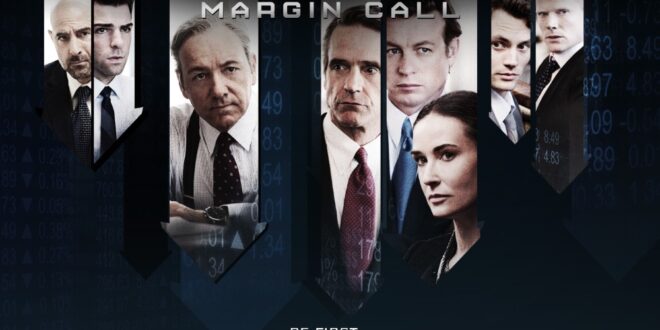
"Margin Call" is probably my favorite feature film about finance. I say "maybe" because the far more famous "The Big Short" will always remain a serious contender. But "Margin Call" has a certain charm and, I would say, depth that "The Big Short" lacks.
In "Margin Call," we follow the reaction of a large Wall Street fund when it realizes that the entire mortgage-based derivatives market is a house of cards that will collapse at any moment, just before the 2008 Global Financial Crisis. The entire action unfolds within about 24 hours, in which the fund must draw up a plan on how to deal with this situation and execute it.
In the financial markets, every second counts. Especially when every second can cost you millions in losses. Just as "The Big Short" has a partial documentary element from the perspective of those "contrarians" who predict the market crash, Margin Call has a partial documentary element from the perspective of those in the "mainstream" of Wall Street who have to fight to survive it. "Margin Call" is not about making profits. It's about limiting losses.
In response to the information received, an emergency board meeting is called, literally in the middle of the night. Very quickly, everyone understands that even if they play their cards perfectly, the situation will lead to serious layoffs in the company. Layoffs that will not only lead to the dismissal of most ordinary traders, but also some high-ranking managers.
The personal dynamics between the company's employees are written and played incredibly well. This, of course, is helped by the incredible cast - Kevin Spacey, Paul Bettany, Jeremy Irons, Zachary Quinto, Demi Moore and everyone else play their roles perfectly. The dialogue is extremely well written. The story itself is not complicated or convoluted, but the film keeps you glued to the screen because there is not a weak scene in terms of dialogue and in terms of emotional impact. "Margin Call" is largely a depressive film. Its main task is to convey the mixture of emotions that people in a similar position experience when they realize that their world and their lives are about to be turned upside down.
This is not a movie about the spectacular profits, unbridled greed, sex, drugs and arrogant narcissism that we are usually used to seeing in Wall Street movies. This is a movie about desperation. In order to survive, the company must practically cause a market collapse. It must be the first to start selling. The only way to avoid being crushed under the inevitable avalanche of the market crash is to be the first snowflake to cause it.
This means that the employees of this company, through their actions, must cause losses of hundreds of billions, which will wipe out the savings and jobs of millions of ordinary people. And this is only to minimize the damage to themselves. Most of them will not even keep their own jobs. The situation is truly terrifying and its emotional weight is clearly realized by the characters of the film. These are not caricatures like Gordon Gekko, but real, three-dimensional personalities who are ultimately not so different from the "ordinary people" (outside of "Wall Street") by whom they will subsequently be demonized.
Zachary Quinto is a perfect fit as the rookie quant who, almost by accident, discovers that the entire derivatives market is about to collapse and unwittingly realizes the scale of the catastrophes that the mistakes of people like him can cause. Paul Bettany is bewilderingly charming as the middle manager who, with critical composure, sets in motion the board meeting process, realizing what this will most likely lead to and accepting the possible consequences with nervous cynicism. Kevin Spacey is incredibly effective as the director who, despite his inner torment and with visible emotional reluctance, must implement the "rescue" plan that will cost the jobs of dozens within the company and millions outside it.
In short, besides being a fairly realistic dramatization of "Wall Street" from the "other side", from the side of those whom Hollywood usually demonizes, Margin Call is simply a very well-written and incredibly acted story.