EKIP– Expert Club for Economics and Politics A Different Opinion
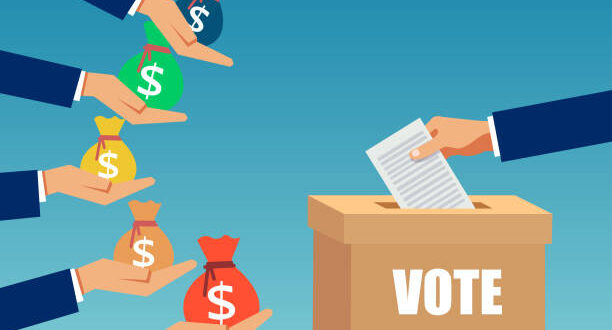
"Buying and selling votes is a crime"
It may sound provocative, but the above slogan (because it is precisely a slogan) is completely meaningless. Moreover, it is elitist, racist and repressive nonsense. However, in the first place, it is illogical nonsense. Because, logically speaking, buying and selling votes simply cannot be a crime. Buying and selling votes is the essence of any democracy. What else is democracy if not a huge market for votes in exchange for promises, most of which are monetary?
Why is vote selling prohibited?
Take a quick look at the election programs of each party. What do you see? From "1000 leva pension" and "2500 leva average salary" to "We will raise the salaries of doctors and teachers", and other evergreens. If these promises sound familiar to you, don't worry: they are taken from very current election programs. What is this, if not an attempt to buy votes and what does vote buying mean? Let's approach it logically and figure out what the scarecrow of liberal democracy is.
To buy something, you first have to offer something in exchange. This thing doesn't actually have to be money, but in the case of vote buying, it's specifically about money. And what are you buying - someone's vote. What is contained in a political promise for, for example, a 1,000 leva pension? There is money offered, there is also a "vote for me" offer in order to realize the offered money.
Where is the difference between buying the vote of someone from the neighborhood for 50 leva and buying the vote of a pensioner for 100 leva higher monthly pension – or some other random number? Where is the difference when you promise higher benefits for children? Thousands of leva in benefits for families to buy electric cars? Of course, we can always assume that we are idiots and therefore do not see the difference in question, but let's not judge ourselves too harshly.
The difference is only one. One purchase (the forbidden one) is simply cheaper . Literally. For the politician himself who is looking to buy a vote, for the state budget and hence for every taxpayer, buying votes for 50 leva per kalpak in the gypsy neighborhood comes out far cheaper than buying votes through promises of higher pensions, salaries or any other budget payment you can think of of that kind.
The ban is illogical.
There is no other difference, except that one transaction takes place in the present tense, and the other in the future. But there is no essential difference. We have a proposal for a monetary payment on the one hand, in exchange for a vote cast on the other. And yet one is illegal and condemned by everyone in politics, and the other is not only legal, but is the foundation of every political program. Common sense is perplexed. What could be the reason for this?
Perhaps the simplest explanation is that cheapness is the leading criterion. Buying votes for 50 leva in a one-time payment per leg is simply too cheap. Profane and even vulgar in some way. As a practice, it sounds too working-class. Yuck! We are above these things. Buying votes should be done with more momentum, with more grandeur, with more finesse and, if possible, be accompanied by a good marketing campaign – with posters and ads on social networks.
But still, one should not overdo the promises, i.e. with good vote buying, because then you will look ridiculous, like Volen Siderov at the time when he promised an increase in the minimum wage from 200 to 2,000 leva.
If vote buying is an art, it has its own quality parameters. There is a golden mean, from which it is simply not aesthetically pleasing to deviate. This is the only logically consistent explanation for the phenomenon that you can buy Grandma Penka's vote for a 100 leva higher pension, but it is not only illegal, but also highly morally reprehensible and even disgusting and vulgar to directly offer her the 100 leva in question. It is these secondary qualifications, outside the purely legal framework, that make vote buying something that is perceived as really bad. Because we all know that there are things that are illegal, but still cool, especially in the eyes of the cultural elite. Vote buying is not one of them.
The ban violates rights and marginalizes
If we have to speak like economists, the ban on buying votes is actually what is called a price floor . In practice, the existence of such a ban means that an individual can only sell their vote from a certain price upwards. If the range of vote buying varies from a vote for a pack of Karelia cigarettes to a vote for tax incentives and subsidies for families with Teslas, the current ban does not allow you to sell your vote for less than 50 leva in food coupons per month, guaranteed to every grandmother personally by Prime Minister Boyko Borisov.
Like any price floor (like the minimum wage, for example ), this ban marginalizes all voters who would sell their vote for less than the practically imposed minimum. It marginalizes them because 50 leva in cash clearly best meets their subjective needs. You can have whatever opinion you want about how adequate the assessment of such people is for their own needs, but the principle is that in a democracy, especially a liberal one, if everyone has a right to something, it is their own opinion and judgment.
All of us, children of democracy, are born with one fundamental democratic right – one person (or even one “soul”, if you will), one vote. And we (should) have the full and free right to dispose of that voice. Yes, the voice also carries responsibility, but the decision about how we take on that responsibility is a personal one. No one else has the right to command and forbid us to use that voice in one way or another.
The maxim “Vox populi, vox dei” (“Voice of the people, voice of God”) does not end with a footnote “But not if it is sold cheaply”. No, the maxim is absolute. Therefore, after its obvious illogicality, the second argument against the ban on vote buying is that it contradicts the fundamental democratic and egalitarian principles of liberal democracy.
The ban is racism.
And since we are talking about marginalization, here we come to another liberal-democratic argument against the ban on vote buying. We all know that there is a significant overlap between the group of voters who sell their votes cheaply and the minority group of Roma in Bulgaria. The ban on vote buying effectively turns tens or even hundreds of thousands of Roma in Bulgaria into criminals.
This is racism. The ban on buying and selling votes turns Roma in Bulgaria into criminals simply because of their political choice. To forbid such a significant part of an ethnic minority from voting because of the nature of their choice is purely and simply a targeted restriction of the political rights of a given racial-ethnic group. But put this way, it sounds too incorrect and uncomfortable, doesn't it?
Yes, it's a roundabout way of saying that, but many of the laws of the Jim Crow regime in the southern states of the United States were not defined as applying only to the black population. Yet their practical effect was that they limited the political participation of precisely this population (in favor of whites). Nowadays, any respected academic historian in the United States will tell you that these laws were racist. By the way, have you heard of "Apartheid"? Limiting political participation, by whatever instrument, is the foundation of any racist regime.
A victimless crime
And since we're talking about criminals, what kind of crime is buying and selling votes? It's as much a crime as buying marijuana. Dude, I just want to smoke a joint after work. Who am I hurting? That's right, no one. Just as smoking marijuana doesn't hurt anyone (except maybe the smoker himself, if he can't wake up for work), buying and selling votes is the quintessential victimless crime.
And just as the ban on smoking simply creates pointless work and generous opportunities for bribes for the domestic police, the ban on vote-buying does the same. And in the same way it gives the police the opportunity to repress and marginalize a group of society at will for actions that do not harm anyone . This, I think, some would rightly call policing. Perhaps even fascism, and with a racist flavor, given the ethnicity of those who most often violate the ban . How would you argue with that?
In short, the ban on buying and selling votes is an illogical, elitist, anti-democratic, racist and perhaps even fascist measure. Need I say more? “ Mr. Gorbachev, tear down this wall!” Fellow citizens, the only thing we would lose are our own shackles!