EKIP– Expert Club for Economics and Politics A Different Opinion
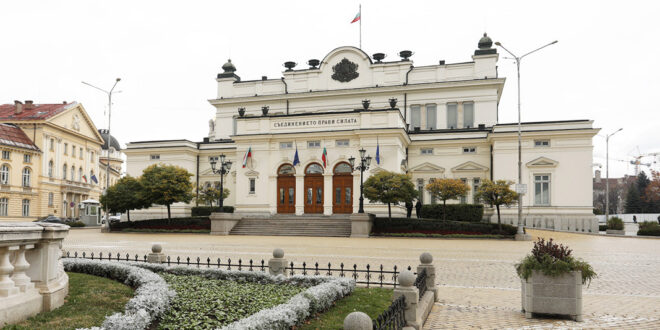
Emotions and feelings inevitably have an impact on the overall socio-political and economic life. It is especially strong at crucial historical moments. This justifies the interest in them. The main questions that will be answered in this text are: when and under what conditions has political life in Bulgaria caused joy, delight and enthusiasm and what are the consequences of them?
We will focus our attention on the activities of the parliament. Its Stenographic Diaries reflect all the political, economic, social and other problems that concerned the ruling and opposition (when there was one). As an indicator of the presence of the mentioned emotions, we will use the cry of “hurray”, registered by the stenographers in the parliament. “Hurray” is a classic battle cry that allows us to identify intense joy, delight and enthusiasm, and its use as a litmus test is justified.
"Hurray" for the loan of the summer of 1914.
In 1914, Bulgaria was recovering from the national catastrophe caused by the loss of the Second Balkan War (1913), and the world was heading towards a new and more terrible war. A coalition of Russophobic parties was in power, and Dr. Vasil Radoslavov was Prime Minister. To overcome the consequences of the national catastrophe, the government sought external credit, and the major economies that were able to provide it were willing to do so in return for some form of foreign policy commitment. In the summer of 1914, World War I broke out and the important players in international politics were looking for allies. The smaller and less developed European countries with unresolved problems were the right clients.
After difficult negotiations, in June 1914, the Bulgarian Finance Minister Dimitar Tonchev signed several contracts with a representative of a consortium of banks led by the German "Disconto Gesellschaft". The first was for a bond loan with a nominal value of 500 million gold francs and 5% annual interest. With the remaining contracts, Bulgaria received an advance of 120 million gold francs, foreign investors received the right to build the important railway line Mihailovo - Haskovo - Porto Lagos (on the White Sea, then within the borders of Bulgaria) and a port on the White Sea, "Disconto Gesellschaft" was given the right to form a company for the exploitation of the state mines in Pernik and Bobov Dol. Through the loan on the eve of the First World War, Bulgaria showed a clear preference for being tied to one of the great powers, which is an important detail.
According to the Tarnovo Constitution, on June 30, 1914, the loan agreements were submitted to the First Extraordinary Session of the XVII Ordinary National Assembly (ONA). Their discussion and adoption took place on July 2. It became one of the most turbulent and scandalous sessions of the parliament. The entire opposition declared itself against the agreements, but the rulers were determined to approve them. They were not interested in the motives of their opponents, but in achieving the ultimate goal. The discussions quickly turned into a fist fight. According to the description in the Stenographic Diaries, “People’s representatives from the right and the right center surround the rostrum and the stenographic table, the representatives of the opposition also jump in… and fight… The throwing of papers intensifies. A volume hits the Prime Minister; some ministers and representatives take the Prime Minister out of the hall… The gathering and fighting around the rostrum and the stenographic table intensifies…” The ruling majority prevails in manpower and imposes its will. Despite fierce resistance, the loan agreements are accepted with enthusiastic shouts of “Hurray” .
In the following months, suspicions about the government's foreign policy preferences came true. Bulgaria became an ally of Germany in World War I, and a second national catastrophe followed. It cost the lives of tens of thousands of young Bulgarians, enormous material costs, and failed national unification.
"Hurray" for the high productivity of the parliament in 1938.
The Great Depression, which began in the autumn of 1929, caused a crisis in the Bulgarian political system. The democratically elected coalition governments, at least on the surface, did not show any expediency or determination. Discussions of legislative and other measures often degenerated into bargaining and abuse of public resources. And competing authoritarian formations eagerly awaited their seizure of power. On May 19, 1934, a military coup was carried out. The parliament and political parties were dissolved, local self-government was liquidated, and freedom of speech was abolished. The established regime had its own internal dynamics, but in some fundamental characteristics it resembled Mussolini's regime in Italy.
Until 1938, Bulgaria was governed by so-called ordinances-laws issued by the Council of Ministers on the basis of Art. 47 of the constitution. According to it, if the state is threatened by internal or external danger and the National Assembly cannot be convened, the monarch "on the recommendation of the Council of Ministers and under the general responsibility of the Ministers, may issue ordinances and make orders that have the binding force of law. Such emergency ordinances and orders shall be submitted for approval to the first National Assembly convened thereafter." The extent to which this article is correctly applicable to the situation in the country from May 1934 until the convening of a new parliament in May 1938 is debatable. An important emphasis in the constitutional text is that all acts of the Council of Ministers must be submitted for approval by the parliament after the end of the state of emergency.
During the First Extraordinary Session of the XXIV ONS, the Minister of Justice Il. Kozhuharov submitted for approval the ordinances, temporary ordinances, ordinance-laws, decisions and decrees issued on the basis of Art. 47 of the Constitution for the period from May 19, 1934 to May 31, 1938. In the Motives to his proposal, the Minister is categorical that a complex of legal norms has been created for this period. They "regulate and largely build the legal and economic life of both the state and the individual citizen". The discussion of the proposal took place on June 1 and 3, 1938. The opposition members of parliament subjected the Minister's proposal to severe criticism. Well-founded legal arguments were pointed out by Prof. P. Staynov. He pointed out that among the ordinance-laws submitted for approval there are those that openly contradict the Constitution, which has not been repealed. S. Tsanov notes that a parliamentary approval of hundreds of normative acts at once renders the very existence of the National Assembly meaningless. They ironically state that the Council of Ministers has not even provided the deputies with a list of the ordinances-laws and other normative acts. Their words were ignored by the majority and Minister Kozhuharov's proposal was accepted with shouts of "Hurray" and stormy applause.
With one vote, 1,138 ordinances, 527 decrees, 88 agreements and contracts, and 8 decrees were legalized, a total of 1,761 decisions of the Council of Ministers. The productivity of labor is impressive, but it calls into question the purpose of parliament.
"Hurray" for the alliance with Hitler in 1941.
In September 1939, World War II broke out. Most of the Bulgarian rulers sincerely sought to maintain neutrality. The memories of the mistakes and sacrifices in the second decade of the 20th century are painful for many Bulgarians. As the hostilities progressed, this became increasingly difficult. Bulgaria was squeezed between the geopolitical and military-strategic interests of Germany and the USSR, which were allies at the beginning of the war.
The government, led by Prof. Bogdan Filov, began negotiations for an alliance with Germany. On March 1 (Saturday), 1941, at the Belvedere Palace in Vienna, Filov signed a protocol for Bulgaria's accession to the Tripartite Pact, i.e. for a de facto alliance with Hitler. The next day, the Prime Minister returned to Bulgaria, where a meeting of the XXV National Assembly was convened, opened at 6:15 p.m. The protocol for accession to the Tripartite Pact, which was very short, was read to the members of parliament. The Stenographic Diaries laconically noted " All members of parliament stood up, applauded violently and for a long time and gave the government a long ovation with shouts of "hurray ". Opposition deputies P. Staynov and N. Mushanov asked to speak, but were drowned out by new shouts of "hurray". The meeting ended at 6:32 p.m. and was closed again with prolonged "hurray" and thunderous applause. In a total of 17 minutes, it was decided that Bulgaria was abandoning its neutrality.
From the distance of time, it is easy to condemn the approval of the alliance with Hitler in March 1941. It was a mistake, but it should be noted that huge German troops were stationed on the northern Bulgarian border and refusal to join the Tripartite Pact would have meant the occupation of Bulgaria. The enthusiasm and joy of the majority of deputies at joining the pact, however, is certainly a servile exaggeration. Moreover, at the end of the war, Bulgaria was again among the defeated.
Closing remarks
The presented facts are indicative in several aspects. Emotions prevail at critical moments and refer to decisions taken by a parliamentary majority under the pressure of a strong executive branch. In all three cases examined, the consequences of the decisions have a negative impact on the fate of Bulgarian citizens. Emotions and feelings lead to silencing and dealing with those who disagree, they neglect the meaning of discussions and opposing arguments. This is followed by binding with losing coalitions that defend dubious values. Obviously, the presence of a majority is no guarantee for making the right decisions. Mistakes are costly and are a path to national catastrophes. Last but not least: they call into question the meaning of an independent legislative branch.
This has been the case in the past. It remains to be seen whether, for example, the eventual adoption of the euro will pass through the National Assembly and whether it will be greeted with "hurray."