EKIP– Expert Club for Economics and Politics A Different Opinion
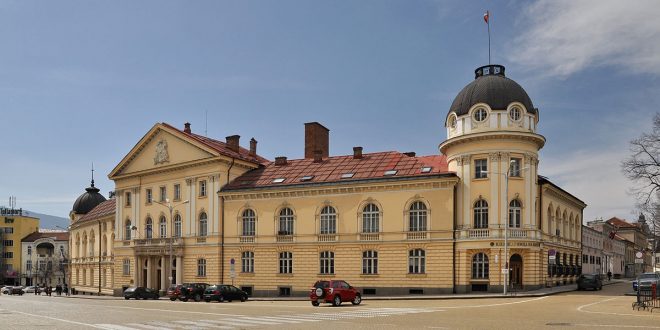
State money for the Bulgarian Academy of Sciences is a topic on which no matter what anyone says, it will still be wrong. This is because there are two completely opposite, but equally correct points of view. On the one hand, it is really not right for someone to receive money without working for it - in this sense, it is extremely important to pay special attention not only to scientific, but also to development activities and practical implementations of innovations... which at the moment are far from the required level.
On the other hand, it cannot be denied that science is not measured by money only in the short term – sometimes decades pass before an idea is realized. Somewhere in the middle between the two conflicting theses stands tradition – a centuries-old tradition that should not be thrown away lightly. In the end, it turns out that the situation is not at all rosy – the Bulgarian Academy of Sciences must exist, but it is not normal for it to exist in its current state.
Scientific activity must be linked to business
Years ago, Minister Simeon Dyankov had an idea to connect the Bulgarian Academy of Sciences with universities. Most scientific centers around the world are built in this way – some are higher education institutions. This idea is banally simple and has been in effect since higher education has existed at all – students, through their fees and additionally as bearers of state subsidies, should financially support not only the teaching team and the material base, but also support the scientific and development activities of the purely scientific units there. These are universities in which master's and doctoral programs are not only considered as a tool for self-reproduction of the university staff, but also as a real resource for generating practically useful innovations that are in partnership with business.
However, this idea failed and there is a good reason for this – the universities themselves continue to experience financial difficulties to this day, so for them the inclusion of such scientific units would be more of a burden than a positive. Reforming scientific institutes requires a lot of funds and investments, which our relatively small and poor universities do not have. In other words, such a dissolution of the Bulgarian Academy of Sciences would lead more to the mass closure of institutes, rather than to their recovery. This is precisely the big problem. And the fact that the current leadership of the Bulgarian Academy of Sciences would be against it, because for them this means a loss of power, is obviously a less serious case.
The existence of separate, entirely scientific institutes, without being part of a higher education institution, is also not a rarity in the world. Just mentioning the iconic Bell Labs is a sufficient example that this can not only happen, but scientific work can turn into an extremely successful business for hundreds of millions of dollars. That is, to claim that the BAS model is dead by design cannot be true. The problem in our country is what is repeatedly repeated by politicians (yes, sometimes they say true things) - the connection between business and science is missing.
Currently, the Bulgarian Academy of Sciences is too dependent on state subsidies.
The creation of Sofia TechPark was an attempt to build some kind of such bond. Many people gloat over the failures of this project, but I will be more restrained – I think it is still too early to label it as a complete failure. However, should we pressure the state to give money for more and more such projects? No, obviously we should not– expectations for such projects are justifiably negative. Can we force business to invest in our scientific institutes? No, obviously this cannot happen either.
Where then is the way out of this situation? The way forward for the Bulgarian Academy of Sciences should be aimed at breaking away from dependence on state subsidies, and not at the opposite - more and more "state money for science". There is nothing wrong with the state supporting science. It is bad when science is entirely dependent on state support. Scientific centers are obliged to find a way to finance themselves - otherwise they are doomed to inevitable and painful bankruptcy. It is easy to write in words. But how to implement it?
One way is by chance. We support the Bulgarian Academy of Sciences with state money and hope that something ingenious will be created there out of the blue. The other way is through economic growth of the state as a whole (so that companies can have more financial resources) and a reduction in the tax burden (so that companies can free up resources for investments in innovations). In any case, however, I firmly believe that the scientific institutes of the Bulgarian Academy of Sciences should not be closed and wasted. A prestigious scientific institute is built either with a lot of money in one go, or with many years of accumulated experience and traditions. Both are expensive pleasures, but the second at least is paid in installments.
If the funding method is not reformed, science will continue to suffer
In the current state of affairs, the Bulgarian Academy of Sciences is dying - there are no young people. Money from business will not come with a magic wand, that is, it will not come soon. Raising taxes for additional subsidies in the direction of preserving scientific institutes will be a measure in the opposite direction. That is, we have a vicious circle with no easy way out. At such moments, one begins to look for "out of the box" solutions.
One such decision is again related to subsidies, but this time from a different perspective – not to their increase or decrease, but to their distribution. And yes, it is here that Bulgaria has the potential to seriously support the Bulgarian Academy of Sciences. Currently, our secondary and higher education institutions are oversubscribed. The state order in universities is greater than the number of applicants. In addition, even the small paid education that exists in state higher education institutions is also regulated by a fee ceiling. It is obvious that this is some kind of absurdity, in which an awful lot of money is wasted, for which we often receive dubious quality. The state could save a lot of money if:
- Drastically reduce the number of government procurement positions in non-priority specialties (and do not be tempted to make the lame, the crippled, and the crippled a "priority");
- Liberate regulations over paid education and allow universities to organize it at their own discretion - there is no need for state control over this, because the people who will pay for it from their own pockets will naturally control the quality themselves.
This way, there will be a positive outcome in two directions - first, state universities will improve their quality, because they will now have to strive to take the money of the end user, not that of the state budget, and second, there will be freed up financial resources with which to finance much more scientific and development activity - both at the Bulgarian Academy of Sciences and at these same universities.