EKIP– Expert Club for Economics and Politics A Different Opinion
Five-year plan is the abbreviated name of the five-year plans, through which economic development is centrally controlled and planned under socialist conditions. That is why the socialist countries of Eastern Europe are often called countries with central planning, although five-year plans also exist outside the Eastern Bloc. The implementation of the economic goals set by the political leadership implies a high degree of state control over economic resources, i.e. the elimination or limitation of private ownership of the means of production. In this sense, the presence of comprehensive state planning is rightly considered a basic, albeit secondary, characteristic of socialism.
When was the first Bulgarian five-year plan developed?
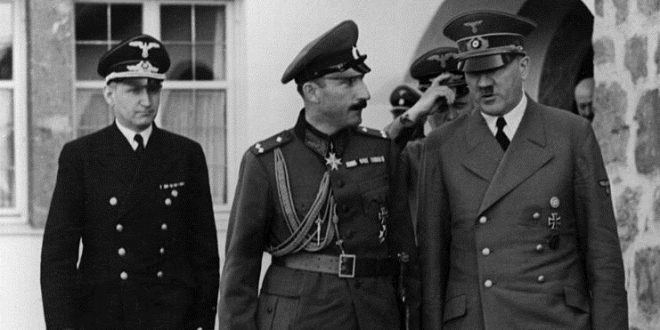
The first five-year plan for the Bulgarian economy was developed in 1941, before the communist-dominated Fatherland Front coalition came to power .
This statement differs from the traditional narrative of Bulgarian socio-economic development. According to it, for the first time, a comprehensive five-year plan was implemented under the conditions of the prevailing Stalinist model of socialism from 1949 to 1953. It was preceded by the abolition of large private land ownership, the nationalization of industry and banks, the liquidation of the stock exchange, etc. According to the imperative statements of the five-year plan, the main state investments were directed to heavy industry.
The first five-year plan is a sure sign that Bulgarian society is embarking on the path of socialism. However, the beginning of the five-year planning was not in 1949, but in 1941, when the Fatherland Front had not yet been created, and governments were being appointed and heavily dependent on the will of Tsar Boris III.
The idea of five-year planning did not appear out of nowhere. After the end of World War I (1919), Bulgarian economists debated the possibility of implementing planning in the country's economy, but did not reach a consensus. Even skeptics about the possibilities of planning under capitalism seemed to be more numerous. With the beginning of World War II (1939), the ideas of planning and comprehensive state control over the economy strengthened and acquired practical dimensions. At the end of 1941, a General Conceptual Plan for the Electrification of Bulgaria was completed, according to which the power lines were state property, and electricity production and distribution could be left to private or public initiative. The ideas of planning in industry became part of the negotiations of the Bulgarian side with representatives of Germany for coordinating the economic development of the two countries in 1941.
These were not yet five-year plans, they concerned relatively unimportant sectors of the economy at that time. The full name of the five-year plan developed in 1941 was the Five-Year Agricultural and Economic Plan. It referred to the guidelines of the state policy in agriculture for the period 1942-1946. And agriculture was the most important sector in the structure of the Bulgarian economy. The initiator of the plan was the Minister of Agriculture Dimitar Kushev. He appointed a commission of 16 people, which after six months of work submitted the document to him.
Content characteristics of the first five-year plan
The plan consists of three parts. The first is dedicated to agriculture, the second to forests, and the third to the daily life of rural residents. A curious detail is that all printed volumes of the plan are marked as “strictly confidential”. Wartime conditions somewhat justify the secrecy. Access to the contents of the five-year plan is limited to a limited circle of privileged people, considered by the government to be specialists. Apparently, part of the philosophy of the authors of the Plan is the view that a small number of professionals are able to direct and organize the lives of the mass of the Bulgarian population. The state authorities obviously assume that the “competent authorities” are able to best anticipate the individual goals and desires of each participant in economic life.
From a substantive point of view, the Five-Year Agricultural and Economic Plan contains systematized information on the state of land ownership and the main agricultural productions. The plan is based on the well-known fact of the small-scale nature of Bulgarian agriculture, the fragmentation of land ownership and the presence of huge hidden unemployment for the scale of the country, etc. The proposed measures for the modernization of agriculture are well known in the economic policy of Bulgaria from the interwar period (1919-1939). They consist of the distribution of interest-free loans, subsidizing and purchasing of production by the state, state measures to encourage the production of seedlings, effective plant protection, land consolidation, construction of melioration facilities and the like.
Probably the most important goal of the plan is to provide land to landless and landless rural households. This goal is not new, because as early as the early 1920s, the populist government of the Bulgarian National Socialist Workers' Party (BZNS) made an unsuccessful attempt to achieve something similar. To achieve this goal of the plan, a need for 18 million decares of land was established. It was estimated that they were sufficient to create viable farms. Such farms were considered to be farms with 50 decares of land. However, this goal of the plan is unachievable, although this is not clearly stated anywhere. The detailed calculations of the authors of the five-year plan show that the arable land that can be put into economic turnover is about 12.65 million decares, i.e. there is a shortage of almost 5.5 million. This makes it clear that the measures provided for in the Plan, even if implemented in their entirety, will not resolve fundamental economic and social problems in the country.
Analysis of content characteristics
A careful analysis of the Five-Year Agricultural Plan leads to the identification of four groups of measures, ideas, and policies that are essentially anti-capitalist:
A) Critical attitude towards the market and specific market mechanisms. The plan clearly states a negative attitude towards trade. For example, it is believed that the methods used in the trade in tobacco products create chaos in the market. Therefore, it is envisaged to deepen the centralization of tobacco purchases. Another emphasis in the plan is the claim about the harmful role of intermediaries, who reduce the profits of agricultural and livestock producers. For this reason, measures are envisaged to limit them and, if possible, to completely isolate them from contact with producers.
B) Decisive role of the state and state economic initiative. This characteristic of the Plan is present directly or indirectly in all its parts. In very rare cases, state initiative or economic activity is envisaged to support private, usually private initiative is relied on in individual cases to support state economic activities, and then to a limited extent.
C) Neo-mercantilism. One of the main principles of the plan is the desire to satisfy domestic consumption above all else and to limit the import of various goods and raw materials into Bulgaria.
D) Collectivism. Among the most easily distinguishable characteristics of the Five-Year Agricultural Plan is that in almost all of its parts preference is given to collectivist economic forms and activities. The interests of individual individuals or companies are left in the background and often not discussed at all. Sometimes it is even envisaged to resort directly to violence against them.
Where does the first Bulgarian five-year plan lead?
None of the above groups of anti-capitalist measures, ideas and policies in themselves means a direct aspiration to impose socialism. In their assessment, however, it must be borne in mind that they are not independent, but are part of an overall Plan, i.e. they are intended to act in combination, mutually reinforcing each other. The main result of their synergy, without necessarily being declared in the plan, is an acceleration of the escape from capitalism, which in turn is nothing other than a movement towards socialism. The Five-Year Plan has not been implemented. The reasons for this are many, but none of them is due to the fear that the Five-Year Agricultural Plan is a step on the path to socialism.
In a previous article, I noted that a consequence of the long-term economic policy of the Bulgarian state in the late 19th and early 20th centuries was the preparation for the establishment of a socialist economic model ( see here ). However, a number of smaller, concrete practices also led to the establishment of socialism. Among them is the first Bulgarian five-year plan. Even that does not yet mean that socialism is inevitable. After all, central planning also existed in countries that do not define themselves as socialist. However, the accelerated movement towards a regime without private ownership of the means of production is an indisputable fact.