EKIP– Expert Club for Economics and Politics A Different Opinion
The peculiarities of political life are such that the most adaptable survive in it, and they are usually not the smartest, most honest, most talented, or most worthy representatives of the human race. Natural selection in the political jungle often brings to the fore people with questionable moral qualities. There are exceptions to this rule, of course, and they deserve attention, because politics and government are an inevitable part of the social structure. And it needs exceptions.
Grigor Nachovich's Unrealized Projects
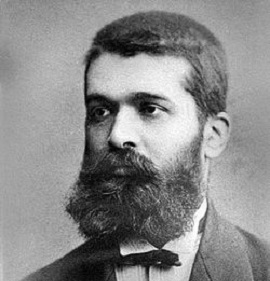
Among the early rulers of the Principality of Bulgaria, who cannot be classified as typical Bulgarian (and not only) politicians, is Grigor Nachovich (1845-1920). He is among the few involved in the construction of Bulgarian statehood who can be defined as classical liberals. Nachovich is not perfect, but his shortcomings are significantly less than his positive traits.
Born in Svishtov, he studied economics in France and Vienna, participated in some of the liberation actions of the Bulgarians before the Liberation. After the establishment of the Bulgarian Principality, he held responsible positions in its administration - Minister of Finance, Minister of Foreign Affairs, Minister of Agriculture, diplomatic agent of Bulgaria in Constantinople, etc. It was in the capital of the Ottoman Empire that he participated in the negotiations and had a major role in the signing of the Bulgarian-Turkish agreement of 1904. According to his statements, the Bulgarians from Macedonia and the Edirne region, who had fled to the Principality of Bulgaria after the suppression of the Ilinden-Preobrazhenie Uprising (1903), were given the right to return to their native places without being bothered by the authorities. Thus, over 15,000 Bulgarian refugees returned to their homes.
However, this is not what makes Nachovich an atypical Bulgarian politician. The sources of his unusualness lie elsewhere. In his diaries and in his published research, in his initiatives regarding the economic organization of Bulgaria, he makes important suggestions and observations. They explain some of the peculiarities of political life and economic failures. Therefore, they deserve attention.
From the point of view of economic development, Nachovich proposes, but fails to impose, the transformation of the BNB into a joint-stock bank with the participation of foreign private capital. A similar proposal was made with regard to another large and essentially state-owned bank - the Bulgarian Agricultural Bank. In his opinion, the transformation of these banks into joint-stock banks will reduce the possibilities for party-political influence in their activities, will increase their capital and will help impose better standards in the development of credit in the country. Another element of his views - Nachovich notes that the huge municipal lands and forests for the country's scale only contribute to their devastation and plunder. He declares himself in favor of their transformation into private property or in individual cases for their long-term lease. The organization of state agricultural education is also criticized, and it is pointed out that by 1900, 760 boys had graduated from state agricultural schools. However, only 36 of them work in private agriculture. The rest have become teachers and government officials...
The inconvenient truths
At the beginning of 1885, Nachovich bitterly noted in his diary: “ A person cannot expect loyalty and gratitude from gluttons; as long as you help them, you are good, because they exploit you. As soon as you stop being able to help them, you immediately become bad.” These words are not usual for a politician who absolutely wants to be elected and re-elected to his post. If he is a true “democrat,” then the candidate for public servant should try in every way to please his masters. Nachovich’s words sound heretical against the background of the poor’s writings and myths, with which socio-political thinking in Bulgaria has been overgrown both before and now. In it, the virtue of the poor is rarely questioned, and the presence of positive moral characteristics is a priori considered their monopoly. Nachovich, however, is clear: among the poor, for a number of reasons, unpleasant qualities can and do occur.
The characteristics that Nachovich makes of individual classes and individuals from Bulgarian social and political life are worthy of attention. The military class in the country is characterized in the following way: " In no other class have I observed such petty envy as among our military." Not that everyone is like that, but according to Nachovich, in the class of Bulgarian officers there is a champion in the not very noble competition in pettiness and envy of one's neighbor. Even more interesting are the characteristics that Nachovich makes of Stefan Stambolov. For a number of reasons, Stambolov continues to be considered by both specialist historians and laymen as the most remarkable Bulgarian statesman. Yes, he had some shortcomings, but overall… Here is what a careful observer like Nachovich says: “ Stambolov hated rich and independent people, especially when they did not belong to his party…” and more from the same: “ He fears the enrichment of the Bulgarians, so that they do not become more characteristic and more independent; he wants their nakedness, so that he can more easily command them.” This contains a large part of the explanation for the constant failures in attempts at positive economic development. Politicians, symbolized especially vividly by Stambolov, do not like rich people outside their parties. Political leaders, not the market and the satisfaction of consumer demand, impose themselves as the distributors of wealth. They determine who, how much and for how long will control the national wealth. Ultimately, a rich society means a high degree of independence, something that no politician, Bulgarian or not, can like.
The last of the unrealized "projects"
At the end of 1918, the name of Grigor Nachovich was associated with another unrealized project. In order to understand the meaning of this project more clearly, it is good to say a few words about the overall historical context. At the end of 1918, Bulgaria had just emerged from the First World War. And it was defeated. However, this was not the only problem. In the second decade of the 20th century, Bulgaria suffered two national catastrophes. Both were related to the loss of wars, of territories, and the accumulation of refugees from the various regions that remained under foreign rule. The country was economically exhausted, disillusioned, crippled. And this is assessed by Grigor Nachovich as a result of the overall policy after the Liberation.
Shocked by the depth of the pogrom and the overall social decay, on December 24, 1918, Nachovich wrote a letter to Dominic Murphy, the US Consul General in Bulgaria. In his letter, the Bulgarian politician raised the idea of Bulgaria becoming part of the USA. Nachovich accepted the United States as a model of a state organized according to the principles of classical liberalism. The main parameters of the accession were developed in six points. It should be for a period of 50 years, receive the sanction of the victorious countries in World War I, and provide for the possibility after the expiration of the 50-year period, with the consent of Bulgaria and the USA, for the country to continue to be part of the USA. Nachovich wrote: “ Considering that the people in the government of the country [ Bulgaria, b.m. P.P. ] are often inexperienced and dishonest and allow or intentionally participate in abuses harmful to the population,” it is necessary for the legislative bodies of both countries to appoint a High Control Commission. It will monitor compliance with the laws, investigate abuses, and investigate complaints from citizens. According to Nachovich, Bulgaria will have its own constitution and legislative bodies. However, the administration and army will be in the hands of the allies; without the consent and support of the United States, Bulgaria will not be able to declare war.
Nachovich's words from 1918 are not national betrayal. They are a cry of despair from a sincere patriot who participated in the building of Bulgarian institutions, defended the interests of Bulgarians abroad, and who saw everything he believed in collapse.
Closing remarks
The unrealized alternatives and missed opportunities in Bulgarian history are many. Even too many. Undoubtedly, not all of the possible alternatives would have brought positive results. From the point of view of the proposals made by Grigor Nachovich, it seems that most of his unrealized projects (except for the one for joining the USA, because even Nachovich himself hardly harbored illusions about its realization) are part of the ideas that deserved a better chance. However, the peculiarities of political life are such that good very rarely wins.