EKIP– Expert Club for Economics and Politics A Different Opinion
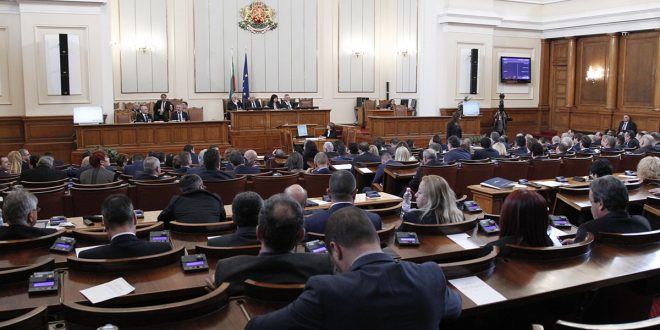
This Friday (29.06) representatives of the GERB parliamentary group, led by Menda Stoyanova (who is also the chairwoman of the Budget and Finance Committee) submitted a bill to unify the excise tax on sticks for the newly launched IQOS product for "smokeless smoking" and conventional cigarettes. The measure is surprising because it goes against what is happening in the rest of Europe and in general the need for such tax harmonization is devoid of sufficiently convincing argumentation. That is why speculations about lobbyist interference immediately appeared in the media. In this article, we will analyze the proposed bill and the gravity of such accusations, but first, let's answer the main question.
What is IQOS ?
First, it is important to understand that these are not classic e-cigarettes. E-cigarettes heat nicotine liquid, while IQOS sticks (which at first glance look like just shorter cigarettes) contain tobacco. However, this tobacco is processed differently than that in regular cigarettes and, like the liquid in e-cigarettes, it is only heated and not burned (hence the name "heat not burn" in English for this type of product). In practice, what this new device does is simply heat tobacco without burning it, and so smoking is done without inhaling the smoke that is released when a cigarette burns. Some smoke is still released, but because the tobacco is only heated and not burned, this smoke contains fewer toxic substances and, accordingly, should be less harmful. This is the main advantage of this type of product, which Philip Morris, the company that produces it, highlights in its marketing.
It is important to note that studies have not yet proven for sure whether IQOS cigarettes are safer than standard cigarettes for smokers themselves. Yes, many studies indicate that IQOS sticks are indeed safer than standard cigarettes. The problem is that many of these studies were sponsored by Philip Morris (the company that manufactures them) and accordingly there is still skepticism about their credibility. Some scientists criticize these studies and question their conclusions, and the FDA (Federal Drug Administration of the United States) still refuses to classify IQOS as safer than classic cigarettes due to a lack of sufficient definitive evidence.
In any case, one thing is certain - IQOS are not more harmful than standard cigarettes. The only dispute is whether they are safer for smokers. In this regard, only time can tell. From a personal impression - this type of cigarette does not smoke as much and the smoke that it emits when heated is definitely not as thick and does not irritate the respiratory tract as much as regular cigarettes. And they do not smell as bad. It definitely seems like they are safer, but for now we cannot be 100% sure.
What is the practice in Europe and what is offered in our country?
The European Commission refused to harmonize the excise duties imposed on conventional cigarettes and the new IQOS product precisely for this reason. This is a quite reasonable decision on the part of the EC and somewhat surprising given the tendency of this institution to impose increasingly burdensome and unjustified regulations. Given that there is a chance that this product will turn out to be less harmful than classic cigarettes, it is not justified to treat it with the same punitive levels of taxation from now on.
Our native politicians, however, as it became clear, clearly have a different opinion. On 29.06, the GERB parliamentary group submitted a bill to harmonize the excise duty between conventional cigarettes and the new IQOS product, which, by the way, entered the market in Bulgaria only in the last 6-9 months. The practical result of this is that the price of IQOS cigarettes could almost double and from 5.5 leva. currently become nearly 10. Such a colossal jump in price could completely push this product out of the market and return all those who consume it to conventional cigarettes.
How strong is the argumentation of the bill?
The reasons in support of this measure are quite unclear. The argumentation from the importers is generally limited to the fact that IQOS is also a tobacco product. And therefore it should be taxed like cigarettes. Yes, it is a tobacco product, but the main argument for the extremely high excise taxes on cigarettes is that they are harmful to health. This is also the logic of the European Commission and our country. It is precisely following this logic that the EC has refused to harmonize the excise tax for now, following the principle of "innocent until proven otherwise". That is, until it is proven that IQOS is as harmful a product as regular cigarettes, there is no reason to tax it in the same way. This is the reasonable approach.
Of course, there is also the argument that the state should have no role in determining who consumes what and to what extent. Attempts by state authorities to "promote" public health through more restrictive regulatory or tax regimes on this or that product do not yield any significant results, and a look at the NSI statistics proves it. A review of the dynamics of the percentage of smokers in the NSI statistics proves it - raising excise taxes does not lead to fewer smokers.
But that's another topic. The question remains - why did our government decide not to follow the logic of "harmless until proven harmful", but to directly tax the new product with the same penalty levels without evidence that it is as harmful as regular cigarettes? From a fiscal point of view, this measure also does not make much sense, for a very simple reason. It creates an incentive for smuggling the IQOS product from other European countries where such harmonization does not exist and where this type of cigarettes would be cheaper if we harmonize tax rates. If the proposed bill is adopted, Bulgaria would be the only country in the EU with 100% harmonization of taxation of conventional and smokeless cigarettes.
The balance sheet – what are the potential effects of harmonization?
If current legal sales of IQOS sticks were replaced by smuggled imports, this would represent a 100% loss of any potential tax revenue from the sale of such products. This includes not only excise duties, but also other taxes such as VAT. Yes, the market share of this type of product is still extremely small because it is new, but it has serious potential to grow because it is rapidly gaining popularity in the West.
And this is where the key is most likely. The purpose of harmonization is most likely neither to protect public health nor to increase state tax revenues, but simply to protect someone's market share. In a word - protectionism. And like any protectionism, this is a measure to the detriment of consumers and in favor of a certain producer(s). In this case, an obvious winner, for example, would be Bulgartabac.
Harmonization of excise policy would push the new IQOS product out of the market and prevent Philip Morris from potentially expanding its share of the domestic cigarette market at the expense of other manufacturers. Given the lack of adequate arguments in support of this bill, this seems like the most logical conclusion – someone has lobbying to secure a protectionist measure in defense of the current status quo on the tobacco market. Ultimately, when we draw the line, the potential negatives of this bill for consumers and taxpayers outweigh the potential positives (which are not at all clear).
And to top it all off, if this bill is passed, it would be yet another extremely bad signal for all potential investors in Bulgaria, foreign and domestic (but especially foreign). It would be a signal that trying to innovate in our market is a very risky endeavor, because the government is clearly very susceptible to lobbying pressure from established players. Then let's not wonder why the level of foreign direct investment is low and continues to fall. Because of such policies.