EKIP– Expert Club for Economics and Politics A Different Opinion
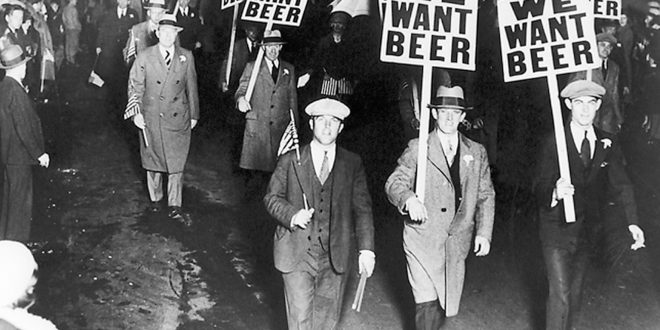
Prohibitions have been part of the history of mankind since biblical times. Their emergence and public acceptance or rejection are the result of a long evolutionary process. In fact, the past abounds with examples in which attempts by a state or other authority to impose some restrictions ended in failure. The most popular is probably the attempt to introduce the so-called "prohibition" in the USA. With an amendment to the constitution in 1920, the production, import, export, trade and transportation of any alcoholic beverages was prohibited in the country. The results of the prohibition were opposite to those expected - alcohol consumption did not decrease, conditions were created for the emergence of organized crime, mortality related to alcohol consumption increased, its price increased, the economic interests of alcohol-producing regions were severely affected, etc. Therefore, in 1933, the prohibition was abolished.
Political Economy of Prohibitions - Bulgarian Dimensions
In the Bulgarian economy in the 19th and early 20th centuries, restrictions were relatively few. The Tarnovo Constitution did not prohibit the carrying of weapons, the production and sale of alcohol, tobacco, or other similar agricultural crops.
Even before the Liberation, poppy was grown for opium production in regions that are now part of Southwestern Bulgaria and the Republic of Macedonia. The first successful attempts to cultivate it were made in the 1830s. The natural and climatic conditions there turned out to be extremely suitable and the crop brought significant monetary income to the local population. This is also reflected in the Bulgarian literary classics - Avram Nemtur, the father of Nia from Dimitar Talev's "The Iron Lamp", was involved in the poppy trade and earned a good living. Representatives of the authorities even looked for a way to encourage poppy cultivation. In the 1880s, the district governor of Stara Zagora, Atanas Iliev, expressed regret that this "precious plant" was not grown in the district and recommended that the Agricultural School in Sadovo prepare a short and clear guide on how to grow it. There were no negative effects of opium use in Bulgarian society during this period. It is exported to Europe or the East.
The time of prohibitions came after the end of World War I (1919). Their justification varied, and sometimes none at all. In any case, however, the prohibitions were part of a mass retreat from liberal economic and political principles. Often, the prohibitions were directly caused by foreign intervention or by imitation of what was happening in more advanced European countries and the United States.
Among the prohibitions that deserve attention is the one introduced by the Law on Disarmament of the Population in Bulgaria, in accordance with the Neuilly Treaty. The law was voted and published in the State Gazette on July 18, 1922. The country is governed by the populists of the Bulgarian Nationalist Union. By virtue of the legal provisions, the Bulgarian population is prohibited from possessing combat weapons, such as those in service in the Bulgarian or any other army, as well as revolvers. The trade in hunting weapons and their use is permitted within the country. The only objection to the adoption of the law in parliament was made by the communists. Led by demagogic motives, they correctly noted that by virtue of the Neuilly Treaty Bulgaria is not obliged to adopt such a law, which is characterized as oppressive and unconstitutional.
The next ban came with two laws adopted in the second half of the 1920s. On July 27, 1925, the Law on Amendments and Supplements to the Law on the Improvement of Agricultural Production and the Protection of Field Properties was published. In addition to Art. 9, the following text was unexpectedly included: "... the import, sowing and distribution of Indian hemp (cannabis indica) is prohibited". The formulation of this law is not accidental, because it was further developed in 1929 in the Public Health Act. The draft of this law was submitted to the 22nd Ordinary National Assembly in its first regular session in 1927-1928. Art. 308 literally repeats the 1925 ban, with the important addition that "Only drugstores and pharmacies may import herba cannabis indica and preparations thereof for medical use". In the next Art. Article 309 of the same law prohibits “the preparation, import, distribution and trade of smoking preparations prepared with opium or with the resin of cannabis indica (hashish).” The explanatory notes to these laws and later in the parliamentary discussion for their adoption lack explanations for the emergence of these prohibitions.
One of the early drafts of the Public Health Act provided for a complete restriction on the use of alcohol. According to contemporaries, he set himself the goal of making Bulgaria “dry”, i.e. to introduce a regime similar to that in the USA. Extremes of a similar nature were avoided, but the joint action of three laws – on public health, on excise duties and patent fees, and on consultation of the people on municipal affairs – made it possible to introduce a dry regime in individual settlements. For this purpose, it was necessary to hold a local referendum to close the pubs. The legal provisions were used by active supporters of the temperance movement. It is known that after referendums, a dry regime was introduced in a number of villages. Among them, one can mention the village of Lomets (Troyansko), the village of Voynitsi and the village of Komoshtitsa (Lomsko), the village of Mekish (Tarnovo), the village of Dushevo (Sevlievo), the village of Vlahovyr (Belogradchik), the village of Mirkovo (Pirdopsko), the village of Kocherinovo (Dupnish region), the village of Urbabintsi (Kul region), etc. An unsuccessful attempt to introduce a dry regime was made in Lom and Samokov.
In the referendums to close pubs, for the first time in Bulgarian history, women were given the right to vote. This is probably one of the reasons for their success from the point of view of opponents of alcohol consumption. Available information shows that they were supported by cooperatives and sometimes by local communists.
The results of the prohibitions
The disarmament of the Bulgarians under the 1922 law was carried out at the insistence of the victorious countries in World War I. However, it did not yield any particular results, because it failed to prevent the September Uprising (1923) inspired by the USSR, and the subsequent robberies, murders and atrocities by communist-inspired bandits.
The cultivation of poppy for opium poppy was essentially placed under strict state control and, although it did not disappear, its importance decreased in the following years. The categorical ban on Indian hemp failed to achieve the expected effect. This is evidenced by two documents from the Ministry of Internal Affairs and Public Health. In February 1931, the then Minister of Internal Affairs Andrey Lyapchev sent a report to the representatives of the central government in the regions. In it, he found that the peasants in some regions were sowing several acres of Indian hemp "deceived by interested traders and smugglers". The minister reminded that its cultivation was prohibited and that violators would be punished. A few years later, the Minister of Internal Affairs Iv. Krasnovsky again drew the attention of his wards to the need to strictly observe the ban on the cultivation of Indian hemp. These findings and recommendations from the central government are proof that the legal ban was not being observed.
There is little more specific information about how the introduction of a dry regime affected individual settlements in the country. In 1931, the Plovdiv district doctor Dr. N. Kanchev noted that in villages with closed pubs there were "cafes, where instead of coffee, brandy is poured into coffee cups and the "cafe owners" in the back room supposedly welcome guests, but they are given alcohol to drink!". As early as 1928, in parliament, the deputy from the ruling majority of the Democratic Alliance R. Madzharov stated that with the closure of the pubs, the state had lost taxpayers, and instead of in the closed pubs, "we are still drinking, but in other establishments, with people saying "Give us white or red lemonade"" (obviously referring to brandy and wine). In the village of Lomets, new illegal pubs appeared in private homes in place of the closed pubs, and some of the villagers went to drink in neighboring villages. Thus, in 1932, the village decided to abolish the prohibition regime and reopen legal pubs. The local temperance activist Hristo Taslakov wrote on this occasion, "Referendum and administrative measures do not help sober up the people" [1].
Closing remarks
Alcoholism and drug addiction have undeniable negative social and economic effects. Weapons of war are designed to kill. However, their direct legal prohibition does not solve existing problems. It has the potential to create new ones that are even more difficult to solve. Through prohibition, the state is trying to seize the moral and ethical functions of religion, of voluntary organizations that are called to combat these vices through persuasion and moral sanctions. Thus, it swallows up and destroys the weak beginnings of self-organization, private initiative and civil society.
[1] I express my heartfelt gratitude to Mrs. E. Avdzhieva, director of the Museum of Folk Crafts and Applied Arts – Troyan, for the information provided about the dry regime in the village of Lomets, Troyan region.