EKIP– Expert Club for Economics and Politics A Different Opinion
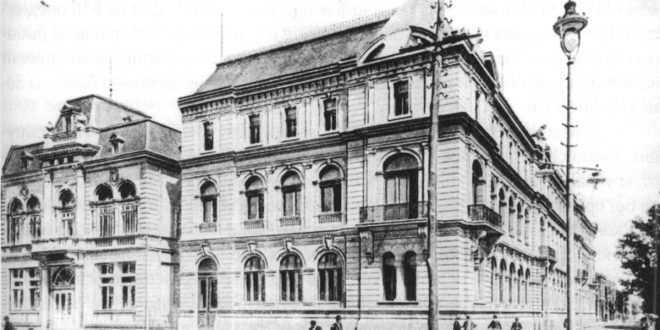
The love for state ownership and state economic initiatives is periodically revived. The economic effect of the activities of state-owned enterprises usually sharply contrasts with the expectations of promoting social justice, limiting inequalities, reducing poverty, etc. And since the devil is in the details, the assessment of the results of their functioning can be made by looking at the details of the work of specific enterprises in specific historical circumstances.
The establishment of the Bulgarian Agricultural Bank
Among the major and influential state initiatives in Bulgarian economic history from the time of the so-called First Capitalism is the Bulgarian Agricultural Bank (BAZB). The bank is not entirely new. It is a transformation of the general benefit savings banks created on the initiative of the Turkish authorities back in the 1860s, which were supposed to limit usury and provide cheap credit to the agricultural population. The savings banks continued to exist after the Liberation, and even before changing their name they resembled a bank.
BZB was established by a special law in 1903. The capital stock is 35 million gold leva. Formally, BZB is not state-owned, but public. However, in terms of its management, how and who appoints its management bodies, and who determines and controls the directions of its activities, it is in fact a state bank. Its main goal, according to the law by which it was established, is to lend primarily to farmers, but short-term lending to non-farmers is also possible. Thus, tradition and the regulatory framework present BZB as a state modernization instrument for primitive agriculture.
It turns out that this same regulatory framework and the later practical activities of the bank do not fully correspond to the declared generally beneficial goals. First of all, in the law on the establishment of the Bulgarian Bank of Commerce, the legislator does not fail to mention among the functions of the new credit institution that it lends money to the state, participates in state loans, and lends to municipalities and district councils. Obviously, the authorities are creating an important source for their own lending.
BZB as a "killer" of loan sharks
The "struggle" of the cash registers and later the BZB with usury deserves special attention. As everywhere, so too in Bulgaria, usurers exist because of the demand for loans, which cannot be satisfied by banking or other similar structures. Usurers in villages and towns are economic units that arose spontaneously and that operate according to the conditions in the Bulgarian lands. It is for this reason that the economist Georgi Danailov recommends that the BZB work on the basis of the principles on which usurers operate. The latter know the people and their creditworthiness in their area well and are therefore able to adequately satisfy the needs for credit without exposing themselves to excessive risks. However, the State Bank never manages to achieve such knowledge. It is heavily bureaucratized, with representative offices in the cities and without the ability to really assess the needs of its clients.
Among the lasting shortcomings of the lending carried out by the BZB is that, according to a 1927 deputy, there are thousands of cases in which a request for a loan is answered after 4-5 months, when the rural household no longer needs it. On the other hand, the bank becomes a convenient tool for the ruling parties to win elections or to reward the loyalty of their supporters in the localities. The future Minister of Finance Marko Ryaskov recalls that before the parliamentary elections in 1911, as the manager of the BZB branch in Pleven, he was pressured to agitate through the banking structures in favor of the ruling party.
In society, moneylenders are accepted as an almost universal social evil. They are believed to be solely responsible for the ruin of hundreds of villages, whose inhabitants are burdened with unbearable loans. Such collective characteristics conveniently overlook the fact that moneylenders actually demand elementary financial discipline from their debtors. Among the moneylenders themselves, as among any professional and social community, there are both good and bad people, both honest merchants and swindlers.
Atanas Iliev, in his memoirs about post-liberation Stara Zagora, tells of the local moneylender Vasil Zlatev, who was a "good, thrifty, hardworking citizen". Thanks to the loans he granted to the local population, many craftsmen, merchants and peasants from the region of Stara Zagora devastated during the Russo-Turkish War recovered. V. Zlatev himself enjoyed the trust and received credit from the rich Tarnovo landlord Slavcho Paskalev and never took his debtors to court. A similar moneylender in the Ruse region was master Gani Karsnaliyata. N. Konstantinov tells about him in 1910 in his article against usury. The author also notes that "Such cases can be studied by our older people everywhere in our country". The same author notes that often when moneylenders are prosecuted, they are hidden by the peasants who have been credited. That is, Obviously, the examples mentioned are not rare exceptions. These loan sharks are the main competitor that the BZB is called upon to destroy.
The cheap credit that the BZB was supposed to provide to rural households was perceived by the Bulgarians of that time as a magical means of overcoming economic backwardness and modernizing every sector of the economy. Theoretically, it is well known that cheap credit and artificially suppressing the interest rate have a huge potential to create conditions for crises by encouraging the development of projects for which there is no real need. Since the main characteristic of Bulgarian agriculture during the years under review is the lack of capitalism, the possibilities of cheap credit to generate crises are weak. However, the low-interest credit from the state bank means that scarce public funds are used not in accordance with the principles of economic rationality. In this sense, they are not able to generate noticeable economic growth.
Bulgarian Agricultural Bank as a "friend" of cooperatives
In 1921, the ruling majority of the country introduced significant changes to the law on the BZB. Among the most important was the provision that the bank would be responsible for lending to all types of agricultural cooperative associations. Some of the larger cooperative associations (syndicates) received long-term loans guaranteed by the state. Over the next few years, the BZB did indeed direct its investments to agricultural cooperatives, which were mostly credit cooperatives. This new direction of work again yielded unexpected results. They were established in 1925 by a special parliamentary inquiry committee into the affairs of the BZB.
The involvement of the BZB in lending to cooperatives leads to the fact that the bank has fewer funds left for personal loans to individual farmers. And the latter are very often neglected. An interesting case is presented by the interviewers about the bank's activities in the Provadiysk district. There, the bank management prohibits the distribution of personal loans to farmers. Loans are distributed only to cooperatives. The results of the experiment turn out to be "disastrous" for the agricultural population of the district, the majority of which is outside the cooperatives. Unable to obtain loans from the BZB, the farmers were forced to turn to private banks and moneylenders. It turns out that with its actions the BZB actually provides clients to the moneylenders with whom it is supposed to fight. The Provadiysk experiment is a harbinger of the policy of forced entry into cooperatives, which the communists carried out more than two decades later.
The cooperative credit of the BZB is directed at cooperatives that are politically close to the government. Loans are given out that turn out to be uncollectible, because, seduced by easy money, the cooperatives engage in speculative activities. And speculation is supposedly not supposed to be a characteristic feature of cooperatives. The BZB does not actually help with the modernization of agriculture, but “has largely patronized the speculative element”. The conclusion is extremely interesting that the spread of cooperatives in Bulgaria is not due to any particular love for the cooperative idea, but happens because of “the created mentality that through cooperatives [cooperatives – P.P.] will be able to access the bank’s funds more easily”. Thus, the cooperatives credited by the BZB become a means of personal enrichment for some of their members. Much of the easy money given out to various cooperative associations is invested in unviable projects – by the way, this is what economic theory predicts. But theory is not among the strong points of supporters of state banking.
Brief summary
The good intentions with which the state-owned BZB was supposedly created were not realized. The massive state attack through the bank, but also through tax laws, led to the limitation of usury in the Bulgarian countryside. However, no meaningful substitute appeared in its place. In the third decade of the 20th century, the BZB turned to lending to cooperatives, but they often became a means of draining public resources for private benefit. Thus, the creation and operation of the Bulgarian Agricultural Bank had a result that contradicted the great expectations for it. Agriculture was actually deprived of accessible and economically justified credit, and this doomed it to long-term stagnation.
Image source: Wikipedia