 EKIP– Expert Club for Economics and Politics A Different Opinion
Author: Momchil Petrov
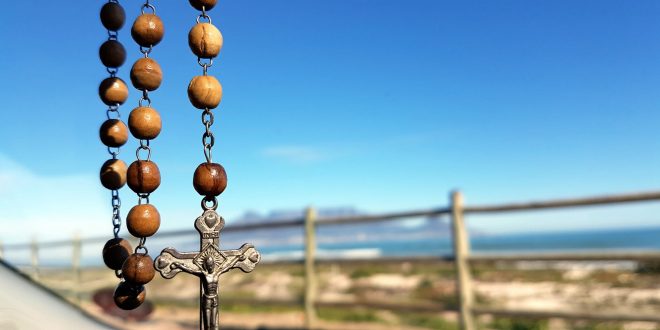
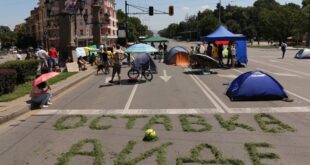
An unusual protest took place in Sofia this weekend. Billed as a "Prayer March for Free Expression of Faith," the event's goal was to oppose the changes to the Law on Religious Denominations that were voted on at first reading.
The protest was organized by the Protestant churches in Sofia and was supported by the Catholic Church. In fact, all the significant religious communities in the country declared themselves against the changes in the law on religious confessions: the Bulgarian Orthodox Church, the Muslim confession, the Catholic and Protestant churches, as well as the Jewish community. The astonishing unanimity of the religious communities in opposition to the law is in stark contrast to the impressive unity of the parliamentary forces in support of the changes. What is behind these astonishing agreements between the religious confessions on the one hand and the political forces represented in the parliament on the other?
The answer is the control over religions that the changes in the law impose. Since this change is obviously not going to be well received, the carrot that the proponents of the changes use is the promise of generous funding for the two largest religious communities – the Orthodox and the Muslim. Against this background, the situation of the smaller religious communities remains even more difficult, because they remain subject to all sorts of and frankly pointless restrictions.
The list of restrictions envisaged is comprehensive and not subject to logical justification: number of believers in a community, requirements for the building in which meetings are held, restriction on activities outside of approved buildings, claims for accreditation of employees, restrictions on visiting employees from abroad and a requirement for special approval of employees with foreign citizenship, a requirement for prior approval of donations from abroad and a literal impossibility for higher education institutions of smaller faiths. The texts of the law show that in addition to obvious malice, there are many shortcomings and incompetence in them, which makes their adoption on first reading shocking news.
Obviously, the Protestant and Catholic churches, which expressed their dissatisfaction yesterday, are most directly affected by these changes. On the one hand, the Catholic Church is closely connected with the Universal Catholic Church, and the majority of its priests in our country are Poles and Italians. On the other hand, Protestant communities are self-organizing, self-governing, and their essence is the striving for independence and spontaneity. In practice, the changes would put the Protestant and Catholic churches in the position of permanent violators of the law, endlessly dependent on permissions and exceptions that the Directorate of Religious Denominations, authorized by the changes, can make for them.
This made the protest unexpectedly massive, and although its organization took literally a few days, a solid crowd of people gathered at the National Assembly Square and passed the route of the procession. This unusual and peaceful protest, in which the crowd sang Christian hymns and said prayers, seems to be eloquent proof of how absurd the logic of the changes to the Law on Religions is, which a priori present religion as something dubious, socially dangerous, and a sphere that should be subject to the strictest control by the state.
The spontaneous and firm resistance that Christians from the Protestant and Catholic Churches demonstrated comes to remind us that when left without state guardianship, religious communities become a natural and important part of civil society. And they must remain such – a territory free from the control and management of state officials and politicians, a unique space where the values of the past interact with the challenges of the present era, adding to the pages of human culture and civilization. A society and a state that place this sphere under government guardianship and control will definitely lose an important part of the understanding and feeling of freedom.


One comment
Pingback: Всичко за новите промени в ЗАКОНА за вероизповеданията (2018-2019) – Protestantstvo.com