 EKIP– Expert Club for Economics and Politics A Different Opinion
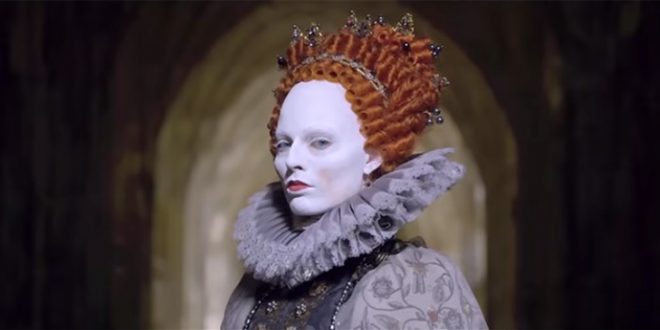
A favorite weekend activity for the Sofia burgher is visiting one of the dozen cinemas in the city. As a (semi)member of this electorally self-marginalized group, I also indulge in the pleasure of lying covered in popcorn, staring at a giant screen. The last Hollywood work I consumed in this way is called "The Queen of Scots" - a political drama set in the British noble courts of the 16th century.
After the screening, I shared on the agora (Facebook) the irritation that has often haunted me in recent years when it comes to pop culture products coming from the West. Namely, the pushing of various politically correct, diversity, "gender" elements where they have no place. For example, as in the case of the film about Scotland from 1550 - dozens of black soldiers and lords, an Indian knight, several Asian court ladies, a transgender Mexican bard and a devout Catholic queen, patroness of all forms of homosexual pleasures.
When does artistic "embellishment" of history become too much?
Friends have given reasonable comments and questions regarding my complaint. This is not a documentary, the author should have the space to take creative risks, the market produced this product, libertarians why do you speak against other races, etc. Still valid criticisms, which are important to address on a principled level, so as not to provide intellectual cover for cultural-Marxist leprosy. With full awareness of the provinciality of our discussion, although this is exactly how the market functions, as we will see a little below.
Historical films are not documentaries and often even interpret certain events in the past in an unconventional way. This is not the case with “Queen of Scots”. Neither the important events, nor the costumes, nor the weapons, nor the historical places in the film differ too much from the real ones from that period in the past. Somehow everything is made so that the viewer believes (at least on the surface) that the action takes place in 16th century Britain… except for the ethnic composition of the characters and their attitude towards homosexuality. [1] The black Scottish soldier in every frame breaks the cinematic illusion just as successfully as if we saw Queen Mary with chewing gum and an electronic watch.
Of course, not all films are or should be historically accurate. Directors and screenwriters can allow for any changes to reality, but to work for the success of the film they must follow some internal logic and consistency. In general, they must contribute to the final product being a more interesting and compelling story, even if they are just a whim of the author.
Art should not suffer because of political messages
This is especially true for political messages in art – if there are going to be any, let it not be at the expense of the art itself. Ineptly pushing ideology into every second scene does not help any film. Political propaganda can be presented in a masterful way that has an impact, even when you recognize it and do not agree with it. A successful example in this direction are the most famous Bulgarian comedies from the late socialist era, in which public criticism is skillfully implied, but does not distract or spoil the plot, but makes it more convincing (“Dangerous Charm” with Todor Kolev, for example).
And in fact, ethnically, sexually or physically different people do not need the fourth wall to be broken in their honor. There are enough other stories in which they can be present, including being legitimate main characters. What is needed is a good storyteller, not a reversal of the principles of logic in a "diversity" competition. There are thousands of examples, but I will give one that impresses me very much. J. R. R. Martin's character - Tyrion Lannister - brilliantly written and uniquely played by Peter Dinklage. An image that is not created to set a shining example for minorities, but is a strong and working character thanks to its specifics. It is not a handout with the aim of stimulating the "poor" marginalized groups (or to show how woke the author is) and that is why it works. [2]
Cultural Marxism is killing culture and harming consumers
We also come to the so-misunderstood market. The fact is that, as far as we know, the film about Mary is the result of a voluntary investment, without government subsidy or coercion. But the market process does not consist only in the creation of a product, it also includes the meeting of the product with the consumer. This meeting sends the entrepreneur monetary and non-monetary signals about how customers perceive the investment of resources in the way he did it. My Facebook post expresses the attitude that I have after having given of my resources to see the film. I was not satisfied and I want to release into the space the reason for my dissatisfaction, but also to warn others with my taste not to pay for something that they will not like. This is how markets function, by constantly transmitting information.
Libertarians are not defenders of everything created by the market, we stand behind the process of free exchange itself. An integral part of this process is the taste of consumers and their communication with entrepreneurs. In a market without political intervention, those who find an audience whose interests to satisfy win. Self-regulation happens through mistakes - i.e. through the loss of money.
Living in their Hollywood bubble, some artists have come to believe that they can sell movies with mediocre political messages. I am a consumer who says “no, thanks.” Judging by the response from critics and other fans of the seventh art, it confirms an observation that overdoing modern political messages is a symptom that goes hand in hand with poor quality in other aspects of the product (for reference: the recent Star Wars). In the case of “The Queen of Scots,” a highly interesting real-world story is dulled and smeared with intersectional leftist messages.
[1] This is perhaps the time to point out that even without these things, the film is quite flat in its understanding of the historical context. But, and this is key, it tries to mimic it, albeit unsuccessfully.
[2] At the same time, Martin has been "criticized" for not having enough ethnic diversity in his pseudo-medieval version of Europe.






To fans of Marxist productions that will quickly be forgotten by the market, I can highly recommend "Robin Hood" / Robin Hood (2019) - a bigger high-budget flop we are unlikely to see during the year, even though it is only just beginning. It digs the bottom in almost every paragraph, full of Marxist clichés and ridiculous "revolutionary fervor". And, of course, nothing to do with the well-known story of Robin Hood, just an attempt to use the name to popularize unpopular ideas. The only thing I will remember the film positively for are the original fight scenes with a bow - they were made by some of the people behind the unique fight scenes in John Wick 1 and 2 (they have been working together since The Matrix), as well as a pretty good stuntman and expert on medieval archery (Lars Andersen).
Another one I can distinguish, although not so clearly, is Mortal Engines (2019). A film with many problems, one of which is the blatant cultural Marxism. It is far more watchable than Robin Hood, but still quite bad.
A Bulgarian video game company recently faced a similar problem. Their new game is set in Medieval Europe, and a few users criticized them for not being able to choose a black character. There weren't many, but the problem is that these users are always the noisiest.
So yes - there's nothing wrong with including racial diversity in fantasy productions, but when it comes to historical context, it sometimes seems ridiculous.
Besides - whoever wants more blacks (for example) in movies, why doesn't he produce a movie about blacks where they are the main characters. I would gladly watch a movie about Shaka Zulu or other stories from Africa (and not only). And I won't feel offended if I don't see a single white person...
I accept the comment, but I don't understand the title. What does Marx have to do with the concept of the film, and is the term "cultural Marxism" an established term?