EKIP– Expert Club for Economics and Politics A Different Opinion
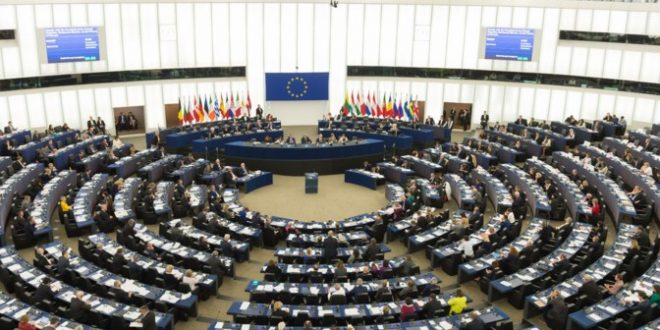
As the next European Parliament elections approach this month, it is good to recall what happened during the previous mandate of our current representatives at European level. Over the past few years, a number of insane bills have passed through the EP, which, alas, were adopted, very often with broad support from our own MEPs, despite being to the detriment of European and Bulgarian citizens. In this article, we will briefly look at the most striking such examples - if you intend to vote in the upcoming elections, think very carefully before casting your vote for an MEP who has supported or failed to adequately resist one or more of these proposals.
Articles 11 and 13 of the Copyright Directive
Comically, Bulgaria is proving to be a major champion of the misunderstood protection of intellectual property rights. The Commissioner for the Digital Economy and Society, Ms. Gabriel, has spearheaded a directive that will further threaten the free exchange of data in the online space. We have already written at length about both proposals ( here and here ), so I will only summarize here.
Article 11 introduces a new category of rights holder - “press publication”, which is widespread in journalistic content published under the editorial control of the service provider. Press publishers will have the right to be compensated by websites that link to their content. This provision is called a “link tax”. In fact, it is a form of protectionism, seeking to support a declining industry. While it seems unlikely to stop the decline of the traditional press, it will certainly succeed in reducing the amount of news content in circulation, as platforms can simply stop offering news links, as happened in places where a “link tax” was piloted.
Article 13 requires platforms that allow users to upload material to them (YouTube, etc.) and thus make it available to the public, to enter into licensing agreements with the rights holders in any material that may ever be uploaded to their sites, and to use technology to pre-filter user content that infringes copyright. Failure to meet both criteria will result in the platforms being liable for copyright infringement.
This in itself poses a danger to platforms, as they will be the sole bearers of responsibility for what content is offered on their sites. Algorithms designed to protect copyright are already actively working on larger sites and technology is advancing without the need for direct intervention by the European Commission through directives. Article 13 also effectively rewrites existing EU copyright law. As the directive has progressed in terms of legislation, safeguards have been added, such as requiring Member States to ensure that users can rely on exceptions for quotation, criticism, review, caricature, parody, etc., which is expected to further complicate its implementation and also multiply the administrative and legal costs of its implementation, which ultimately come out of our pockets.
GDPR
In order to keep the internet safe with regard to the personal information we voluntarily share with companies, the EU has decided to impose an unreasonable and illogical directive on the protection of our personal data. According to a 2018 report by Ernst&Young, it will cost the world’s top 500 companies around $7.8 billion to optimize their content in accordance with the new rules. As for European companies, companies in the European Union have already spent around €200 billion to bring their personal data processing and storage procedures into line with the General Data Protection Regulation.
Rather than helping to protect data, GDPR actually violates competition rules by creating an unbearable financial burden for small and medium-sized market players, which harms their ability to compete with large companies. Before the GDPR, 50% of what was spent on advertising in the EU went directly to Google. After the regulation, this market belongs to Google with 95%. As a result of the directive, the data-driven economy is largely left without its driving force, namely data. This in itself means that it will be less and less possible for companies to produce a product according to the needs and tastes of the customer, which will shrink the market for goods and services.
It is important to note that there are potential inherent and external costs of non-compliance with the GDPR. Fines for EU supervisory authorities can reach up to €20 million or a percentage of annual global revenue. Protecting data subjects’ rights is serious business and will only get bigger as the value of personal data grows, and so do the fines associated with it.
Free travel
The €12 million worth of free tickets that the European Commission (EC) under the auspices of the EPP will gladly give out to people under 18 to travel around Europe is a “wonderful” measure for borderless European integration (according to Václav Klaus). The aim of the initiative is to show that borders in the EU can be crossed freely (what a surprise). The question is why is it necessary to subsidize travel in order to demonstrate a fundamental right of EU citizens that has existed since 1993. The simple answer is that certain European parties started fighting for electoral support early on and this was convenient and cheap (for them) populism for the young electorate.
The more complex one is the ever-stronger desire and propaganda to show how resilient the EU is and how wrong the Eurosceptics are in their criticism of its existence in the form it has acquired in the last two decades, namely – a heavy, Euro-bureaucratic, dysfunctional, over-regulatory, centralized (semi-)state. The instillation of a “European feeling” as a priority through such policies cannot be measured objectively. The free lunch is paid for by someone else – and it is this other who will cast their vote for the current state of the community, which is critical.
The Mobility Package
This is another topic we have commented on before. It all started with France’s accusations of “social dumping” due to more competitive prices and conditions for carriers from Central and Eastern Europe. First of all, let’s clarify that there is no such thing as “dumping” – what Macron is complaining about is that an economy, as a result of its development, can afford to provide the same service, but at a much lower price. In short, the Mobility Package aims to eliminate differences in social and economic conditions and benefits for those working in the transport sector and literally equalize the services market. In other words – forming a cartel, through legal measures.
The unification of the Bulgarian MEPs took place, as always, at the last moment, when it came to having a quick and decisive reaction. Due to the "flight delay", the opportunity to temporarily block the package at the administrative level was missed. Thus, some of our supposedly "right-wing" MEPs, including those who are part of the broad "European right", demonstrated that apparently the fight against left-wing and statist policies of this kind is not important enough to require adequate planning of the schedule. In the end, all the Bulgarian MEPs present, except for one prominent "conservative", voted against, but nevertheless, the controversial texts were adopted at first reading and we have to see what will happen at the second.
This, in short, is the "wall of shame" with the most insane proposals that were adopted by the current European Parliament. I purposefully do not mention specific names in this text, so that no one says that this is a political attack only against specific individuals (and parties). You can check for yourself how your representative voted for the above-mentioned bills. From there, you judge whether he deserves to be supported again.