 EKIP– Expert Club for Economics and Politics A Different Opinion
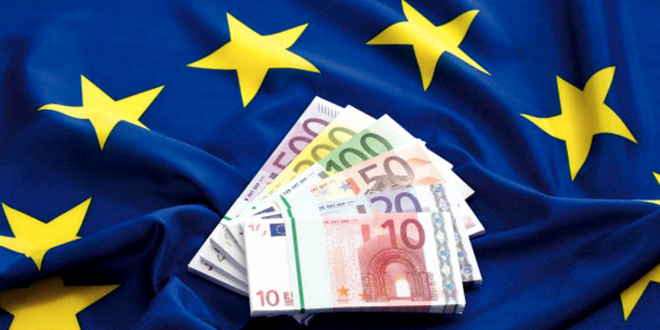
As the European Parliament elections approach this month, all the candidates are tripping over each other to explain why we should vote for them, without of course promising anything concrete. And without even directly addressing the serious topics that should be a priority in the pre-election debates. Like – what are we going to do with the EU funds? Over the past decade, the EU funds have proven to be mainly a source of corruption and political rent instead of economic growth and innovation, which is supposedly their idea. Isn't it high time we seriously thought about whether we are not better off without them?
The dependence of Bulgarian businesses on EU funds is detrimental
The main flaw of EU funds is that they make Bulgarian business dependent on state funding and patronage. Flooding the market with state funding for all kinds of projects in all sectors has a "crowding out" effect on private funding. The so-called economic effect of "crowding out" has been known in economics for a very long time. When the state offers funding for the implementation of a variety of projects, this pushes out funding for the same things, but coming from the private sector. This occurs mainly because, as we all already know painfully, the qualification standards for such funding are lower and the control over its spending is weaker.
There are several reasons for the lower standards of the state compared to the private sector. First of all, the state is not worried about the risk of bankruptcy. Especially when it comes to EU funds, it does not really matter whether a given project for which funding has been provided (no matter how large it is) turns out to be a failure from an economic point of view. The state does not actually bear any financial risk, because it simply redistributes money from taxpayers. If it loses money from financing a given project, it can simply take more. As for money from EU funds, the incentives are even more perverse, because the money that is redistributed does not even mainly belong to Bulgarian taxpayers, but to German, Dutch, etc. Thus, the state has even less incentive than usual to monitor the adequate absorption of these funds.
Due to the perverse incentives that EU funds create, their funding is regularly used for ineffective and loss-making projects. Thus, instead of subsidizing economic development (which is supposedly their idea), EU funds subsidize economic stagnation in the long term – because they are drained for loss-making projects, very often implemented by uncompetitive businesses with political connections. The big problem is that over the past decade, the Bulgarian economy has become addicted to EU funds like a drug. You take it and for a short time you feel great pleasure (some economic growth is simulated), but after the effect wears off, you are overcome by a depressive state (growth falls), so you want more. But the more you get high, the shorter the pleasure is and you have to take more and more of the drug to repeat the same result. And so on until you overdose.
In addition to low quality, EU funds also subsidize corruption
In Bulgaria, as you probably know, these vices of EU funds are further exacerbated by the extremely low quality of institutions and the high level of corruption. In fact, it is almost certain that EU funds themselves to a very large extent subsidize corruption and misuse of public funds in Bulgaria, because they increase the amount of public money at the disposal of corrupt politicians. Think about how many scandals related to misuse of EU funds you have heard about in the last year alone. Or even in the last month – for example, the recent high-profile story about guest houses built with EU funds, which instead of being used as tourist facilities, are actually used as private properties.
EU funds directly subsidize precisely such abuses because they represent "easy" money that must be fully absorbed within a fixed period of time. This is one of the biggest problems with EU funding - what is most important in its evaluation is not the efficiency of the absorption itself (i.e. how much real work is done with it for taxpayers), but its scale (i.e. how much money is spent).
Even a child can remember that if the highest priority is the level of absorption of a given amount, and not the quality of the work performed, then the amount in question will most likely be spent poorly...often to line the pockets of government officials, politicians and related businessmen. Over the years, a number of journalistic investigations have been conducted, as well as economic analyses, which have clearly shown that EU funds worsen the level of corruption abuses and therefore have a negative rather than a positive effect on the economic development of a given country, because they crowd out better-quality privately-funded alternatives. Some of the best research on the subject is by Transparency International, the Government Transparency Institute, and the Corruption Research Center Budapest. The Central Bank of Italy also has some in-depth publications on the subject here, here, and here.
European funds are not bringing us closer, but rather further away from Western standards.
The most disastrous result of all these vices of EU funds is that the economy is becoming less competitive. The business environment in Bulgaria is being deformed, businesses are learning that everything is done most easily with EU funds...if you can get your hands on them. And that is why all businesses in sectors where the level of funding with EU money is high (this also applies to state funding in general) are learning to prioritize qualifying for such state aid, instead of satisfying private market consumers. Instead of innovation and satisfying consumer desires, investments are being made in corruption and satisfying political whims...such as cheap apartments. It is clear why this is a problem.
But the even bigger problem is that this exacerbates the problems with the economic development of poorer countries in Europe like Bulgaria. The more dependent a given sector becomes on any state funding, the harder it is for it to exist without it and to compete on an equal footing with the same sectors in other countries in the global market. EU funding is supposed to stop at a point when Bulgaria's economy manages to achieve "convergence", i.e. to become sufficiently developed to be comparable to Western Europe. But, paradoxically, it is the EU funds that slow down this process by subsidizing corruption and economically inefficient businesses that would not survive without their funding.
Instead of stimulating economic development, EU funds stimulate inefficient businesses and projects. Instead of meeting the real needs of Bulgarian taxpayers, they line the pockets of corrupt politicians and related parties. As it becomes clear, this vicious model must be eliminated. Every politician in Bulgaria is aware of all this, but no one has yet dared to take a truly bold stand on the issue and declare the termination of funding through the European Structural Funds.
Brussels has no problem with subsidized corruption, but we should have
It was previously planned that after the current programming period (lasting until the end of 2020), their funding would be cut, as was the original plan, but it is now abundantly clear that this will not happen, because 1) the goals are far from being achieved and 2) Brussels uses EU funds as a tool of influence. The biggest reason Brussels has not stopped funding from EU funds for countries like ours is that in this way they buy at least partial obedience from our domestic politicians. Something that is extremely valuable in an increasingly divided and troubled by internal conflicts European Union.
We ourselves must fight to end the epidemic of waste and corruption that EU funds are leading to. This should be a major theme of the current European Parliament elections in Bulgaria, especially in the context of the "guesthouse" scandal, but alas, we still do not see any of the leading candidates of the various parties tackling it (the only exception is perhaps this publication, but here too we are not talking about a complete suspension of EU funds, but about the need for judicial reform).
It is high time someone said it out loud – EU funds are mostly harming the Bulgarian economy – and fought for their complete suspension (which includes a suspension of contributions). This is a basic requirement for any politician with ambitions for a position in the European Parliament if they want to win my vote.





One comment
Pingback: Judge and expect to be judged – conscientious voters. And you, Mrs. Vachkova. | EGO