 EKIP– Expert Club for Economics and Politics A Different Opinion
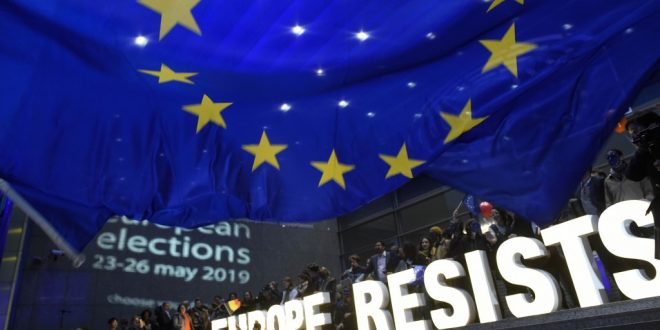
A few days after the elections for the new composition of the European Parliament for the next five years, it is a good time to take stock – who won and who lost from these elections? In this article, I will pay attention to the results in the rest of Europe and more specifically in key member states such as Germany, France, Italy and still – the United Kingdom. These are the countries that send the most representatives to the European Parliament and accordingly the elections there have the greatest impact on its composition. As for Bulgaria – the topic has more or less already been chewed over in the media, only 3 days later, and in reality the composition of the representatives we will have in the EP has not changed compared to 2014. However, in many other EU member states the situation is quite different.
In Germany – a realignment of the left
In Germany, the elections were won by the Christian Democratic Party (of Chancellor Angela Merkel) with 28.9% of the vote. Although Merkel's party won, this was achieved with a result that was 6.4% lower than in 2014, which resulted in the loss of 5 MEPs for the party. In this sense, the electoral victory itself is rather "Pyrrhic". However, the Social Democrats suffered an even more serious loss of power. In these elections, they managed to win only 15.8% of the vote, securing only 16 seats in the European Parliament, a full 11 fewer than in the previous elections.
The real winners of these elections in Germany were certainly the Greens, who collected 20.5% of the votes cast, winning 20 seats in the European Parliament – 9 more than in 2014. This is an incredible achievement for a party that until recently was almost completely outside the political mainstream. With this result, the Greens will certainly try to compete with the Social Democrats for the title of second political force in Germany in the next parliamentary elections. And far from succeeding in completely displacing them – in the last few years the Social Democrats have been losing more and more popularity, largely due to the certain radicalization of their own electorate, who, especially on environmental issues, are looking for ever harder and ever more left-wing policies (such as the Greens propose).
Meanwhile, the right-wing Alternative for Germany also improved its election result compared to 2014, winning 11.0% of the vote and 11 seats in the European Parliament. This marks an improvement of about 4% compared to the previous election, but overall the result is not impressive, especially considering the expectations that the right-wing "populists" (as the media call them) will significantly improve their result in these elections. It is clear that the AfD continues to attract from the Christian Democratic electorate, but is still very far from a position where it can seriously challenge them for the right-wing electorate in Germany, unlike the situation with the Greens and the Social Democrats.
In France – the status quo is dead, long live the (new) status quo
The equivalent of the Greens in France also managed to significantly improve its electoral result in these elections compared to 2014, winning 13.5% of the vote and 13 seats in the European Parliament (7 more than before). Of course, the biggest news is the success of the newly formed alliance between Macron's En Marche! party and other smaller center-left parties in France, part of the Alliance of Liberals and Democrats for Europe (ALDE). Macron's formation won 23 seats in the European Parliament with 22.4% of the vote.
Le Pen's party also won 23 seats, but this is far from being a serious success, given that they lost 1 compared to the previous election and failed to improve their electoral result. Overall, it seems that the National Front in France is starting to lose ground, which is a somewhat logical development, given the subsidence of the migrant crisis over the past two years. At the same time, after the series of terrorist attacks between 2014 and 2017, the crisis with Islamic terrorism in Europe also seems to have temporarily subsided. In this context, it is logical that a party that builds its platform mainly around combating these problems would lose some ground.
The former mainstream parties in France are suffering greatly, with the centre-right Republicans and the centre-left Socialists winning 8 and 6 seats respectively, while losing 12 and 7 seats in the European Parliament. This is an indication that President Macron has managed to win over France’s more centrist voters, both those who lean left and those who lean right. Overall, it looks like French politics will be dominated by Macron and, to a much lesser extent, the local Green movement. In Germany, the old establishment parties are also losing significant ground, but in France their defeat in these elections is far more severe.
In Italy – Dominus Salvini
In Italy, the greatest success was achieved by Matteo Salvini's League, which won 34.3% of the vote, which is equivalent to 29 seats in the European Parliament - 24 more than before. In second place was the former ruling party of the Democrats (center-left), which won only 22.7% of the vote (18.1% less than before) and 19 seats (12 less than before). In third place is the Five Star Movement with 17.1% of the vote and 14 seats in the European Parliament. The movement is losing support compared to the previous elections and winning 3 fewer seats.
It seems that Matteo Salvini's League has managed to steal some of the Five Star electorate. The two parties, which are currently coalition partners in the government, are to some extent fighting for the same type of voters – Italians who are dissatisfied with the previous status quo in the country and the current one in Brussels, which imposes restrictions on Italy's fiscal and economic policy. Since they came to power, Matteo Salvini has definitely become the most active and recognizable figure of the League-Five Star government, so it is not surprising that his party has managed to significantly improve its result, while the coalition partners are lagging behind.
While in France and Germany those who gained significant new ground in the European elections were on the left side of the political spectrum, Salvini's victory in Italy marks an advance by the more right-wing forces in the country. Of course, in this case I use "right-wing" with a certain note that the government of which the League is a part also introduces and promotes many economic policies that are rather left-wing. There are also some more right-wing policies, of course, but overall the program is mixed and leaning rather to the left, as is traditional in a southern European country like Italy. The League's explicit right-wing positions are more likely to be found in its attitude towards issues of importance to the whole of the EU - for example, opposition to the concentration of power in Brussels.
In the UK – Brexit or death!
In the UK, the defeat of the status quo parties – the Conservative Party and Labour – was complete. Nigel Farage’s Brexit Party dominated the election with 30.5% of the vote, winning 29 seats in the European Parliament. Even if it is only temporary, until the country leaves the EU, this is a stunning success and Farage could use it as a basis for a more active future participation in British domestic politics. In second place were the Liberal Democrats, who represent the more “traditional” alternative to the Conservatives and Labour in British politics. They won 16 seats in the European Parliament, 15 more than in the previous election. Overall, these results in themselves fundamentally change the composition of the representatives that the Kingdom sends to the European Parliament.
For the Conservative Party, this election was a complete disaster. Winning just 8.8% of the vote, the Conservatives will send just 4 representatives, 15 fewer than in 2014. Labour also lost half its seats, leaving it with 10, after winning 13.6% of the vote in last week’s election. These results speak volumes – the British public is deeply disappointed by the utter inability of the establishment politicians to deal with Brussels and get the country out of the EU in a way that protects their interests. At the same time, the Greens managed to gain ground in the UK as well, securing 7 seats in the European Parliament, compared to 3 previously.
In view of Brexit, a decisive victory for Farage's hardline Eurosceptics may not be of much significance for the long-term development of politics within the EU. But at least in the short term, it will certainly put pressure on the status quo in the European Parliament and strengthen Eurosceptic sentiments against the centralization of power in Brussels.
More interesting are the implications for Britain’s domestic politics – with this heavy loss and Theresa May’s resignation, it will be interesting to see in what direction the Conservative Party will develop in the coming years and especially in the next general election. At this point, it is abundantly clear that the Conservatives need to build a completely new vision for the country’s political (and economic) future outside the EU – something that has been rather postponed until now, due to the fact that the party continued to be led by a person who opposed the idea of Brexit – Theresa May. After her resignation, the more radical wing of the party should be able to establish control and impose its different vision for the country’s future. We have yet to find out what that will be.
In Greece – New Hope
Within the framework of this article, I also include a commentary on the election results in a smaller country like Greece for some strictly specific reasons. First, because Greece was the center of the latest economic crisis in the Eurozone. Second, because the victory of the right-liberal New Democracy party over the ruling left-wing Syriza party marks a remarkable turnaround in the country's domestic politics. And third, because this turnaround is directly related to the deal that Prime Minister Tsipras struck to rename the Republic of Macedonia "North Macedonia."
Many Greek citizens were unhappy with the deal because they did not want to recognize the name "Macedonia" of their northern neighbor at all, in any context, even with the qualification "northern". Although it is certainly not the only factor, it certainly gave a boost to the result of "New Democracy", which defeated the ruling party by 33.1% to 23.7%, securing 8 to 6 seats in the European Parliament. Syriza's heavy loss led to the immediate announcement of early elections for the end of June, due to the fact that the failure of the Europeans is a clear vote of no confidence in the country's government.
The important thing here is that New Democracy is a party that defends quite right-wing positions in the economic sphere – it supports cutting government spending, taxes, and accelerating the privatization process. If such a party came to power in Greece, it would be a turnaround in the traditionally left-leaning domestic political scene. New Democracy is currently expected to win the parliamentary elections, but probably not by as much of a margin as the European elections. Unless he manages to pull off some kind of miracle in the campaign next month, Tsipras’ days as prime minister seem numbered.
Nothing new on the Central-Eastern front
In Central and Eastern Europe, the elections were clearly won by the ruling parties, and by a very significant margin. Orban's party in Hungary won with an impressive 51.5%, and in Poland, the ruling Law and Justice party won with 45.4%. Even in the Czech Republic, the elections were won by a "populist" party, although the vote there was much more fragmented. In general, in Central and Eastern Europe, these elections for the European Parliament were completely dominated by the so-called "populist" formations, which are already in power anyway. In this sense, there was almost no change in the situation there.
So what? – the future policy of the European Parliament
As a result of all this, the incumbent parties EPP and PES lost a significant number of seats in the European Parliament – 39 and 34, respectively, and fell to 178 and 153 seats. On the other hand, the biggest winners were the Greens, who increased their representation by 17 seats (reaching 69) and the Liberal Democrats (ALDE), who won a total of 105 seats, 37 more than in the previous elections. Interestingly, ACRE (Alliance of European Conservatives and Reformists), which is made up of far-right and nationalist politicians, lost 13 seats in the European Parliament. At the same time, the other nationalist formation – Europe of Nations and Freedom – won 22 new seats, but remains extremely small. The net result is a disappointing 9 more seats for nationalists and Eurosceptics in the European Parliament.
Given that the expectations were that the Eurosceptics would achieve a very serious success in these elections, we cannot help but consider this result as disappointing. More impressive is the success of the Greens and that of ALDE, although the latter is mainly due to the advance of Macron's formation in France and in this sense is a rather isolated phenomenon. The European Parliament is now certainly more fragmented than before, but this fragmentation is far from being in favor of the right-wing and nationalist-minded formations. In reality, without Farage's party, their presence in the European Parliament is quite modest and even with it could be completely neutralized by an alliance between the Greens, social democrats (PES) and left-liberals (ALDE).
In view of these results, what awaits us as a policy from the European Parliament in the future is perhaps some form of "watermelon Macronism". We will certainly witness a greater push towards increasingly aggressive "green" policies, as well as an increasing centralization and socialization of the union - an issue on which the leading 4 parties in the European Parliament are almost unanimous. Green policies will of course be nothing more than timidly disguised socialisms (and hence "watermelon" - green on the outside, red on the inside), given the fact that on economic and social issues the Greens are more left-wing than the Social Democrats.
In conclusion, I would say that the results of these European elections do not bring optimism at all for right-wing EU citizens. Despite the successes of right-wing Eurosceptics in the UK, the overall political situation in the parliament does not seem to have moved to the right. Yes, these elections have led to greater fragmentation of the European Parliament, but in a way that leaves the left-liberals and the Greens in the best position to take advantage of it. One consolation, of course, is that in principle not much depends on the European Parliament - as an institution it does not have serious powers of legislative initiative. What it does have, however, is the ability to block the European Commission's attempts to impose ever heavier centralization and socialization of the EU. The bad thing is that in view of the progress of ALDE and the Greens, two of the formations that support greater centralization of the union with both hands, this ability is unlikely to be used for its intended purpose.






One comment
Pingback: Elections are coming. Let them not be more of the same