EKIP– Expert Club for Economics and Politics A Different Opinion
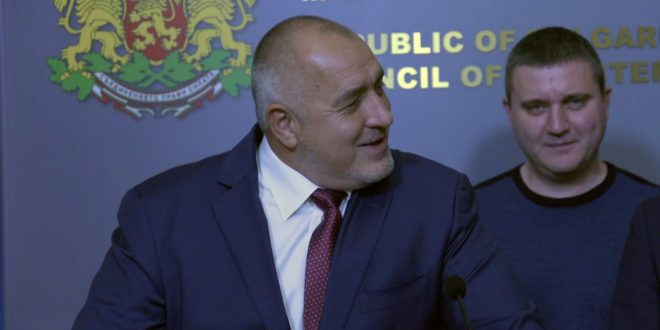
Today, all the media exploded with the news that the leader of the Women's GERB party and former regional governor of Pernik Irena Sokolova was arrested during a raid by the prosecutor's office in connection with the water crisis in the city. Meanwhile, the Minister of Environment and Water Neno Dimov also found himself detained after special forces sent by the prosecutor's office entered the ministry to investigate the case. Special forces have also been sent to the Pernik Water and Sewerage Company, and Prime Minister Boyko Borisov said that he would discuss with the coalition partners the possible resignation of the Minister of Environment.
It seems that the tension surrounding the water crisis scandal is reaching a boiling point. Pernik has been on a water regime for months due to the water shortage, about 100,000 people are affected, and for the moment there is no prospect that the problem will be resolved soon. On the contrary, in the last two or three weeks information has emerged that there are problems not only in Pernik and the Studena dam. There has been talk of a danger of a water regime in other cities such as Botevgrad in the shortest possible time, perhaps in Sliven and the region in a few months, there are concerns about other areas as well, despite the assurances of the relevant municipalities and water supply companies that this will not happen.
"Someone must take political responsibility"
People are justifiably angry and want someone to take responsibility for the crisis. If the problem continues to grow, public discontent will also grow, and this could lead to the fall of the government and early elections. Remember what happened in early 2013 over electricity prices. Protests over more abstract political causes such as judicial reform may not have the power to topple governments, but mass public discontent over fundamental domestic problems (expensive energy or water shortages) certainly can.
Borisov is very well aware of this and precisely because of this fact he is already ready to sacrifice Neno Dimov. By the way, it is somewhat surprising that only now is there talk of resignations, after the crisis has deepened to such a great extent. In other situations and in relation to other ministers, Borisov has been much more frivolous. Remember how the resignation of Social Minister Biser Petkov was requested less than two months ago – there was no major crisis, there was not even a major blunder by the minister.
Neno Dimov got away with resigning during the protests over Pirin Park two years ago, but it seems that this time he will be the sacrificial lamb. The only question that remains is – is it justified? Is he really to blame for the crisis? Even if he is, an equally important question is, is he ONLY to blame? And the Minister of Regional Development and Public Works? After all, ViK Pernik is 51% owned by this ministry. Shouldn't he be held responsible?
Will Borisov manage to come out "dry" again?
But even if Borisov asks for the resignation of both ministers, there remains at least one other person who also bears serious responsibility for the crisis – himself. Being prime minister is not just being an influencer on social media, as Borisov seems to imagine himself to be lately. Being prime minister means being at the head of the country's state apparatus. Which means that you are the boss of precisely those ministers whose resignations you want when they screw up something in their portfolio. Which makes you responsible for their failures, at least to some extent. We cannot hold the Minister of Foreign Affairs responsible for the failures of the Minister of Environment and Water. But we not only can, but must, hold the Prime Minister accountable.
We have played this circus before, after all. This is a favorite scenario of Borisov's cabinets, which the first few times played out as a tragedy, but at this point the audience perceives it more as a farce. Resignations are a significant move that calms public discontent only when they lead to a qualitative change and improvement in the work of state institutions. But when, after a series of ministerial resignations over the years (there are AT LEAST one or two every year), things continue in general as before, the sensitivity of the Bulgarian voter to this PR trick begins to atrophy.
The answer to the questions of how exactly the water crisis came about and who is responsible is certainly not unambiguous. The reasons, as is usually the case in Bulgaria, are most likely complex. Certainly, both blatant corruption and simple negligence are involved in the whole mess. We know the politicians, we know the bureaucrats. And the negligence is the responsibility of the entire government in this case, because as it turned out, the drying up of the dams is not a case of yesterday, but something that has been brewing as a potentially very serious problem for quite some time. The relevant ministers and the prime minister certainly knew, but for one reason or another they did not take adequate measures.
How deep is the problem and what is it due to?
It is shocking that after several months of development of this case, we still do not have any clarity about what exactly caused the water crisis. And it seems that the responsible state institutions themselves are also not fully aware and do not have full clarity on how to solve the problem. Instead of informing the public about what caused the crisis and what will be done to ensure that it never happens again, ministers and prime ministers only shift responsibility to each other (or to the BSP, as is the regular practice). If it is a question of simple illegal draining of dams, then everything is rooted in the biggest systemic problem of the state - corruption. If it is a question of natural drying up, then we are talking about some kind of environmental problem that (for some unknown reason) has not been noticed and addressed.
It is most likely a combination of both – corruption in the institutions, which deepens an environmental problem, which is not addressed due to their negligence. It is for this reason that Borisov's ridiculous idea to form some kind of pan-national water and sanitation company with full state control is extremely insane. Pernik Water and Sanitation is already majority controlled by the state and we all saw what happened. As some have joked, what exactly is the purpose of this proposal – to ensure that the problems in Pernik will certainly spread throughout the country?
Rather, the exact opposite measure – not nationalization, but denationalization, that is, privatization – would most likely yield a far better long-term result. Because as we see, state institutions are clearly incapable of adequately handling such a fundamental function as the country's water supply. Perhaps it is time to seriously think about the issue.