EKIP– Expert Club for Economics and Politics A Different Opinion
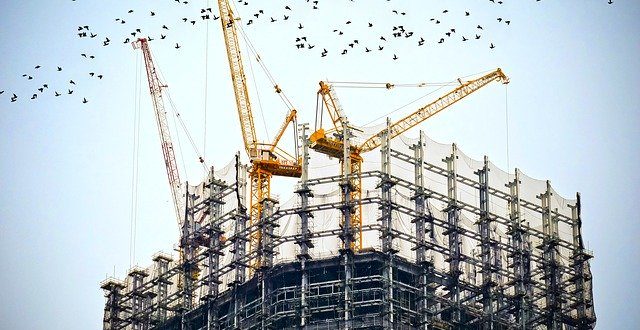
Over the past few years, a special fetish for limiting one's time and being a builder has begun to form among the capital's residents. In a panic over the "overdevelopment" of city squares, many people began to demand that the municipality impose more restrictive regulations on construction in Sofia and to vote for any local political candidates who promised to stop construction even through illegal means (e.g. Desislava Ivancheva). In addition to worsening the investment environment in the country's largest economic center, all this leads to serious negative consequences in the economic, urban planning, and indeed in any plan for the city as a whole.
In response to these public tensions, the Sofia Municipality tightened the regulatory framework for construction in 2018 with new, more restrictive restrictions on the permissible height of buildings. Today, after the last local elections, in the capital's municipal councils, the construction taxes are a big topic - from some corners there are calls for their increase, after the municipal council already increased the tax on property transactions from 2.5% to 3% at the end of last year.
What are the problems with regulation?
The problem with construction regulations is that in practice they lead to an artificial restriction of construction and correspondingly higher property prices on the market. Due to regulations, properties are built more slowly, more expensively and, in the end, less. As a result, property prices have started to rise significantly - they are becoming higher than they would otherwise be. This is starting to act as a barrier to city residents wanting to own their own homes. In other words, it is leading to the literal impoverishment of the city's population. This is a well-known economic process that the TEAM described in our proposal for the reform of Sofia's urban planning policy, which we published in 2018.
The opposition, of course, is not one-sided. Some will object that there is still a need for some regulations. It is understandable. Without the municipality to establish rules regarding the use of the territory it owns and controls, chaos will ensue. However, regulations need to be carefully measured so that their negative effects in terms of increasing the cost of living in the city do not outweigh the technical benefits.
Specifically in Sofia, the biggest problem is that there is no discussion on the topic. When have you heard a politician address the bad side of the regulations in the construction industry? And any of the non-governmental organizations that want more restrictive regulations introduced, like Save Sofia? No. Everyone adheres to all building regulations, which is the only blessing for the urban environment.
The Danger of Excessive Restriction of Construction
Let me give you an extreme example. The Indian city of Delhi has some of the strictest building restrictions in the world. There, practically all buildings are restricted to no more than two stories. If you have 1,000 square meters of floor area, you are not allowed to build a building with more than 2,000 square meters of total floor area. With a population of over 11 million, the result of this regulation is catastrophic. More than a third of the population lives in illegal ghettos because they cannot afford to live in the rest of the city, where housing prices have become prohibitively high due to excessive regulations.
The situation is similar in Mumbai. There, construction regulations create a huge overload on the city's road infrastructure and transport, forcing city residents to travel for hours from one end of the city to the other. The overload on city transport is so serious that an average of 9 people die per day on the city's trains. If building regulations in these cities were not so restrictive and buildings could be built taller and denser, these problems would not exist or at least would not be as serious.
What these cities clearly show is how serious the danger is that the pressure for increasingly restrictive building regulations will get out of control and lead to the creation of serious problems in other areas of the urban fabric (overcrowding of the road network) and to serious social problems such as unreasonably high housing prices. Bulgaria can be proud that the majority of its population can afford to live in their own home. This is a fundamental sign of prosperity that should not be taken away from Bulgarian citizens due to short-sighted regulations.
Oil on fire: the incompetent work of CO
In the case of Sofia, in addition to the pressure for more restrictions and regulations, a very serious problem is the slow work and in some cases the complete abandonment of the city administration. In the short term, this may actually be the most serious problem that needs to be addressed urgently.
At numerous public events in recent months, representatives of construction companies in the country have had one main complaint - the cumbersome work of the municipality. According to builders, the issuance of a building permit often takes up to 3 years! Such long delays on the part of the administration kill any flexibility in the property market. As a result, sometimes in the short term, there is a shortage of properties on the market and prices increase drastically, especially in periods of strong income growth and subsequent strong demand for new properties (as has been the case in recent years).
In addition, the capital city itself often abdicates from its debts, specifically related to the provision of water, electricity and road infrastructure to newly developed areas in the city. Often, builders themselves are burdened with this expense, so that they can complete their projects and place the finished product on the property market. This, of course, also makes properties more expensive, as it represents an additional and often unforeseen expense for builders. And it is clear that, without the municipality having done the work on planning the construction of this infrastructure, we get areas like Manastirski Livadi - high-quality construction, but at best incomplete, and at worst completely lacking infrastructure.
The explosive combination leads to impoverishment
The combination of these factors - the pressure for a large-scale restriction of construction on the one hand and the refusal or inability of the CO to complete the work, on the other - leads to a sharp increase in property prices in Sofia. That is, it leads to the impoverishment, especially of the young part of the population. Young families are forced to take on ever-increasing loans, which they pay off until retirement age, if they want to afford even the most basic three-room apartment.
If the situation is not controlled, the state of the property market in Sofia will only continue to deteriorate. As a start, the Sofia Municipality must start working - quickly and efficiently in the shortest possible time. For this purpose, optimization of municipal services is necessary, which could be achieved through digitalization of the entire process related to the approval of construction activities in the city. "Digitalization" was the "pop" slogan of the local elections in Sofia. If the municipality presents it as such a high priority, let them put all their efforts into using modern technologies to improve the quality of their work. For now, we only have promises, let's wait for concrete actions.
And secondly, let's cool down the debate about the restrictions on construction. Yes, overdevelopment can be a big problem, but excessive restrictions on construction can be even bigger. We need a precise assessment of the impact of each regulation on construction in Sofia. If the assessment shows that the potential social cost of regulation is higher than its possible benefits, it is obvious that it should be rejected. The problem is that . Alas, there are no one-sided phenomena in economics.