 EKIP– Expert Club for Economics and Politics A Different Opinion
The protests that have been going on for more than twenty days give rise to reflections on the political system in the country. What are the levers of influence, how does our type of representative democracy function, where are the similarities and differences with other models around the world? On this occasion, it is interesting to look at where the legitimacy of the existing political forces comes from, which social groups are pushing their interests through the current political spokespeople in the National Assembly.
What stands out in comparison in Bulgaria is the inverted relationship between representatives and represented. Unlike Western Europe and the USA – the groups (constituencies) that parties defend in parliament depend on politicians, not the other way around. In our country, the mechanism of representation is inverted – evangelicals in Tennessee can easily give up their congressman and replace him with another, while Bulgarian (left) pensioners are enslaved to the socialist party and its irreplaceable figures.
A recent example of how more direct the electoral interest groups abroad are in redirecting their support can be seen among Conservative voters in the UK, especially those with a strong scepticism towards the European Union. EU-sceptics not only vote for such representatives of the Conservative Party who express similar views to them on the European problem, but recently (unhappy with the position of Cameron's party) they have switched to a new formation – Nigel Farage's UKIP, seriously threatening the ruling party. And this is happening in a country with a first past the post electoral system, which also has other mechanisms (change of candidates) to reflect electoral preferences.
That is, what is long-lasting and organized are the interests of certain groups of citizens – doctors, unions, environmentalists, opponents of abortion, etc. – not their political representation. Under this system, a candidate must present a program that will secure the support of the specific group and its various channels of influence.
A quick glance and it is clear that things are different here. The process of transitioning from the current model to the other depends on the ability of lobby groups (conservatives, socialists, greens, monarchists, homeschooling fans and whatever you can think of) to emancipate themselves and "trade" their support for behavior that they consider correct and representative of their ideas and principles.
This emancipation encounters two divergent problems in the different spectrums of Bulgarian political life. As for parties with a solid electorate such as the BSP and the MRF, with them we do not have as strong an affiliation to any principled ideological core as a symbiosis of the political with extreme survivalist domesticism. That is, the pensioners in the village are waiting for their heating benefits from the socialist mayor, while the MRF is “protecting” its electorate from a new revival process and providing subsidies for certain agricultural crops. In the so-called right, there is not even an attempt to identify electoral groups whose interests should be protected – rather, unsuccessful attempts are being made to create a party “for all Bulgarians”.
On the other hand, self-determination is already happening to some extent among the nationalist electorate, which is compact and well-represented politically – with at least three parties vying for its attention. The nationalists will most likely withdraw from Ataka, following the behavior of Volen Siderov and his cronies, and will shift their votes to other political forces. At a different stage of awareness are groups that are about to demand appropriate representation, and it is precisely the political crisis (in which we are) that may create an opportunity for their needs to be stated. The key to organizing these constituencies are their own extra-political channels of communication and association, through which they can self-organize and broadcast their leaders and demands.
Finally, it is appropriate to clarify that a transformation of our current political system into one in which the agenda is dictated by well-represented groups with common political interests and principles is not a panacea and does not offer the messianic salvation that many Bulgarians are waiting for. On the contrary, many of these associations may be behind corrupt and dangerous ideas, such as pursuing financial interest at the expense of the taxpayer. The positive aspect of such a change would be to limit the power that politicians have to what they have promised - without being able to make sharp turns because of the views of those who voted for them.




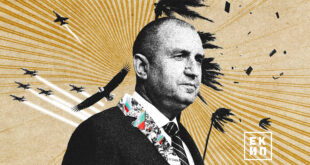

Protesters and ruling politicians do not realize that the current political situation is a concomitant influence of error (an unprofitable way of governing).
Weakness is not political, and it is impossible to end an economic crisis through political means.
Precisely for this reason, even with full 100% support for Mr. Oresharski's government, his managerial failure is assured.
The dependency is that the more the government is supported, the greater its failure and the damage suffered.
Under current conditions, if the government were to manage itself, it would still fail, because it would do so under conditions of managerial incompetence and would not take into account the qualities of the money used.
Few people know that if the cause of the current crisis persists, the more political governance is improved to ensure economic growth, the greater the potential for an economic crisis, with attendant damage.
This insidious addiction is not publicly known and continues to cause harm.
To prevent the escalation of the current economic crisis, public awareness of its particularly important cause and the elimination of this management error are necessary.
Example: If this global state weakness were absent, countries would not have the debts available in 2013.
Ivan Mitev - economist
I think that
"Bulgarian (left) pensioners are enslaved to the socialist party and its irreplaceable figures"
requires a mandatory addition
"Bulgarian "rightists" (including pensioners) are enslaved to all sorts of interchangeable faces of anti-socialist phraseology ("the lesser evil")."
to make the picture objective.
Your theses are logical for the current state of affairs, as is the conclusion of "transforming our current political system into one in which the agenda is dictated by well-represented groups with common political interests and principles". But what part of society can these groups encompass? And the rest, who do not want new parties and leaders, do not want "a way of governing that is suitable for money", but one that is suitable for the people? How will they dictate the agenda?
As for "it is impossible to end an economic crisis by political means," that is not true, Mr. Mitev. There are examples in world history.