 EKIP– Expert Club for Economics and Politics A Different Opinion
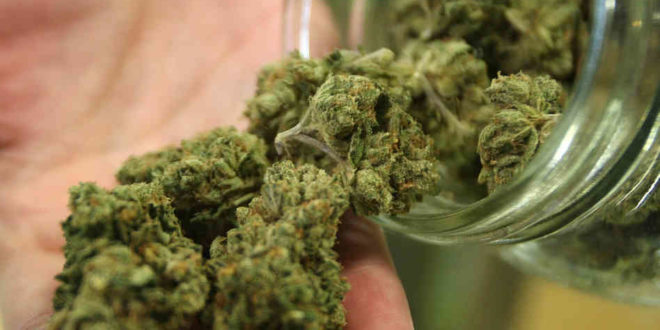
The legalization of drugs is a topic that concerns many defenders of freedom around the world and has become one of the key points in the struggle to limit state interference in the private lives of individuals. And while in most countries the prohibition of alcohol consumption is a thing of the distant past (except, for example, in absolutist Saudi Arabia), the production, distribution and use of narcotics are activities that are still treated as illegal almost everywhere in the world. However, in recent years, a number of countries have seen serious social movements and legislative measures towards the legalization of certain substances.
An example of this is the changes in Colorado and Washington[1] (USA) since 2012, when residents of both states successfully voted in a referendum to legalize the sale of marijuana. Although a number of states have various regimes[2] of decriminalization of possession or sale for medical purposes, these are the first cases of full legalization and permission for "recreational use". In reality, however, it is too early to rejoice - the apparent legalization is tied to too many conditions and restrictions, most of which sound quite vague. While legislators in both states are ready to let the marijuana market develop independently, the federal government reserves the right to intervene if it deems that the market is not sufficiently regulated and measures to "protect the health of the population" are not being observed sufficiently, and accordingly to put an end to the legal sale of marijuana.
What does this mean? That even now there is no real freedom in both states - the only difference from before is that now the control of criminal organizations has been replaced by that of the state. It is clear that the federal authorities do not intend to end the "war on drugs", but only a fragile truce has been achieved, which could collapse at any moment.
There is no point in such piecemeal measures and hundreds of agreements. Although the processes currently observed are a step in the right direction, the complete abolition of the prohibition regimes for drug use is the only policy that corresponds to the idea of a truly free society. A debate combined with a reader vote held a few weeks ago on the website of the Economist magazine[3] is extremely indicative of the current public mood. In the debate on the topic “For and against the legalization of cannabis everywhere”, 92% of the magazine’s readers declared themselves in favor of legalization, and a large number of commentators spoke out not only in favor of the legalization of marijuana, but also of all substances considered narcotics. And while the Economist vote is by no means representative, earlier this year the Huffington Post published data[4] according to which 38% of the US population had tried marijuana, and 85% declared themselves in favor of its legalization. These data speak unequivocally - obviously, the continuation of the war on drugs is not the result of a social norm or the protection of any particular type of morality, but only the persistence of the state apparatus to allow the spending of more and more public funds.
However, at this stage, the achievements in this direction are rather modest. There are several clear and easily explained arguments in favor of legalization:
1) Most drug-related crimes are “victimless crimes.” To the extent that there is bloodshed surrounding drug sales, they are the result of the struggles of different criminal organizations for resources, customers, and territory, and are a direct result of the current prohibitionist regimes and legal framework (i.e., the settlement of disputes between the different interests in these markets is not regulated by a legal system). In other words, drug laws are a gross violation of personal freedom, and many people[5] become criminals because of their personal choice to use a given substance. And yet, in the eyes of society, their employers, the legal system, and banks, these people are criminals with records—a status that is undesirable even after serving their sentence or paying their fine.
2) The war on drugs is costing taxpayers dearly. Its failure is obvious – despite all the efforts and investments in it, the number of people using drugs is inevitably growing[6]. And yet, governments continue to pour huge sums into it, as if they had no more important task than to prosecute drug users and sellers. The US budget for 2014 allocated over $25 billion[7] to combat drugs - for comparison, this is approximately 1/2.5 of the entire federal budget for education (our Ministry of Internal Affairs does not publish data on its various programs). If the prosecution of drugs were to end, these significant sums could be redirected to far more useful activities, or, in the best case, never leave the pockets of taxpayers. However, this is only the direct, monetary cost of the war on drugs – the time and effort of a huge number of police officers who could be dedicated to solving “real” crimes or to completely different professions are wasted. In turn, drug users and producers waste much more time and effort on their supplies and transactions due to the need to hide and protect them from law enforcement, which would not happen if the business were legal.
3) One of the main arguments that opponents of legalization make is that, in their opinion, drug consumption will increase. However, the experience of countries that have taken the step of decriminalizing drugs so far indicates the exact opposite – with the cessation of persecution of users, consumption decreases, and the number of people seeking treatment for drug addiction increases[8].
It is clear that criminalizing drug users, dealers, and producers is a policy that does more harm than good (if there is any, except for the support politicians receive from more conservative voters). For this reason, news such as legalization in Colorado and Washington can only be seen as a positive development. However, they are only a step towards achieving the ultimate goal, namely the removal of all state-imposed restrictions on personal choice to use one or another substance.
Finally, a video from LearnLiberty dedicated to the real victims of the war on drugs.
[youtuber youtube='http://www.youtube.com/watch?v=XKPAn7uRcVY']




I agree with you on everything, but you are wrong here.
I have three friends that I can't recognize anymore. I can't believe their crazy looks, I can't believe their downfall, I can't believe the thefts they got caught with and when I heard one of them was caught breaking a 100 lv coffee machine...
All three started with marijuana, they got to heroin, but they all started with marijuana.
It's not surprising that the above article deals mainly with marijuana, which is a mild drug. That is, as far as I know, it does not lead to severe addiction.
My personal opinion is that if one wants to maintain consistent principles, then one should support the decriminalization of all drugs, i.e. even cocaine, LSD, etc., and as we know, they lead to very strong drug addiction.
However, the latter is an unacceptable opinion for society, because the results of using these powerful drugs are well known.
The underlying principle that must be upheld is that a person should have the right to decide for themselves what to do, even self-destructive actions (such as taking hard drugs), as long as their actions do not have bad consequences for other people. The latter is called individual freedom, and it includes the right to do things that are harmful to you, whether out of stupidity, self-destructive behavior, or illness.
As I said, the latter thesis is socially unacceptable, indefensible within the framework of existing moral norms, and that is why, in my opinion, people focus on milder cases like marijuana. If one wants to defend the decriminalization of all drugs, then one must start by criticizing existing public views.
Why doesn't the moderator approve my comment? Is this how you imagine freedom? This is censorship - nothing more.