 EKIP– Expert Club for Economics and Politics A Different Opinion
Martin Tillier
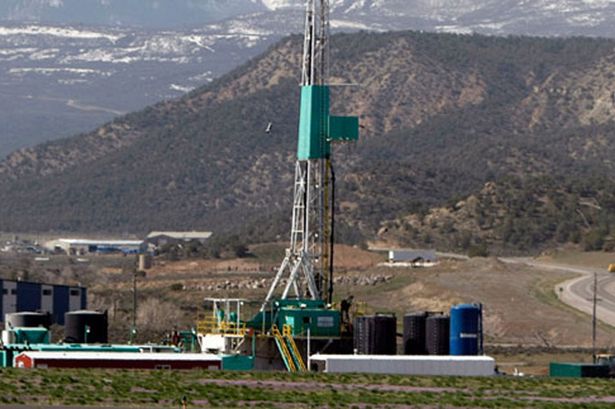
I would bet that most people in the developed world are already familiar with the basics of hydraulic fracturing, or “fracking.” For those who aren’t, it’s a technique used to extract oil and gas from previously inaccessible underground shale (rock formations).
Fracking has had a major impact on the US energy industry, where it has created a boom in oil and gas production in previously undeveloped areas, brought the country closer to energy independence, and led to a major drop in the price of energy, especially that produced from natural gas.
However, there are also opponents of fracking. Environmentalists worry that we are not aware of the potential effects of the chemicals used in the process, and that water pollution could cause a serious environmental problem at some point in the future. The fracturing of underground rock formations also sounds destructive, and many believe that it has caused or could cause earthquakes.
I have no interest in taking sides in such a debate, but every debate starts with knowledge, so I'm presenting five facts you might not know about fracking.
It's not new.
Hydraulic fracking has gained popularity in the last five or six years, but the technology itself has been around for much longer. Hydraulic fracking was first experimented with in 1947 in Kansas. That attempt was unsuccessful, but in 1949 the process was patented and the licensed user of the technology, Halliburton Oil Well Cementing Company, began commercial development of the technique later that year. Since then, fracking has been used in over 90% of wells in the United States.
Sand and water are mainly used.
Environmentalists who are skeptical of fracking focus on the potential for pollution from the chemicals used in the process. This leads many to believe that fracking is some kind of chemical cocktail pumped into the ground. In fact, over 99% of what is pumped into the ground is simply water and sand. This does not mean that pollution and environmental damage are impossible, it just means that it may not be what we imagine it to be.
It makes ice cream more expensive.
One component of the small percentage of substances other than sand and water in fracking fluid is guar gum. It is a natural product from the seeds of the guar plant, which is also used to improve the consistency of ice cream. A graph of the price of the gum since 2000 looks like this:
Chart: Guar Gum Prices
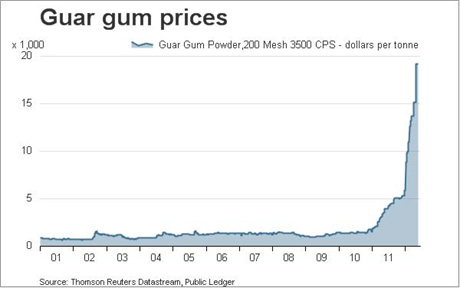
Ice cream and other foods that use the product are seeing notable price increases. For those of us with a sweet tooth, that alone may be reason enough to be concerned about the ever-rapid expansion of fracking.
The biggest environmental threat may be the amount of water used, not chemical pollution.
If the harmless nature of guar gum and the small percentage of chemicals used in fracking fluid lead you to believe that environmental concerns are greatly exaggerated, think again. Using data from 2011, in this article, Jesse Jenkins estimates that the amount of fresh water used in all shale wells in the United States was 0.3% of the country's total fresh water consumption. That doesn't sound like much, but in a world where water scarcity is becoming an increasingly serious threat, it's a good thing to consider.
It is not only used for oil and gas extraction.
Hydraulic fracturing isn't just used to extract oil and gas. It's also used to help extract water from wells, to improve geothermal energy production, and, most surprisingly of all, is used by the U.S. Environmental Protection Agency to clean up hazardous contamination sites.
Both supporters and opponents of fracking will undoubtedly interpret these little-known facts about the process in a one-sided manner to support their arguments. As I said, I have no interest in taking sides. My only goal is for everyone reading this article to learn something they didn't know before. The debate will continue to rage, but the better informed the debaters are, the better for all of us.
You can read the original text here.




The conclusion - the biggest threat is to ice cream.
Don't expose yourself with such articles, team members...