EKIP– Expert Club for Economics and Politics A Different Opinion
We offer something really interesting - a combination of guest commentary by Kuzman Iliev and our editor Stoyan Panchev - in one
Kuzman Iliev
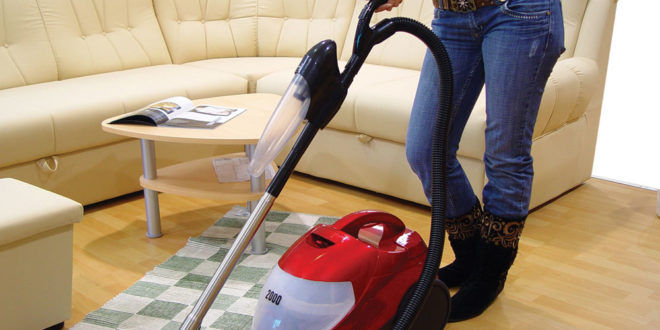
Europe banned vacuum cleaners with a power of over 1,600W, which became the reason for writing the article in the newspaper Dnevnik "Economics of the Banned Vacuum Cleaner", authored by Yulian Popov.
" The debate about the powerful vacuum cleaner encapsulates a fundamental economic dilemma - is it good or bad for the state to interfere in the economy? Does the free market or government dictate have a greater chance of bringing us closer to the desired economic prosperity?"
The article starts well - a person who uses the word "dictate" in relation to what the government does creates the impression that if he doesn't know, he at least has an intuition about the truth.
And he continues: " First, we should remind ourselves that it was not Europe that banned us, but that we banned it ourselves. The fact that we do not know the process of adopting and implementing European directives is our problem, not Europe's. If we were so against this ban, we should have fought in time to prevent it."
Obviously, the author identifies the decisions of the political body with those of the citizens, and since Bulgarian politicians have not “stood up” for themselves in front of their European equivalents, there is nothing to complain about. This touches on a fundamental problem of democracy – that it is turning into a tyranny of the majority. The individual does not have the right to choose for himself, even for things that do not in any way violate the fundamental principle of non-aggression.
Hardly - if a Volensidero member failed or did not want to oppose, you have no right to complain that someone from Brussels tells you what vacuum cleaner to use, how much money to set aside for retirement, health, how much and where to smoke (if the establishment is your property), whether to get married, or in general how and whether to live...
“The free market is like the mermaid – everyone tells tales about her, but no one has seen her. The question is not whether to regulate the market, but how to regulate it so that research, entrepreneurship and competition are maximally supported and work for our well-being.”
The free market is not a Mermaid and it is not a utopia. Yes, it is an ideal, but it is also completely realistic. In practice, non-interference by the EC and EP in the negotiation process for the purchase and sale of vacuum cleaners would be its perfect embodiment.
The free market is just a network of voluntarily exchanging, free people, who own themselves and their private property. Since everyone understands prosperity differently – the civil servants in Brussels and the housewives with vacuum cleaners, for example – there is no way that “regulation” by the state alone can achieve this prosperity. It is the actions of the economic players themselves with their incomes that show what is useful for them and what is not – for themselves, not in the eyes of some state-funded economist or socially engaged journalist. If there is no harm to the personality and private property of other people, there is no problem.
By banning the sale and purchase of certain types of vacuum cleaners, the EU, as the European government, is engaging in what Murray Rothbard calls trilateral intervention. Intervention by a third party in a voluntary and peaceful process of exchange between two other countries.
The sentence “not whether, but how to regulate” is a sentence that only a person with a tyrannical psychoepistemology could say. A kind of: not whether I have the right to interfere with you, but how…
"Most of the discoveries and technological developments that drive today's economy are actually the result of government policy and subsidies. The Internet, for example. Wind and solar energy, which can now compete with conventional energy without subsidies, is another example. Modern insulation materials too. Or aviation. So it's not bad to be a little more careful and selective when we scold regulatory interventions in the market world."
This is absurd. First, “state subsidies” do not exist. This is money forcibly seized from free citizens, subsequently distributed to one or another business. The vast majority of them go to charity. Others – make a business ultra-successful at the expense of others, which is nothing strange. If you take everyone’s money and give it to one entrepreneur, it will probably have some result.
It was the liberalization of the aviation business in the 1970s and 1980s in the US that led to a sharp drop in ticket prices and an increase in quality. There is even tons of mainstream literature about this.
The truth is that the Internet is what it is not because of governments, but in spite of them – the USA, China, Turkey, Bulgaria… Which government does not try to limit the Internet in one form or another, to impose control over it and the information within it, with the most plausible pretexts, of course? As we said: to protect people from themselves is the most favorite argument. It is good that the angels who are at work in the state that forcibly takes their income are more virtuous than the billions who earn this income with their labor. The watchful mother “state”, responsible for the murders of hundreds of millions in the 20th century alone, is hardly the best and most benevolent parent. And here too, there are no exceptions: Russia, China, the USA, Turkey, Bulgaria… As the author says repeatedly in the article: we must be careful. Yes, by delegating anything to the government.
It is clear that the Internet is the embodiment of the free market and can only exist if people need it, and that everything good about it is due to the billions of users and their knowledge, not to one committee or another. Public investment in technology is a tiny fraction of what is developing in parallel as private funding and development of Internet technology.
The bubbles that the state created in wind and solar energy are still being talked about and are yet to burst. When savings in the economy allow a given invention or technology to enter mass use – it does enter, there is no need for this process to be “stimulated” by the state. Otherwise, the ancient Greeks had excellent engineering achievements for the steam engine, for example. They did not have the capital – machines, equipment, savings, with which to make them accessible to a large number of people. It sounds wonderful that every new technology does not enter automatically, but purely economically this is impossible. Until its use becomes profitable, that is, the revenues from it exceed the costs of using it, it is a net social loss of resource.
"Sometimes they not only help the market, they create it."
The anger that overwhelms us over the ban on old light bulbs and vacuum cleaners has another dimension. The vacuum cleaner doesn’t work in a market world. Literally. It runs on subsidized electricity. So we don’t really have much right to say that what kind of vacuum cleaner we buy is our business. In an ideal world of market mermaids, where we pay for everything, really everything that goes into every kilowatt-hour, we might have more reason to protest. In the real world, we have to be a little more careful.”
The fact that the state usurps something and takes control of it does not mean that it is its original dominion. In other words: the fact that the state has conquered the energy sector and is wreaking havoc upon havoc in it does not mean that this sector cannot be free a priori. Nor that when we use energy we should mentally thank the government for the opportunity. Yes, of course, by subsidizing electricity prices, a larger amount of it will be used, with great environmental damage, and a resource will be wasted. That is precisely the best thing about the market, that when it exists, you can see in reality how much a given good or service costs, how valuable, sought-after, and urgent a need it is.
If there were a market for electricity and the price, based on purely market processes, jumped, today probably all vacuum cleaners would consume even less energy than the ceiling imposed, or entrepreneurs and innovators would have invented energy-saving devices for the purpose.
Apart from violence and coercion, there is no product created by the state. There is no way that someone who aims to absorb some forcibly seized money, keeping his place in the hierarchy of subordinates in the state organization, can act like Steve Jobs, who leaves university and works, creates, thinks, makes mistakes, bears responsibility in a garage... It is no coincidence that he was born in the relatively freer America, and not in Cuba or Vietnam, let's say. It is not a question of genes.
Energy security can be achieved much more easily if the private resources and savings wasted on foolish and wrong subsidies are left in the companies for their products and development. Specifically, shale gas with all its pros and cons is an example of why blackmail due to favorable geographical circumstances is a fragile platform.
It is private property and the institution of the market that protect the environment and moderation in the use of scarce resources. Not regulation or state intervention that confuses incentives. The truth is that no one in the 19th century valued oil and uranium, let's say. It's just that no one expected them to be an important raw material. So we have no way of knowing what the future and the market will offer us, understand, people who are free to act and think.

Stoyan Panchev
Sometimes a certain political decision is so absurd that it provokes a completely justified outburst of ridicule, indignation and even resistance. Such is the case with the new absurd idea of the European Commission (EC) and the European Parliament to ban vacuum cleaners with a power of more than 1,600W. Of course, once the great political minds of the Old Continent have arrived at this brilliant decision, other great minds (in journalism, for example) will appear and try to defend it. This is exactly what happened, in the article by Julian Popov in the newspaper "Dnevnik" from September 3rd.
The analysis in Mr. Popov's text begins with a mockery of the outraged Bulgarian public, which instead of sitting around and dealing with various nonsense such as work, taking care of family and household or having fun, should have been monitoring what they were doing in Brussels in order to be able to impose its own opinion. In this sense, as the author says, "Europe did not forbid us something, we forbade it ourselves" - by not watching over the scoundrels in the EC and EP from doing nonsense.
Once the critics are sated, attention turns to the “mermaid” of the free market. Why mermaid? Because Mr. Popov knows that while everyone talks about a free market, no one has seen one. After establishing this “fact” and shocking everyone who has ever been interested in economics, the author moves on to list important “facts”:
- The Internet was invented by the state – of course, this is not the case, for example, according to fellow commentators of Julian Popov in the Wall Street Journal
-Wind and solar energy can now operate without subsidies - great, but why didn't we just wait a dozen years for the technologies to reach that level, instead of spending billions on subsidies.
-"Modern isolations and aviation too" - I don't even know how to comment on this, except that it's absurd to claim that without a state there would be no aviation or isolation
After these solid statements, the text continues with this statement:
"It [the vacuum cleaner] is powered by subsidized electricity. Therefore, we don't have much right to say that what vacuum cleaner we buy is our business. In an ideal world of market mermaids, in which we pay for everything, but really everything that is invested in every kilowatt-hour, we might have more reason to protest."
This is a very peculiar statement. As a consumer, I have never decided who and how will be subsidized by the political authorities – my ability to influence such a decision is very limited. However, the same political authorities have the right to further restrict my freedom by saying which vacuum cleaner I can use (after having once taken my money to subsidize it), because of another action of theirs.
And for Julian Popov, this is not only normal, but also does not give grounds for any protest. It is as if I have asked for electricity to be subsidized and accordingly I will suffer the consequences - I will listen to whatever comes down from the wise Brussels rulers.
To fully convince readers, the analyst from Dnevnik also introduces another thesis. He tells us that “the European Union imports about 30% of its gas from Russia (we – 100%). A large share of the oil and coal we burn also comes from Russia or other unstable regions around the world.” And he adds that since there is no “national security” surcharge in the price of electricity, we must resign ourselves to the Brussels ban. Of course, banning vacuum cleaners is a much better security strategy than diversification or liberalization of the energy market – here Popov is right.
The end of the article is a classic lesson in economic illiteracy. It talks about how much money European households would save, how new energy capacities will not be built, and the like. The purpose of this text does not allow for a deep dive into the topic, but all the “problems” that the author sees are solved in the market through the price mechanism. If a household finds its energy costs too high, it will reduce consumption, at the same time, if the demand for energy is large enough, entrepreneurs will look for ways to satisfy it – whether with the already profitable green technologies or with the extremely cheap shale gas.
Society does not need a fat political class and an all-knowing bureaucracy to deal with such problems. Nor do these same individuals need to make people's lives worse by making their lights dimmer, their vacuum cleaners weaker, or their dinners more nutritious under the pretext that they will save money for them, save the environment for them, or lose weight for them.