EKIP– Expert Club for Economics and Politics A Different Opinion
Sean Reagan
The debate over the Arctic National Wildlife Refuge resurfaced last week when the Obama administration announced new restrictions on Alaska’s vast, oil-rich landscape. The Interior Department is placing 30,000 square miles of ANWR under a drilling ban, and the president is asking Congress to designate the reserve as a wilderness area, the highest form of federal protection.
The reactions were typical. Industry groups said the restrictions “tie the hands of Americans against a future of affordable and reliable energy.” Environmental groups praised the measure: “Some places are just too special to drill for,” said Jamie Williams, president of the Wilderness Society. The Center for Biological Diversity urged Congress to permanently protect the area “before it is destroyed for short-term gain.”
But talk is superficial, so let's try a thought experiment: What if we left the fate of ANWR to environmentalists? What would they do if they owned ANWR?
Consider the National Audubon Society, one of many environmental groups supporting new protections in ANWR. “Drilling is dirty and dangerous work that has historically led to spills and harmed the environment,” says the group, which has long opposed all drilling in ANWR.
But let’s look at how the Audubon Society manages its own private wilderness preserves. For nearly 50 years, the group has allowed oil and gas drilling on its 26,000-acre Paul J. Rainey Preserve in Louisiana. The preserve protects important habitat for thousands of migratory birds and other wildlife. Beginning in the 1950s, several oil companies drilled dozens of wells in the preserve.
In 1981, Reason broke the story of drilling on the Rainey Reservation. “Gas wells on land managed by professional environmentalists may seem almost as out of place as free drinks at an Alcoholics Anonymous meeting,” write John Baden and Rick Stroup. “What happened to the animosity between resource optimizers and environmentalists? Do the lion and the lamb lie down together in the same field?”
The Audubon Society ensured that the drilling was done carefully. The companies had to follow strict drilling restrictions, including restrictions on pumping during the bird nesting season. As one journalist noted in Audubon magazine, “There was a clock-based control mechanism, and when the cranes started working, the construction workers had to stop.” These precautions were necessary, said the preserve’s manager, John Anderson, because Audubon members “would be very angry if we were polluting our own environment, our own land, our own preserve.”
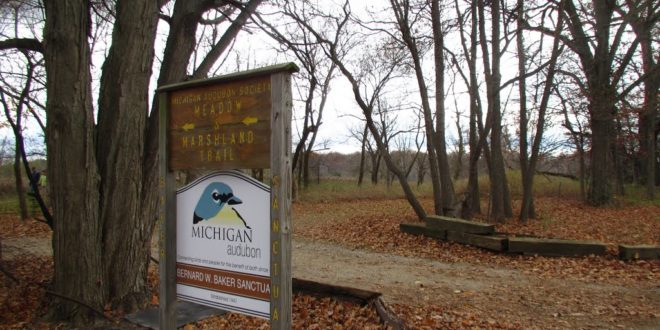
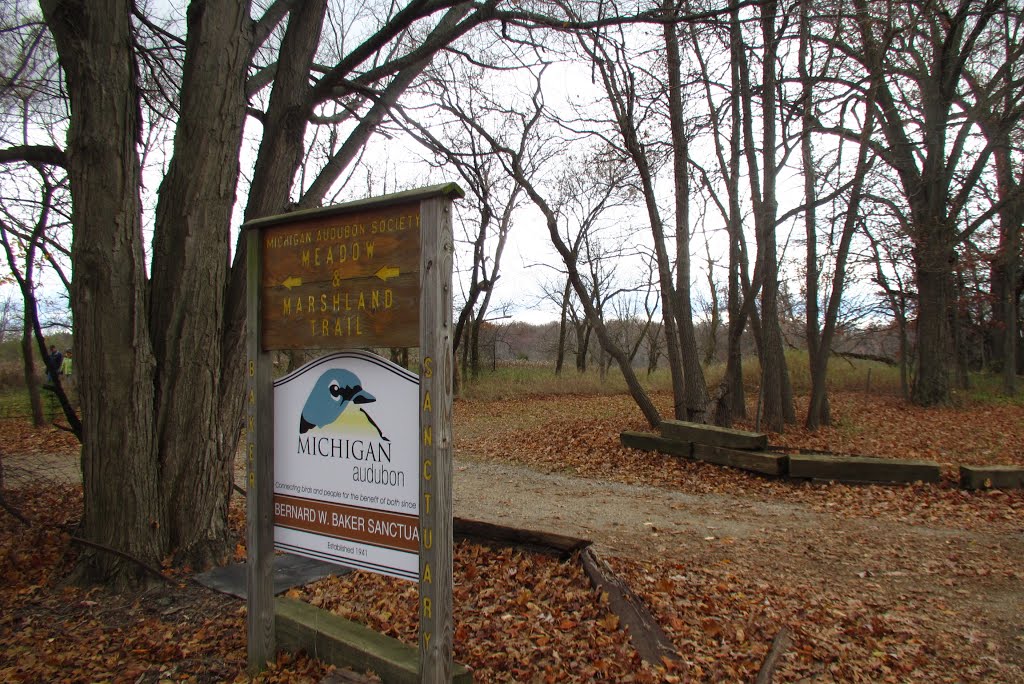
It’s not just Rainey. Audubon has also authorized drilling on the Bernard Baker Reservation in Michigan. For years, an oil well outside the reservation has been tapping into oil and gas beneath its surface through directional drilling. The agreement allows Audubon to earn royalties from the mineral while protecting bird habitat.
Why does Audubon allow drilling on its own reservations but oppose drilling elsewhere? “Different incentives lead to different behaviors,” Baden and Stroup say. Private property rights force Audubon to consider the trade-offs of managing the reservation and the opportunity costs of leaving oil and gas untapped. In exchange for drilling on the Rainey reservation, Audubon earned more than $25 million in royalties that could have been used to buy and protect even more land.
Although oil and gas production on the Rainey Reservation ended in 1999, Audubon is considering reopening the reservation to drilling. New directional drilling techniques allow companies to extract oil and gas beneath the reservation with little or no impact on the inhabited wetlands. The proceeds will help Audubon pursue wetland restoration projects and combat coastal erosion on the reservation.
Back in Alaska, the story is much different. Audubon opposes almost any oil and gas development in ANWR and on all federal lands. On public property, the incentives for compromise are virtually nil. Audubon has no reason to consider development in ANWR because, unlike the Rainey Reservation, they are not in a position to receive any of the benefits.
And those benefits could be significant. A study by economists Matthew Kotchen and Nicholas Burger pegged the value of oil produced under ANWR at $374.0 billion at an oil price of $53 a barrel—not far from today’s price. With that much money, environmentalists will be forced to consider what additional environmental value could be gained by allowing at least some drilling in ANWR.
After all, it is possible that more important environmental benefits lie elsewhere. As one Alaskan writer put it, “It is far more important from an ecological point of view that Alaskan ducks and geese have a place to winter in overpopulated, overdeveloped California than that California ducks and geese have a place to breed each summer in sparsely populated, undeveloped Alaska.” On private property, environmental groups might appreciate the tradeoff just as Audubon did on the Rainey Preserve in order to achieve greater ecological benefit.
This kind of balanced approach is lost in the debate over ANWR today. Under public ownership, ANWR takes on excessive political symbolism: Should we save the Arctic or destroy it for short-term profit? Should we protect America’s last great wilderness or drill and drill? The Rainey Preserve shows that it doesn’t have to be one or the other. Private ownership gives environmental groups a strong incentive to balance conservation with resource development and to make decisions about competing needs in a cooperative, mutually beneficial way.
Property rights matter. When environmental groups shoulder the costs of managing their own lands, their behavior is often very different from what they advocate for on lands that are publicly owned. The Audubon Society’s experience suggests that there is a more sensible approach to environmental issues than the political conservationism we know today. But, unfortunately, you’re not likely to find it in the political debates surrounding ANWR.
Translation: Maria Neeva
You can see the original article here: http://reason.com/archives/2015/02/05/what-would-environmentalists-do-if-they