EKIP– Expert Club for Economics and Politics A Different Opinion
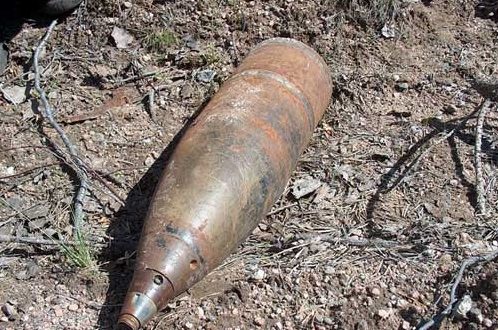
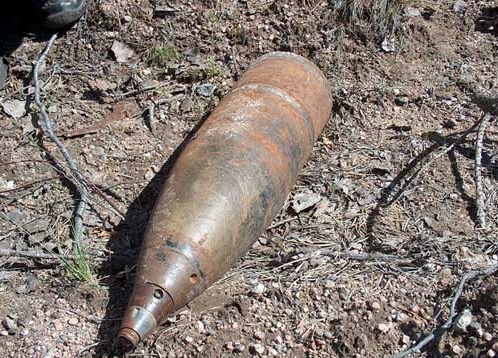
Incidents in ammunition production or disposal plants are becoming more and more common in the news. Unfortunately, regardless of their nature and the reasons for their occurrence, they are perceived as something that happens because of private initiative in the sector. This “stone in the garden” of the free market is largely inaccurate and incorrect. The reason for this is the very manifestation of the incidents, which shows that they are not something typical only for private enterprises. Proof of this is, for example, the fact that half of the cases of explosions since 2008. have occurred precisely in state-owned enterprises or in those with a majority state participation.
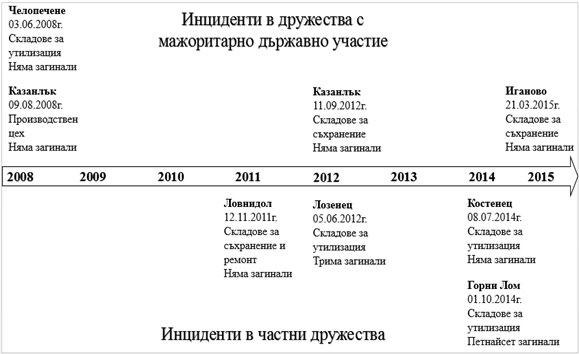
The public sector is clearly not doing a better job with security in factories and warehouses. The only effect of a possible transfer of the disposal activities [1] to the state (what voices were heard) would be a decrease in the efficiency of the respective process and an increase in costs, due to the wasteful nature of the guaranteed market position and the lack of competition. Since the Ministry of Defense's disposal program until the end of 2015 [2] operates with a certain budget, this will not be appropriate, although the cabinet always manages to surprise us with some "reform".
Another problem, besides the one related to safety, is the loss of confidence among people that the free market can and should deal with the production or destruction of ammunition. The incidents that have so far claimed the lives of 19 people for whom this work was more or less the only source of income, 18 of which were in private enterprises, support this thesis. The question is whether the accidents really originate from private initiative or are the result of the lack of quality standards and adequate control over the activity, which force entrepreneurs to reduce their safety costs to the sanitary minimum, which in combination leads to accidents. And even more – what is the system for bearing responsibility for the loss of human life.
What does the law say?
As for the storage of ammunition, the law is particularly voluminous in the part about who can produce and store them and how. The Law on Weapons, Ammunition, Explosives and Pyrotechnic Articles regulates that the Ministry of Interior [3] can issue permits [4] for production and utilization to persons registered as traders and having the appropriate building stock within the meaning of the Spatial Planning Act. Compared to the regulation [5], valid for the sites under the care of the Ministry of Defense, no specific parameters are mentioned. Instead, it is left to the discretion of the Ministry of Interior officials to decide, based on the owner's documents [6], whether an enterprise is legal. The same applies to the employees of the enterprise. The owner is obliged to have qualified personnel [7], but nowhere does it mention what qualifications. In the incident in Gorni Lom at the end of 2014, one of the employees shared in a television interview that the training lasted only one week. In addition, it turned out that the latter, along with about 90% of the other workers, had primary education. A high-risk production process such as the production or utilization of ammunition definitely requires a slightly higher standard, especially in the specific instruction of employees. Unfortunately, control over this aspect is not elsewhere but in the Ministry of Labor and Social Policy [8].
The low requirements for starting a business in the field of ammunition production and utilization are one side of the painful coin of the mentioned incidents. If we turn the other side, we notice that the pointless state regulation of the sector is accompanied by practically non-existent control over its implementation. Having a single regulator in the person of the Ministry of Internal Affairs is, to put it mildly, inadequate given that they license companies that do not meet their own requirements. As a result, we observe the same incidents again and again without any attempt to attack the case by the institutions, which would be aimed at solving the real problem.
The government's reaction
The series of incidents in state and public enterprises has shown the glaring need for measures to ensure the safety of workers. Although regulation and control are one of the main problems in this risky sector, the government clearly has a different vision of how to prevent future incidents. Unfortunately, this is not the “reform” that is enshrined in the coalition’s election program as just a word.
The government has decided to ban the import of ammunition for disposal from abroad, in a move aimed at preventing new incidents similar to the one in Gorni Lom, which occurred during the processing of Greek shells. It came after the incident in Iganovo, where a storage warehouse at the Sopot Military Plant was blown up, which suggests that the measure is more about showing initiative than achieving anything concrete.
Hypothetical private regulation
In a different economic reality, the ammunition disposal and manufacturing business could be self-regulated. Given the high export potential of such an industry, the presence of an organization that enforces quality standards, in addition to making economic sense, could also be a profitable business. Given the frequency of incidents and their impact on ammunition disposal and manufacturing companies, any larger company would want to prove the safety of its methods.
UL (Underwriters Laboratories) is one such example. The company is engaged in consulting in the field of industrial safety (along with other services in the field of environmental protection, etc.) and imposes standards for the safety of products and production processes. Its certifications guarantee compliance with these standards and also add value to the service or production.
Such a structure in the risky sector of ammunition utilization and production would significantly increase the security of the production process. The reason for this is the presence of imports of ammunition for processing from abroad, as well as government orders. No company in the sector will allow sporadic incidents to damage its image in front of potential and current customers, which will largely leave non-competitive companies, from a safety point of view, without revenue, no matter how cheap the service they offer
Back to reality
In light of previous moratoriums, we see once again that the government's propensity to intervene in the free market is not only not decreasing, but is the first option when there is a problem. After the moratorium on timber exports, which tried to wipe out an entire sector, it shows a determination to continue solving cases in an economically unsound way. Considering that the real cause of the incidents remains unaffected by the current measure, it will not surprise anyone if the accidents not only do not subside, but we witness a new incident in the coming months. The curious thing then will be what the government will do. Will it lift the ban, will it take some concrete responsibility and make the necessary legal corrections or, as Mises argues, will it increase its intervention with new measures?
[1] http://www.standartnews.com/balgariya-politika/nenchev_iska_utilizatsiyata_na_boepripasi_da_bade_samo_v_darzhavni_ratse-277708.html
[2] http://www.mediapool.bg/files/195/%D0%BF%D0%BB%D0%B0%D0%BD.PDF
[3] General Directorate of Security Police at the Ministry of Interior
[4] Art.13
[5] Regulation on the conditions and procedure for carrying out activities related to explosives, firearms and ammunition, and their control in the Ministry of Defense
[6] Article 17
[7] Article 14
[8] "The requirements for the qualifications of the persons under para. 1, items 4 - 7 shall be determined by an ordinance of the Minister of Labor and Social Policy jointly with the Minister of Interior and the Minister of Education and Science." – Art. 14, para. 2