 EKIP– Expert Club for Economics and Politics A Different Opinion
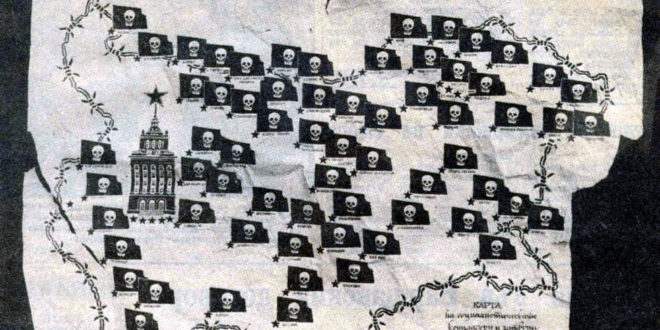
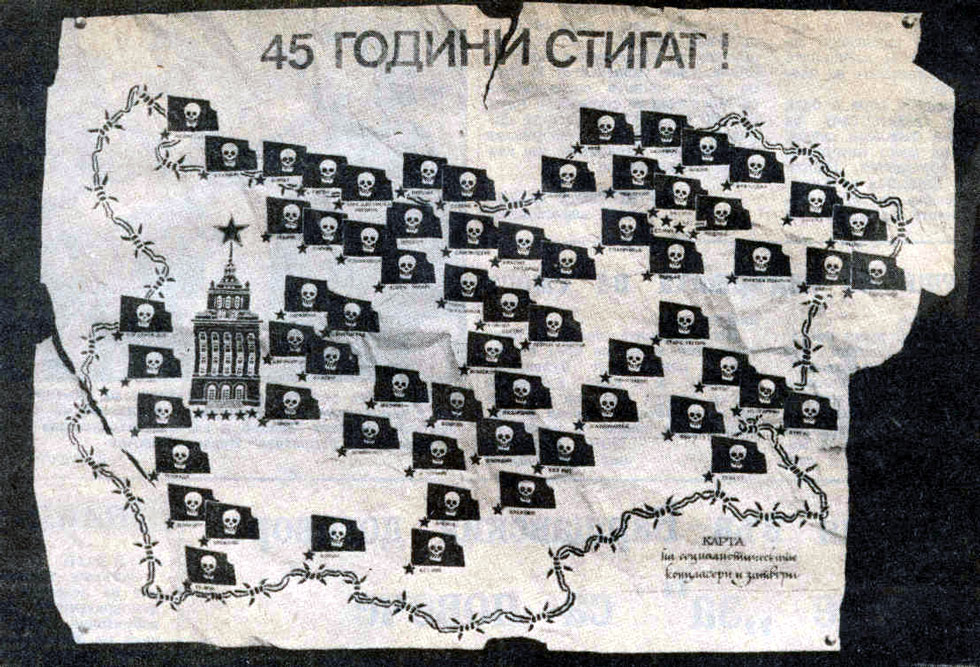 On this day 71 years ago, Bulgarian communists staged a coup d'état and seized power in Bulgaria. Today, their successors once again honor the "bright holiday," trying to convince us of what an achievement communism was for Bulgaria. Let us recall this chapter in the country's history.
The red narrative of events is that the people, led by the partisan movement, rose up and overthrew the fascist government of Bulgaria, thereby freeing themselves from their torment.
First, there is no partisan movement in Bulgaria. Partisans are fighters behind enemy lines. There are partisans in Finland, in the USSR, in France – where there were active hostilities, front lines and occupation of territories by troops of a foreign state. In Bulgaria, these factors are not present. The temporarily residing German units are in no way occupiers (as they appear in other countries, for example in Greece and Yugoslavia), and there are no military operations on the territory of Bulgaria. In this sense, the so-called partisans are the most ordinary terrorists, perpetrators of murder and causers of material damage in the interests of a foreign state. We can say that the communist partisans for Bulgaria are like the assassins in “Charlie Hebdo” for France.
The “People’s Revolution,” as the leftists describe it to us, is also greatly exaggerated. On September 5, the USSR declared war on Bulgaria, and on September 8, Soviet troops invaded the country. The next day, the structures of the OF seized power in Sofia. The coup was carried out solely thanks to the Soviet occupation. In Bulgaria at that time, there were no mass communist movements at all, and the remnants of the communist party were extremely small.
Immediate consequences
The Soviet occupation and the communist coup began to produce their negative results immediately. Repressions against the "enemies of the people" began on September 10. The exact number of those who died without trial and conviction is still unclear, and the death sentences officially issued by the People's Court are over 2,700. For comparison, the death sentences issued during the Nuremberg Trials against senior Nazi officials were 12.
As a result of the Soviet occupation, Bulgaria actively participated in the war. Bulgarian troops were sent to fight against the retreating German army, and in the battles Bulgaria suffered over 30,000 casualties. It is a subjective question whether this participation was justified, but it should be noted that at the time of the involvement of Bulgarian troops, the situation in Germany was very critical and the victory of the Anti-Hitler Coalition was already almost certain.
Unofficial reparations
Between 1944 and 1947, Bulgaria suffered enormous material losses as a result of the Soviet occupation. Bulgaria was forced to bear the entire cost of the Soviet army stationed on the country's territory. The total losses from this amounted to over 80 million dollars, which is about 2/3 of our entire pre-war foreign debt. If these expenses were to be made today, they would amount to 1,060,684,444 dollars. For comparison, the official reparations imposed by the Paris Peace Conference were 70 million dollars, with Yugoslavia waiving the 25 million it was due. Thus, Bulgaria paid almost twice as much for its "liberation" as for its "war crimes."
The long-term consequences
In this category, the damage caused by the communist regime is immeasurable. As economic science teaches us, central planning under socialism cannot work. [1] The total nationalization of production, expropriation of land, expropriation of savings (in the first few years after the war, the Bulgarian National Bank carried out several currency changes, restoring only a small part of the withdrawn old issues) completely destroyed the normal functioning of the economy. [2] Bulgaria embarked on the path of a planned economy, which managed to collapse only after 15 years. The inadequate economic policy of the government led the economy to bankruptcy in 1960, which necessitated the urgent sale of 20 tons of Bulgaria's gold reserve to service loans to the USSR. Over the next 30 years, the economic collapse repeated itself twice and once more in 1996. We have already examined in detail the bankruptcies of the planned economy in Bulgaria in another article. [3]
Money, prices and trade
In a socialist society, these concepts completely lose their meaning. In Bulgaria, after the nationalization of banks, the banking system practically ceases to exist. The Bulgarian National Bank no longer plays the role of a central bank, but of a central planning commission that makes decisions about what to sell and how much to sell. Trade, as a voluntary exchange, ceases to take place. All goods come under the strict control of the state. In these conditions, society constantly lives in a state of deficit, the same as waiting to buy a car or the impossibility of acquiring a given good without the necessary connections.
State-owned enterprises, often operating at a loss, are constantly being financed by the BNB, which prints unsecured banknotes, while strict price controls keep prices artificially low. Wages do not reflect labor productivity, but rather the quantitative notions of labor preached by Marx. As a result, there is a massive dequalification of workers, deprived of the opportunity to earn more for their labor. The result is the abundance of money, combined with a shortage of goods, characteristic of socialist production.
Monetary expansion, combined with the lack of market processes that fundamentally show who needs what and how it can be produced most efficiently, inflated a veritable bubble that burst spectacularly in 1990. [4] The devaluation of the currency that followed the liberalization of prices led to the destruction of people's savings and severe social upheavals, which the Communist Party (which arguably remained in power until the end of 1996) compounded with its consistent leftist policies. [5]
We can summarize that the consequences of September 9th are still being felt today. Fifty years of socialism stopped the development of Bulgaria and left it almost where it was in 1944, with the difference that in the early 90s Bulgaria found itself with a lot of production capacity that no one in the free market needs and which is mired in debt. This historical reality deprived several generations of Bulgarians of a normal life. Therefore, today can be at best a day for reflection and respect for the victims of communism, but not a holiday.
[1] Виж също: Ludwig von Mises, Economic Calculation in the Socialist Commonwealth и Socialism: An Economic and Sociological Analysis.
[2] Martin Ivanov and Daniel Vachkov, The Bulgarian Foreign Debt 1944 – 1989. The Bankruptcy of the Communist Economy, Ciela Publishing House, p. 48.
[3] On the topic, see also: Hristo Hristov, The Secret Bankruptcies of Communism, Ciela Publishing House.
[4] It should be noted that the last bankruptcy of the Bulgarian Communist Party-run economy began as early as 1986.
[5] This stress on the economy and its participants would not have occurred if the state had not controlled prices and had not artificially suppressed them. In this line of thought, the direct culprit for the difficult economic period that followed 1989 is the Communist Party alone.



Guys, your information is somehow inaccurate, I don't know where you got the facts from. But calling people who have turned Bulgaria into an advanced economy with developed industry, agriculture and good social policy terrorists is somehow not correct!
Abe heituri and on your negura mai podurja saitcheto mur6i dolni kogato and you achieve such a standard without murder without end everyone with jili6te and at least 2 children then pluite m......ii mur6ite dolni but ni6to veche you know the names
An advanced economy, developed industry and agriculture are absolutely false assumptions. It has been written many times about the tragic state of the economy during the socialist era. Today, Bulgaria's economy is in a significantly better state.