 EKIP– Expert Club for Economics and Politics A Different Opinion
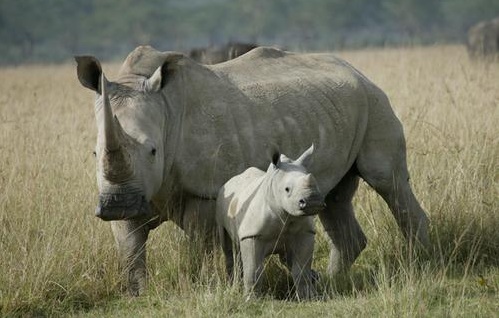
Today, many species of plants and animals are threatened with extinction. It is widely believed that the main causes of this ecological tragedy are agricultural activities, construction and industrial pollutants. The facts say otherwise – the extinction of biological species is a natural process, not a new, anthropogenic phenomenon. Fossils show, for example, that most creatures that lived on this planet disappeared long before the beginning of the industrial revolution.
Despite the above, at current levels of scientific knowledge, technology, and wealth, many people seem not only concerned, but also willing to spend huge amounts of money and take serious measures to reduce pollutants in nature and slow the rate of species extinction. For this reason, students from Northwood University in the United States conducted a study in the spring of 2015, commissioned by the EKIP and under the leadership of Professor Alex Tokarev.
During their internship, the students set out to discover how to most effectively prevent environmental degradation caused by human activities. In this article, we present the summarized results of their research.
Over the past decades, various theories have been developed and solutions sought in different directions. Two main approaches to the problem have emerged. As in many similar situations, one relies on voluntary cooperation, the other on the use of political force.
The first approach proposes a solution through free markets. The second advocates for more government and supra-governmental control. Northwood University students Kristin Tokarev, Tony Sierra, and Stephen Cecchini carefully examined the costs and benefits of different options, including the unintended consequences of past and proposed changes in legislation and regulatory regimes.
The most frequently advocated position in the media around the world is that central and local rules and laws are an indispensable means of protecting nature. Most people accept this opinion uncritically. It is often supported by facts published on the websites of authoritative and influential institutions, such as the US Environmental Protection Agency (EPA). Quite naturally, there we can find numerous claims that the various federal bureaucratic departments, the creation of which began during the time of President Nixon, are the main reason for the improvement in the quality of life due to reduced levels of pollution.
One example is the Clean Air Act, which came into effect in 1970. Measurements show that after its adoption, emissions of six of the most common air pollutants in the United States fell by more than two-thirds. Another website, that of Scientific American, examines the effects of the passage of another law, the Endangered Species Act of 1973. There we learn about the saving of iconic animals for Americans - the bald eagle, the gray wolf, and the grizzly bear.
On the other hand, we all know that despite national laws and international agreements against the killing of African elephants and rhinoceroses, the numbers of these magnificent giants continue to decline at an alarming rate in many areas. These and other similar failures of regulations to achieve their stated goals raise important questions. Among them, the following stands out: can more effective alternatives to legislation be found in the fight to preserve natural resources? This led the team to apply in practice the lessons learned in microeconomics classes: about the enormous role of personal incentives, that is, about how individuals respond to changes in the costs and benefits that directly affect their lives.
An article by the National Center for Policy Analysis notes that laws like the Endangered Species Act often prove counterproductive—the harm to wildlife outweighs the benefits. For example, because landowners face significant financial burdens when endangered species are found on their property, many are tempted to take protective action before federal authorities have even discovered them. The Endangered Species Act in the United States makes it profitable to take action that results in the killing of animals or the destruction of their habitats by plowing land, cutting down trees, and clearing brush.
to be continued...




10. Inflation leads to waste and natural resources become more expensive - https://ekipbg.com/10-neshta-za-koito-e-vinovna-inflaciiata/
The free market, especially in financial capitalism, is the main cause of environmental problems, and the problem is that there are two more catastrophes besides the environmental one, that is, they are interconnected, but the main cause is finance, and it is a systemic crisis.
In 2011, an interesting book by Richard Heinberg, The End of Growth: Adapting to Our New Economic Reality, was published. The author makes a startling diagnosis: humanity has reached a fundamental turning point in its economic history. The trajectory of the expansion of industrial civilization is facing indisputable natural limits. Further growth will be blocked by three factors: resource depletion, environmental constraints, and the crushing volume of debt. These interacting constraints, Heinberg writes, will force us to reassess cherished economic theories and rethink money and trade rather than continue to pursue the impossible – an infinite increase in GDP.
THE ''SYSTEM'' FAILED BECAUSE IT IS BASED ON CONSTANT GROWTH, AND THAT IS IMPOSSIBLE
The most important thing now (since we are facing a fait accompli) is what needs to be done to prevent chaos and wars (comments 1 and 3) - http://darikfinance.bg/novini/116481#comments
It starts with a ban on offshore companies, a tax on interest on government debts and a "Tobin tax" with the goal of 6% budget surpluses that are invested in precisely defined things to avoid the oil catastrophe and global warming.