EKIP– Expert Club for Economics and Politics A Different Opinion
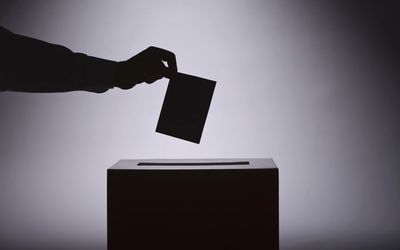
I begin this text with an important clarification – I do not vote, I have not voted for a long time and there is no prospect of voting in the near future. In this text I will examine one of the main reasons for this – the party principle of electing the representatives of the people and part of the administration and the policy packages presented by them.
For the rational voter, at least in theory, voting is solving a complex conundrum – he is expected to familiarize himself with the parties' platforms and, since he is assumed to be fully aware of his own positions, values, and demands, to choose the party whose campaign promises and past policies are closest to them.
How much this process is happening in Bulgaria and what the real motives for voting are for most voters is a topic I will not touch upon – much has been written about kebabs, cash in hand, bus invasions and the distribution of government contracts. Instead, I will focus on the problems that the principle itself raises.
Ready-made packages
The simplest and most commonly used metaphor for the democratic electoral process is a market – voters have their vote, with which they “buy” the politicians and parties they like the most. The comparison is even more accurate, since the main task of elected officials is to direct the funds collected by them in the form of taxes into certain areas, with the assumption that their priorities correspond to the campaign promises.
However, the similarities with the market end there. In regular shopping, the customer individually selects each individual good and service according to his preferences and capabilities. In elections, on the other hand, the “customer” makes a decision between 5-6 fully loaded shopping carts containing a wide range of products, most of which the customer neither likes nor would ever think of spending his money on. [1]
This is precisely what party programs are - a comprehensive proposal for measures in all possible areas in which the state has intervention, control, or participation, which the voter either approves or rejects down to the last detail.
It is rare for parties to be created and to go to elections, standing behind a single cause, without defining their position on all other important public issues (the Green parties are an exception, but recently they have also increasingly reoriented to a broader spectrum of policies). The desire to attract the maximum number of votes leads them to propose policies in the maximum number of areas and in favor of the maximum number of potential voters; as a result, the volume of the package of election promises inevitably grows.
I highly doubt that there is a voter who supports every single policy of the party he supports in an election. It is more likely that he is not even familiar with the content of most of them, but rather casts his vote for one or a few policies with which he agrees, or even just because one of the party figures is sympathetic to him. This even calls into question the idea of rational voting, since the amount of information a voter needs to make a truly informed choice becomes larger and more difficult to digest as the number of parties increases. On the contrary, the challenge of researching party promises is capable of dissuading many from participating in the electoral process at all.
Policy packaging creates a significant problem for both sides in the electoral process – on the one hand, voters are unable to approve or reject some of the policies offered to them, but politicians also do not receive information about which part of their proposals and promises enjoys the support of voters. As a result, a process that could potentially bring a lot of information to both sides is reduced to “I like it-I don’t like it.”
This is an even bigger problem for libertarians (and similar “non-traditional” ideologies), whose views do not fit into the platform of any party and cannot be placed along the traditional line from conservative to liberal parties. If the voter is in a position where he supports low taxes and a small government, but not the aggressive foreign policy characteristic of conservative parties, supports broad personal freedom, but not the high level of redistribution and social programs of liberals, then he is faced with a (sometimes impossible) choice of which of his values is more important or to abstain from voting.
Another consequence of policy packages is the depersonalization of politicians – they rarely stand behind a specific policy of their party, even the opposite – they often have to defend ideas because they are part of the “package”, even if they do not agree with them. Accordingly, in general, they are identified not with their personal qualities and merits, but as part of the structure of their party and the policies it proposes.
These problems caused by the pre-election packaging of policies have no obvious solution, since they are part of the mechanism of representative democracy – we could hardly imagine representation without parties and without elections. The current situation will not change as long as the state retains its right to implement policies in all areas of social (and sometimes personal) life. In this sense, deliverance from program packages could only come with the privatization and transfer to the market of more and more activities and services that are currently provided by the state and therefore fall under the control of elected politicians.
[1] It would not be surprising, for example, for a company to offer its customers a package that includes a toothbrush, toothpaste, and mouthwash, for example. In the case of “buying” party programs, however, it is more likely to be a package that includes toothpaste, motor oil, and grenades.