 EKIP– Expert Club for Economics and Politics A Different Opinion
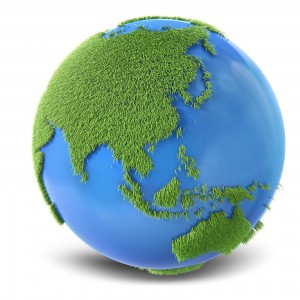
We have just had another greenest and most abundant year in history, and 2016 is set to set new records in the ecological and resource well-being of humanity.
When was the last time you encountered a statement like this? Amidst the avalanche of news about air and water pollution, temperature records, resource depletion, disasters, and calls to "save the planet," it's a unique find.
Have you ever wondered how to measure whether the planet is getting greener? I have two answers. The short answer is biocentric. The change in net primary production, or the amount of biomass created by photosynthetic organisms on land and in the oceans, is the best measure because it really determines biodiversity and the ability of ecosystems to function. We have been able to measure it since we have had satellite coverage, that is, since the late 1970s. NASA's results are unequivocal - primary production is growing, despite deforestation. I will not explain the reasons - everyone knows what the main food of life is! So the short answer is: Yes, the planet is getting greener!
What is happening to natural capital?
The long one is anthropocentric and therefore much more important for people. We can argue that the planet is greener if our natural capital today is more than yesterday and allows us to live longer, healthier and happier lives. The capital in question includes the state of the environment (air, water, soils, climate, ecosystems) and mineral wealth.
How many cholera sufferers do you know? I can't think of any either. We have forgotten that dirty water has always been a serial killer – the “closer” to nature we live, the more likely it is to visit us. Long a problem solved in the developed world, according to the Global Burden of Disease (GBD) study in 1990, it is still the second most significant risk factor for illness and mortality in the world. To date, its impact has fallen by 67% and is now in 9th place. Humanity has access to more and more clean water, and this trend will continue.
How many people do you know who cook on manure or wood? Unfortunately, there is a chance that you will remember – 7% of the population of Bulgaria lives like this. To reassure you, in India and Sub-Saharan Africa they are still the majority, and before Industrialization almost everyone was like this. A little-known fact is that 60% of the victims of air pollution at the global level are due to the burning of biomass in homes. Thank God, the trend is clear – from 1990 to today there has been a decrease of 41%.
Did you know that the word “smog” is not new at all? It was coined in England in 1905 to describe the typical London mix of smoke and fog. What we see in Beijing today is crystal clear mountain air compared to the historical norm in England. From the 13th century, when King Edward I made the first attempt to ban smoking, until the mid-20th century, smog was a part of life there. With the development of technologies for cleaning smoke gases, the world literally began to breathe. The health impact of fine dust smog has fallen by 24% since 1990 on a global scale, with even a decrease in China since 2007. Today, we live in homes and cities with much cleaner air.
Green Minds - Again with Wrong Predictions
The great green minds whose works I studied at university are known for their predictions of inevitable global famine, due to desertification, erosion, loss of soil fertility, depletion of water sources... The exact opposite is happening. In 1990, malnutrition was the leading risk factor for mortality on the planet. Today it has fallen by 67%, and at the top is improper nutrition, which often means... overeating. Despite the ominous predictions, the growth of agricultural production exceeds that of the population, and without more arable land. And 2015 is another year with record yields and falling prices of basic foods. There is no reason to think that this trend will stop, and biotechnology and synthetic foods are still entering at a high speed.
The same thinkers systematically predict the depletion of non-renewable resources, with oil being their favorite topic, but they also like to comment on metals such as copper, zinc, and lead. The combination of geological reality, human genius, and the free market makes them laugh, but this somehow goes unnoticed. Despite the annually increasing yields, in 2015 the reserves of all non-renewable resources are greater than ever, their prices are collapsing, and this will continue in 2016.
They claim that deforestation on the planet has reached catastrophic proportions. However, the global assessment of forest resources shows that in the last 5 years it has fallen to 0.08% per year (from 0.18% in the 1990s) and we can expect a net growth of forests before 2020. They accuse us of erasing between 10,000 and 100,000 species from the Earth annually over the past century. However, the International Union for Conservation of Nature (IUCN) has documented the extinction of no more than 1,000 from 1500 to the present day, that is, two species per year. Interestingly, species are being added to the list less and less frequently and are being deleted more and more often - it is a mass phenomenon for unknown populations to jump out of the thicket. By the way, a known species can no longer disappear - we certainly have its genetic profile, which means that we can revive it. And did you know that the wild populations of almost all the mammals and birds in Europe and North America that we really value – bears, wolves, lynxes, bison, eagles, vultures and other cute creatures – have been steadily growing over the past 50 years? The ones we care about are surviving – we just have the luxury of saving them. Against the backdrop of this “ecocide”, scientists are discovering and describing between 15,000 and 18,000 new species per year, and this will continue for quite some time. Everyone can calculate the net result for themselves.
For 20 years, every drought, flood, heat, cold, storm, hurricane, fire has been associated with climate change. However, the International Disaster Database (EM-DAT) clearly shows that the victims of such phenomena have been steadily decreasing from 1900 to 2015 – not only as a percentage of the population, but also as an absolute value. And the numbers from the past certainly do not present the full information. If in 1915 there was a flood somewhere in the Congo with thousands of victims, the probability that no one knew about it is quite high. Today, it will be broadcast live on CNN and the government will inflate the damage in order to receive more international aid. The values of the ND-GAIN index, which takes into account the vulnerability and readiness of countries to deal with climate disasters, have improved annually since 1995. Don't worry about Bangladesh - its territory is growing by about 20 km2 /year, thanks to the huge amounts of sediment that the Ganges deposits in its delta.
It will get better.
Actually, the long answer could have been short: The Global Environmental Performance Index (EPI), which includes the above, plus some other components, came out green for another year. Again, we have an improvement, which also applies to Bulgaria. The probability of this happening in 2016 is approaching 100%.
No, I'm not saying that we've solved all the problems, nor that new ones won't arise. If I'm not crazy, I'll be out of a job! But I want to bring a little more rational optimism into our lives and wish everyone:
Happy new greenest year 2016!



Optimism is a good thing, but we have to think 50-100 years ahead, that is, centuries ahead, and as for oil, it is certainly an EXHAUSTIBLE energy source and the main question is how much we can give it up, meaning if it is not 100%, we have to keep it for centuries to come.
Everything is exhaustible, and water is slowly being produced through photosynthesis, which is why I have written that shale gas is a crime against humanity because over 600 chemicals, some toxic, are used to extract it, and it is pumped underground, etc.
There is a UN report that with known technologies, the Earth can feed 20,000,000,000, but according to a UN report, every 6 seconds in the world, mostly children die from diseases caused by hunger and dirty water (every year, 10 million children die before their fifth birthday).
Currently, more than one billion people around the world are hungry due to violence, armed conflict and natural hazards. According to the World Health Organization (WHO), one third of the world is well-nourished, one third is undernourished and one third is starving.
And when it comes to oil depletion, it's a little more complicated and less than 20 billion.
, and a separate topic is how much oil reserves there are and how much technological time is needed to transform the world for the functioning of oil (according to scientists, 20 years). AND MOST IMPORTANTLY, HOW MUCH PERCENTAGE CAN WE GIVE UP ON OIL, and if it's not 100%, then we have to leave it for centuries for our children and grandchildren.
On the wall of Prof. Dr. Boyan Durankev (a lecturer at the UNWE in marketing and strategic planning) I summarized the main points and the professor liked what was written because these are the facts - https://www.facebook.com/boyan.durankev/posts/1698158037129090
It is not exhaustible in the economic sense of the word - read Julian Simon, The Ultimate Resource
I don't know what you mean by "It is not exhaustible in the economic sense of the word" and I don't have time to read right now, so if you want, explain.
I am irritated by the words in the article: "The same thinkers systematically predict the depletion of non-renewable resources, their favorite topic being oil."
so what does this Boyan Rashev want to say??? that oil, gas, coal are inexhaustible????
The Earth is a ''ball'', that is, with a certain mass, composition, etc. even water is slowly being depleted for now through photosynthesis and I have explained - https://www.facebook.com/atanas.shalapatov/posts/1566597433618485
That's exactly what it says... Give me an example of a globally depleted non-renewable resource in history and I'll give you 5 examples of practically depleted renewable resources for every one of yours 🙂 But you'll be left with zero!
So you don't get tired of propaganda, do you? I still can't understand who pays you and how YOU have brainwashed yourselves like this. Can't you understand that libertarianism is looked down upon even in its homeland - the USA. And with full reason, so far I don't know of a successful libertarian society, even communism has held on as a system of orders longer.
this one... what communism
The infantile consumerist attitude towards the Earth and its gifts has manifested itself in an infantile article -- no wonder.
Green biomass is growing due to the pollution of the oceans with pesticides. And this algae congestion does not bode well.