EKIP– Expert Club for Economics and Politics A Different Opinion
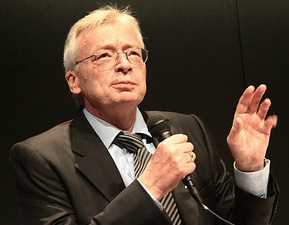 Интервю с Ханс-Херман Хопе за полския седмичник Najwyższy Czas!
What is your assessment of contemporary Western Europe and the EU in particular?
All political parties in Western Europe, regardless of their different names and programs, gravitate around the fundamental idea of democratic socialism. They use elections to legitimize the taxation of the productive parts of society in favor of those who produce nothing. They take from the people (emphasizing the “rich” among them) who bring in their income and accumulate wealth through the production of goods and services that are voluntarily purchased by consumers and redistribute the funds to themselves or, in other words, to the democratic state they control. Along the way, they also enrich various political comrades, supporters, and potential voters.
They do not, of course, call this policy by its proper name—a scourge for the active and a reward for the inactive. That would not be very appealing. Instead, they exploit the primal feeling of envy and claim to be taxing the few “rich” to support the many “poor.” In reality, their policy drives the productive part of the population into relative poverty while rewarding the unproductive by making them richer.
But what do you think about the EU?
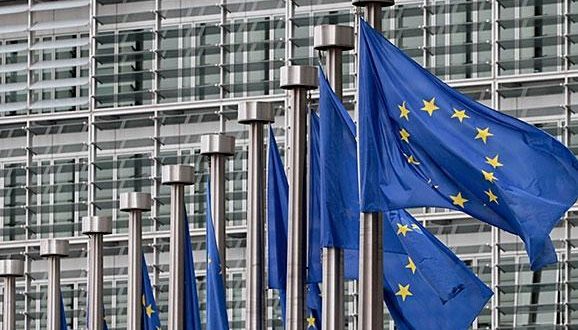
The situation in the organization is constantly deteriorating. The EU is only the first step towards the creation of a European superstate with a long-term goal – a world government dominated by the US and its central bank, the Federal Reserve. From its very beginning, despite its resounding political promises, the EU has never strived for free trade and competition. For this purpose, you do not need tens of thousands of pages of rules and regulations. On the contrary, the main goal of the EU, supported in this endeavor by the US, is the weakening of Germany, the first economic power on the continent. To ensure this, the country was sent on an endless “guilt trip”, putting pressure on the transfer of ever larger parts of its independence to the EU and Brussels and, accordingly, to the US. Of particular note is the surrender of the country’s sovereignty in the field of monetary policy and the exchange of its traditionally strong currency, the German mark, in exchange for the “weak” euro. Its issuer, the ECB, is made up of politically connected central bankers from countries that have had “weak” currencies in the past.
In this light, the EU has three main functions:
First, the consolidation of the taxation and regulatory framework in the different member states in order to reduce competition between them, especially with regard to the level of taxes in different countries. As a result, they are equally uncompetitive.
Second, to ensure that inadequate policies punish the productive and subsidize the inactive in different countries. At the same time, another macro-layer of redistribution is added, from those who are doing better economically, such as Germany and the countries in the North, to those who are economically weaker (especially in the South). The end result – everyone is doing equally badly.
And third, and more importantly in recent decades, in order to combat the simmering resentment against the growing jurisdiction of Brussels, the EU has been on a campaign to eliminate any form of national identity and existing socio-cultural proximity. The idea of a “nation” and the various national and regional self-definitions is considered comical, and “multiculturalism” is promoted as a good that should not be questioned. As is the provision of legal privileges and “special protection” for everyone except white, heterosexual men, and especially married ones (who are portrayed as historical “oppressors” who owe compensation to everyone else who is their historical “victim”), cynically called “anti-discrimination”. The natural social order is systematically undermined, being normal is punished, and all deviations are rewarded.
Can we say in such a case that the politicians at the head of the EU are even worse than those at the national level?
Yes and no. On the one hand, all democratic politicians, without exception, are immoral demagogues. One of my books in German is called “Competition among Criminals”, and it shows what political parties strive for in a democracy. In this respect, there is little difference between the political elites of Berlin, Paris, Rome, etc. and those who lead the parade in Brussels. In reality, the EU elites are former politicians with the same mindset as their national equivalent, on the lookout for lavish salaries, allowances and pensions handed out by the EU.
On the other hand, the EU elites are even worse than politicians at home, because their decisions affect a much larger number of people.
What future do you think awaits the EU?
The EU and the ECB are moral and economic monstrosities in violation of natural and economic laws. One cannot indefinitely punish initiative and success and reward inaction and failure without this leading to collapse. The EU will move from one economic crisis to another, ultimately leading to collapse. The Brexit that we have just experienced is only the first step in the inevitable process of political decentralization.
Is there anything an ordinary citizen can do in a similar situation?
Instead of accepting the politicians' high-flown talk of "freedom," "prosperity," "social justice," etc., people need to learn to accept the EU for what it is: a gang of power-hungry criminals increasing their influence and wealth at the expense of working people. And second, people need to develop a vision of possible alternatives to the current quagmire, not a European superstate or federation, but a Europe built up of thousands of Liechtensteins or Swiss cantons, united by free trade and in constant competition with each other to attract residents.
Can you make a comparison between the US and the situation in Europe?
The gap between the United States and Western Europe is much smaller than popular perceptions on both sides of the Atlantic. Developments in Europe since World War II have been closely monitored, controlled, and manipulated through threats or bribes by the political elites in Washington. In effect, Europe has become a satellite of the United States. This is evident on the one hand in the fact that American military personnel are stationed all over the Old Continent, all the way to the Russian border. On the other hand, there are the constant trips of European elites and their intellectual bodyguards to Washington, similar to the Muslim pilgrimage to Mecca. The German political elite, whose guilt complex has turned into a mental illness, stands out above the rest in terms of cowardice, subservience, and servility.
When it comes to US domestic affairs, both Europeans and Americans are wrong. The former still see the US as “the land of the free,” influenced by individualism and unfettered capitalism, while the latter see Europe as home to unbalanced socialism and collectivism, completely different from “the American way.” In reality, however, there is not much difference between “democratic capitalism” in the US and the “democratic socialism” that is observed in Europe.
Certainly America has always had far more outspoken advocates of free markets and still manages to attract the brightest and best while keeping the tax burden below European levels. However, if we look at sovereign debt to GDP, the US falls into the category of economic anomalies like Greece. It is true that in the US you can still say whatever you want without being persecuted by the state, whereas in Europe you can end up in prison for the same thing. However, the disease of “political correctness” that is raging in the Western world like an epidemic actually traces its roots to the US, where it was known as “civil rights” in the 1960s. And while words there don’t land you in jail, they can certainly ruin your career to an even greater extent than in any European country.
As for foreign policy, while the political elite was calling for the Third World to come to the United States, the same pernicious policy as that of “multiculturalism” in Europe, the American elites used aggression in their policy. In recent decades, they have attacked Afghanistan, Pakistan, Iraq, Libya, Syria, Sudan, Somalia, and Yemen, causing the deaths of thousands of innocent civilians and unleashing a wave of terrorism, mostly financed by Saudi Arabia, with whose elites it maintains friendly relations.
Last question, how do you assess the economic success of former communist countries like China, which combine a one-party dictatorship with a partially free market?
The economic success of a country depends on three related determinants: the security of private property, freedom of trade, and freedom of association and disassociation, and of course the diligence, intelligence, and innovation of its people. Any government that relies on taxes to finance itself is in violation of these three requirements. However, the effects of these violations can be blunted and even used to explain the relative success or failure of some countries. The internal organization of the state, whether it is a one-party dictatorship or a multi-party democracy, is irrelevant. The example of Venezuela has shown that democratic elections can lead to the complete rejection of private property and free trade, leading to a spectacular economic collapse.
A comparison of the economic performance of India and China can be instructive in this regard. Modern India has been governed by democratic governments for almost 70 years, while China has been ruled by a communist dictatorship. The result? Both countries are desperately poor by Western standards, a signal that both governments show little or no concern for property rights. However, while the economic situation in both countries was similar until the early 1980s, with the onset of “reformed communism” in China, the country’s GDP has leapt significantly above India’s, reflecting a greater level of economic freedom in the country and a more industrious and intelligent population.
In conclusion, don't trust democracy, but don't turn to dictatorship. Instead, pin your hopes on radical political decentralization, not just in India and China, but everywhere.