EKIP– Expert Club for Economics and Politics A Different Opinion
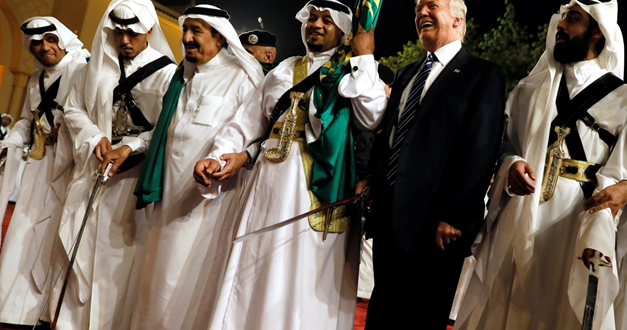
Trump made his first visit as head of state to Saudi Arabia. In Riyadh, he signed the largest military equipment deal in history, worth a total of $350 billion (or at least a preliminary agreement for it).
It is important to clarify that as the president of the largest economy and military power in the world, Trump has every right under the country's constitution to sign such a deal, because ultimately it will have a positive effect on the US economy. At the same time, the increased military cooperation with the Saudis and the general rhetoric and behavior of the American president during this visit differ sharply from the positions we heard during the 2016 presidential campaign.
The reasons for this sharp turn in Trump's foreign policy can be found in the desire of the US and the West to balance the distribution of power in the Middle East, where Sunnis and Shiites, Israel against all Arab countries, and the US and Russia are fighting for supremacy on the one hand.
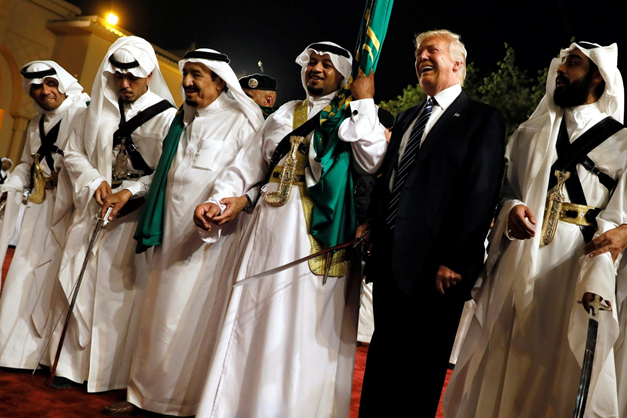
A deal with one of the world's largest sponsors of terrorism?
What is undeniable is that such a policy of intervention and any attempts to establish balance in this volatile part of the world have historically been proven to be unsuccessful and generate more aggression, violence and suffering. The problem here, however, is entirely moral and is related to the foreign policy platform that Trump presented as his during the presidential campaign.
To begin with, Saudi Arabia currently has effective Sharia law in place. Christians are not allowed to enter a significant part of the country, women are not allowed to drive without an escort, a number of crimes are punishable by stoning to death, and gays can be thrown from tall buildings. The country is ruled by an Islamic theocratic monarchy that has deliberately stifled any democratic processes. In addition, Saudi Arabia is one of the world's largest sponsors of radical Islam. The development of Al-Qaeda and the Islamic State in Syria and Iraq was made possible mainly thanks to the billions of dollars invested by Saudi Arabia and Qatar in military and media support for these radical groups.
Saudi Arabia, Qatar and Kuwait have for years been pursuing a strategy of constant and targeted spread of Salafism in Europe by funding mosques, religious schools, media, think tanks and preachers. This is most often done through non-governmental organizations such as the Saudi Muslim World League, Sheikh Eid Bin Mohammad al-Thani Charitable Association and Kuwaiti Revival of Islamic Heritage Society (RIHS), each of which is banned in the US and Russia for links to Al-Qaeda. An important element is that quite often Donald Trump and a significant number of American politicians speak of Iran as the largest donor of radical Islam in the world. However, think about it, when was the last time in Western Europe there was a terrorist attack carried out by Shiites?
What happened to Trump's tough stance against Saudi Arabia?
And here comes the fundamental moral problem with the arms deal praised by the administration. Donald Trump himself was elected above all as a person who would oppose the establishment and the ruling political class. As a person who would be the antithesis of the average politician - ready to lie to his voters just to be elected to a given position. Here begins the deep cognitive dissonance between the citizen and President Trump. Over the years, he has always held an extremely tough position against Saudi Arabia.
In his 2011 book, Time to Get Tough: Making America #1 Again, he said the following about Saudi Arabia: “They are the world’s largest state sponsor of terrorism. Saudi Arabia uses our petrodollars, our own money, to fund the terrorists who kill our people, while the Saudis rely on us to protect them.” At a campaign event in 2016, he made it clear that Saudi Arabia may have had something to do with the September 9, 2001 attacks. During the campaign, he even personally warned the Saudi crown prince that when he became president, he would not allow his father’s money to influence American foreign policy.
Trump has moved away from his core principles and positions that won him the election.
Ultimately, by signing this deal, Donald Trump continued the long-standing strategy of the US and the West to allow Saudi Arabia to do whatever it wants in the region in exchange for this type of bargaining. How can a president speak out against radical Islamic terrorism when, with his direct actions, according to his own words from the recent past, he is quite purposefully turning the largest donor of terrorism in the world into a military force? How can one talk about protecting human rights when in Saudi Arabia, bringing a Bible into the country can land you in prison? An even sadder element is that, most likely, with the weapons that the US will sell, the genocide against civilians in Yemen will continue.
This particular deal is the emanation of everything that Trump voters voted against.