EKIP– Expert Club for Economics and Politics A Different Opinion

Author: Stefan Kichev
Man is born naked into this world, equipped only with his mind and body, which, forced by circumstances, he uses in transforming the resources given by nature so as to satisfy his needs and improve his standard of living.
The only way he can do this is by putting his mind and energy into mixing his labor with the natural resource, thus turning it into his property, which he can then consume or freely exchange for goods created by others like him. People have discovered that this natural process of value creation is carried out most effectively in an environment of a free market and respect for the right of each to dispose of his property, to sell it, and to negotiate for it.
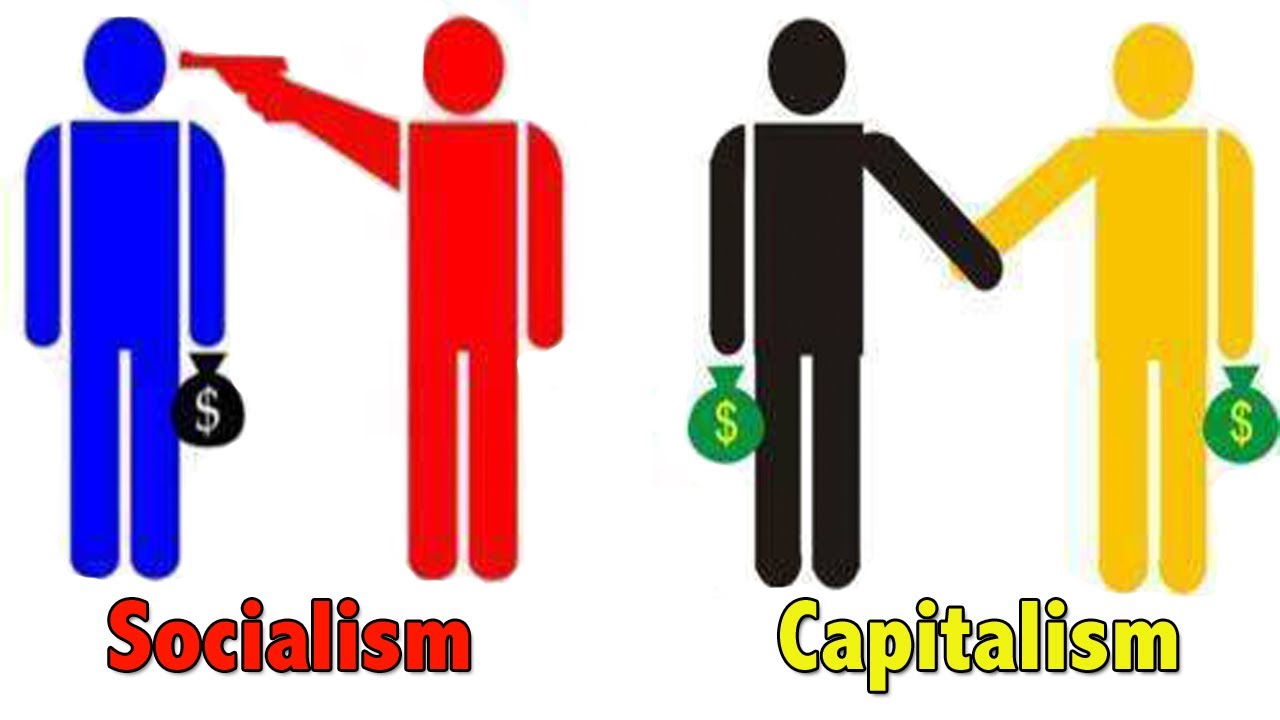
The two methods of acquiring wealth
Franz Oppenheimer in his book “Der Staat” distinguishes two ways of acquiring wealth. The first is through production and free mutually beneficial exchange of goods described above, which he calls the “economic means” of acquiring wealth. The second method is simpler, due to the fact that it does not require productivity or the investment of effort and energy in the production of goods from natural resources. It is the forcible seizure of property from other producers who have created it through the use of economic means. This method Oppenheimer calls the “political means”.
From everything stated so far, it is clear that the two main political-economic systems, considered in their abstract, regardless of their specific manifestations over time - capitalism and socialism - respectively consist of the use of the two aforementioned means of acquiring wealth.
There are many variations of socialism, but at its core it consists of the use of political means to redistribute the goods created economically.
Now we will look at one of its less popular variations, namely conservative socialism (right-wing statism). First, it is worth familiarizing ourselves with a little historical context in order to fully understand how conservatism manifests itself as a variation of socialism.
The emergence of the free economy and classical liberalism
In the 17th and 18th centuries, Europe was still dominated by the feudal system, which was characterized by the arbitrary, state-backed distribution of land and property under the control of a feudal lord. This feudal lord, through the use of his monopoly over a given land, exploited the peasants living on it and enjoyed all the benefits derived from its management. Of course, there was enormous resistance to this social system, but what is interesting in this case is that it was not driven so much by the peasants as by the merchants, who suffered most from the established economic conditions.
Desperate to find a space where they could trade freely, unfettered by the arbitrariness and arbitrary actions of the feudal lords, they fled to the edges of the feudal estates, where they settled far from state power. It was in these places that trade (now in conditions of relative freedom) flourished and quickly generated an extraordinary amount of wealth, attracting all the peasants fleeing the misery of their forced drudgery.
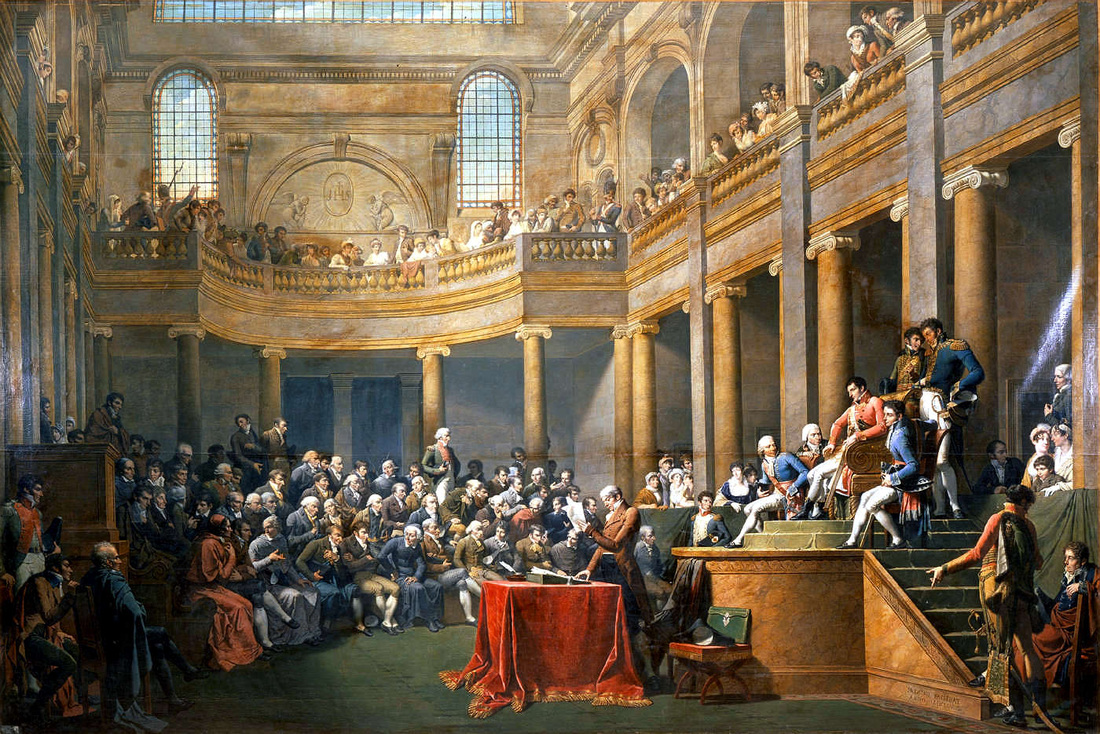
At this time, the tradition of classical liberalism was on the rise, and the newly emerging merchant class quickly took advantage of the articulated defenses and justifications of private property, influenced largely by the revival of natural law in political and social discourse by thinkers such as John Locke. Several revolutions, most notably the Glorious Revolution in England and the subsequent American and French Revolutions, forever undermined the feudal system, and liberalism was established as the new order.
It leads to unprecedented social changes, arising mainly from the enormous wealth created by the conditions of private property and a relatively free market. Already at the top of the social pyramid appear people far removed from the former aristocratic structure, and the value that a person represents in society is no longer shaped by his bloodline, but by the ability to create products or services sought and valued by consumers. All these processes culminate in the industrial revolution.
Political reactions against capitalism from the left and right
Naturally, the whirlwind, the social unrest, and the incredible social mobility that emerged due to the industrial revolution generated reactions from both the left and the right.
On the left, they are outraged by the economic inequality that this new form of wealth distribution brings with it and generally discuss how it can be corrected by using political means to distribute it throughout society in a fair and egalitarian ideal (equality) manner. As I mentioned, left-wing socialism has an extremely large number of variations and the topic of this essay will not deal with them. Conservatism, however, the post-feudal system, is still deeply marked by the historical baggage it carries from its past, making it the philosophical heir to feudalism.

Accepting to some extent the principles of classical liberalism, which include private property, free trade and production of goods, as well as individual freedom, it nevertheless retains its own unique ideological characteristic. It aims at preserving the established order, its maintenance and continuation. Opposing radical changes in the social order, it wants above all to strengthen and consolidate the distribution of wealth and to preserve the main productive forces established in the market, respectively influenced by its initial disagreement with radical changes and transformations in the dynamics, structure and order of society.
And here comes the most important part - radical changes that can overturn the hierarchy in a society can come from the use of both political means (Soviet socialism) and economic ones. And so we come to the definition of right-wing socialism:
The use of political means to deter any potential changes in the established social and economic order that may arise from the free use of economic means.
The methods of conservative socialism
Just as economic means vary from different factors of production, and different methods of disposing of private property and profiting from it (renting, building on it, etc.), so political means consist of different methods by which property and goods created privately are fully or partially seized.
Left-wing socialism mostly resorts to taxation, as well as outright expropriation in some cases, but here we will only consider the three main variant forms of political means that right-wing socialism uses to achieve the goals described above.
Price control
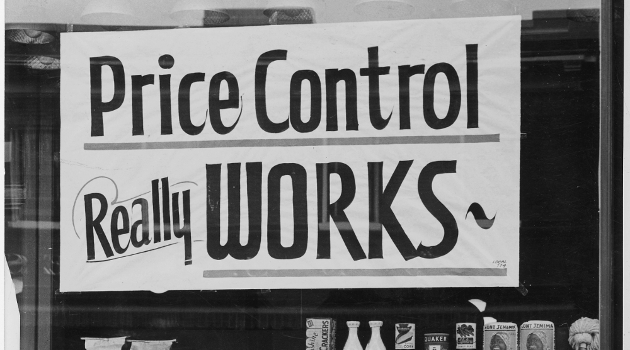
The first such method we will consider is price control. In order to understand more clearly how price control can be considered a socialist policy, something must be explained about the nature of the idea of private property. Although a person has exclusive control over his property, as well as control over the profits derived from its disposition and trade, this exclusive control does not extend to the value of his property.
The value of a product or service is determined by supply and demand - this is an economic law as old as the economy itself. If there is increased demand for a product or service, then its price (value) increases and vice versa, if demand decreases, the price decreases in parallel with it. Consumer interest, which determines the value of a product or service, in turn, can be influenced by a lot of different factors. Therefore, the value of a given good or service varies and may decrease or increase depending on the dynamics of consumers.
Conservatism, as I noted, in its essence, marked by the desire to protect and preserve the established social and economic hierarchy in a given society, respectively, aims to preserve the value of the property of all the major players who have established themselves in the relatively free market.
Conservative politicians do this through the use of price controls, in which a government decree (backed by the potential force that can be used to enforce it) sets a maximum and/or minimum at which a product or service can be sold. In this way, the incentive for any producer to take advantage of, and adapt to, changing consumer demand dynamics, which, as I have described, are subject to changes beyond the control of the producers themselves, is removed.
Once a price ceiling is established, any profit that the producer could have received due to his adequate response to changes in the market (lowering or raising the price), (so to speak), is socialized in favor of the established large players in the market.
This policy, beloved of conservatives, clearly shows the fundamental similarity between their socialism and that of the left. In both cases, the acquisition of wealth becomes a purely political issue, rather than an economic one, as liberalism (in its classical form) would have it.
The negative consequences of such socialist policies have been described in detail in many places, and this essay will not examine them, but instead aims solely to show how socialist practices themselves, despite differences in their specifics, remain with the same goal - the redistribution of wealth from productive people to unproductive ones - and are not limited to their leftist supporters.
Regulations against innovation
Having explained the key feature of the idea of private property, which also plays a major role in our dissection of conservative socialism, we can move on to the second way in which right-wing statist politicians reinforce the established economic order.
As we have already noted, the supply and demand that navigate the value of a product or service can be influenced by an enormous number of things. One of these things is innovation. A large business, established in the market, assuming that it operates in a free or relatively free market, should be constantly under threat from the emergence of an innovation that, while useful and appreciated by consumers, can seriously damage the value of the product it offers.

It is precisely business innovation that is the cause of the greatest social mobilizations in a given society, as well as the upheavals of established economic and social hierarchies. The way in which conservative politicians in this case protect this established order from the changes that naturally occur from innovation is through regulations. The imposition of countless regulations on new products or services on the market, as well as the imposition of mandatory state approval of a new product before it can enter the market, seriously hinders and discourages potential competitors who want to rise in the economic hierarchy (and thus change it).
And again, in this way, the profit that an entrepreneur would reap from offering an innovative good that would lead to changes in consumer demand in a free market is socialized through regulatory measures that hinder his free use of economic resources, in favor of already established rivals in the economic hierarchy.
Laws that regulate consumer behavior
The last policy, which I will describe again, can to some extent be called regulation, but being more specific, it requires a separate explanation. Another thing that influences supply and demand are the consumers themselves, or more precisely, their individual, indifferent to profit or loss, personal preferences, tastes or trends.
Any change in consumer behavior has some economic side effects. If a fashion trend emerges that promotes long hair or discourages shaving, it directly affects a whole host of businesses, from hair salons to shampoo companies. Again, these behavioral changes can lead to unforeseen changes in supply and demand that affect the value of the products or services offered by the dominant producers.

A well-known example here is the use of cannabis for recreational or medical purposes. The increase in cannabis use in a society will have direct economic effects, both on alcohol and tobacco producers and on ice cream companies. For this reason, the third socialist policy that marks conservative socialism, and with which I will conclude, is behavioral control through laws. These laws regulate consumer behavior so as to prevent possible changes in it from leading to different situations in the market itself, which would result in a decrease in the value of the products and services of established producers, as well as an increase in the value of the products and services of potential competitors.
Again, the profit that potential competitors would gain if they were allowed to adequately respond to possible changes in consumer behavior is socialized to the benefit of established businesses that profit from current consumer behavior.
The end result of these policies is the destruction of private property.
Taken to their extremes, these three policies would create a regime in which private property is only nominal, while control over it, its use, and its profits rest in the hands of the ruling clique. Such regimes existed in the 20th century, as they still exist today, but it is most important to note that conservative socialism has had an influence in all Western societies and countries, as is eloquently demonstrated by the policies they have pursued.
The solution is classical liberalism, the cornerstone of which is individual freedom and private property, which contradicts both left-wing socialism, which attempts to redistribute wealth from the rich productive to the poor unproductive, and right-wing socialism, which redistributes wealth from the poor productive to the rich unproductive. Conservatism can thus be defined as socialism for the rich.
Източник на изображенията: Google