EKIP– Expert Club for Economics and Politics A Different Opinion
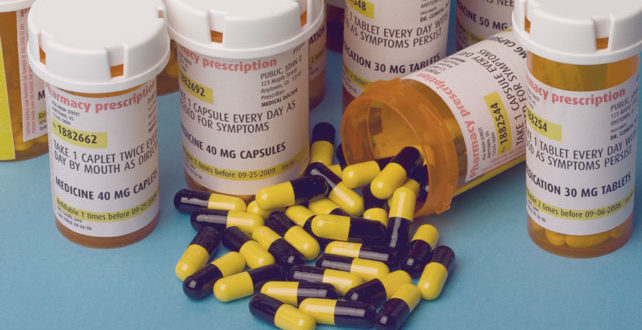
On August 3, the U.S. Senate unanimously passed a bill that would provide access to unapproved experimental drugs for people with life-threatening illnesses, a major victory for libertarians who say government regulations violate patients’ rights.
The bill, S. 204(115), passed the Senate quickly and smoothly, despite the fact that its members are fiercely divided on health care. The powerful pharmaceutical lobby, which had quietly opposed an earlier version of the bill, has now kept a low profile and has not attracted attention. The industry’s focus has shifted to its desire to fight the efforts to eliminate drug pricing, which President Trump has promised to tackle.
"New hope" for critically ill patients
Senator Ron Johnson, a key sponsor of the bill, called its passage a victory for both individual liberty over the state and the “right to hope.” The libertarian Goldwater Institute also supported it, and Vice President Mike Pence tweeted that it represented new hope and a new chance for patients.
The new law will allow patients with serious illnesses, everything from advanced cancer to multiple sclerosis, to access experimental drugs directly from pharmaceutical companies without having to go through the Food and Drug Administration (FDA), which has its own program for seriously ill patients, approving 99% of applications.
The experimental treatment bill, however, does not require drug makers to make them available. In the 37 states with such laws, Goldwater can point to only one doctor who says he used the state bill for a patient, and that for a drug that was already covered by the FDA for other patients.
This has prompted some critics to call the bill "the right to ask" instead of "the right to try," and they have pointed out that it would give false hope to seriously ill patients.

The opposition to the reform
“The bill is fundamentally flawed,” wrote Allison Bateman-House, a professor of medical ethics at New York University who is leading the opposition to Johnson’s bill, in an email. “What patients have the right to do (and have had long before the bill was passed) is to ask drug companies for permission to use their experimental drugs outside of clinical trials. If a company refuses, either before or after the bill is passed, then it has the final say—neither the FDA nor the courts have the authority to force companies to provide access to the experimental drugs they are developing.”
And if experimental drugs become widely used outside of standard clinical trials, it could undermine the foundation of the rigorous science needed to determine the safety and effectiveness of drugs. Many of them fail in clinical trials. Some are even dangerous.
"In this situation, patients think they are willing to take the risk, but they often don't understand what it is," says Diana Zuckerman, president of the National Center for Health Research, which lobbied against the bill.
And while the now-revised bill requires annual reports on the effectiveness of the drugs used, patient safety experts are not convinced that this is enough.
But it's hard for lawmakers to say no to hope.
The reform is supported by both Republicans and Democrats.
“Objecting to patient rights bills is like objecting to motherhood, apple pie, and the American flag; you just don’t do it if you expect to get reelected,” writes David Gorsky, an oncologist at Wayne State University, on his blog about evidence-based medicine. It’s easier for a senator to vote for a bill than to explain to voters why the new law might not only not benefit them, but could actually harm them.
PhRMA issued a statement on the subject, but declined to say whether it supports the bill, which still needs to be approved by the House after the summer recess: "We are grateful for the opportunity to work with Senator Johnson and look forward to continuing to do so. The revised bill that passed the Senate includes important protections for patient safety and clinical trial processes."
Senate help chairman Lamar Alexander and senior Democrat Patty Murray, the same duo who are about to begin bipartisan hearings on “stabilizing” Obamacare, helped Sen. Johnson reach a compromise. Alexander told reporters after the vote: “Johnson tried to convince everyone affected by the bill of its rightness, including the pharmaceutical industry, lawyers and patients. I am very happy with its passage, especially for patients across the country who will have the opportunity to benefit.”
Senator Joe Donnelly, one of the few Democrats who have been advocating for the bill since the beginning, said that many party members wanted to get involved after the idea of the new laws was explained to them in detail.
The FDA is also working behind the scenes to tip the scales toward changes that make the bill safer for patients.
The Libertarian Bias of Reform
However, not every senator approves of the libertarian rhetoric about why federal regulators should stop interfering with patients that supported the bill and was a key part of the message the Goldwater Institute wants to send to the states and Washington.
"There is no more fundamental freedom than having the right to save one's own life. The bill guarantees that freedom by allowing both patients and doctors to control the treatment they receive when diagnosed with a terminal illness," Goldwater President Victor Riches said in a statement.
More and more liberal lawmakers are facing significant lobbying, highlighting heartbreaking stories of young children or newlyweds who don’t have much time left to live. Meanwhile, the strongest opposition, the pharmaceutical industry and doctors’ groups, are not vocal in their dissent. The latter, in turn, does not provide lawmakers with enough political protection to afford to vote “no.”
“There’s no doubt about it – many patients think this is the answer to their prayers. […] They really believe it and are encouraging their representatives in Congress to support a bill that in many previous cases has been considered a bad idea by congressmen,” Zuckerman said.
Pharmaceutical companies are in tacit agreement
PhRMA's quiet behavior has hurt opponents of the bill from the start. The industry has never taken a formal position on this, or other, previous bills, but it has consistently raised the potential problems and dangers of any approach to access to experimental drugs that seeks to circumvent the FDA and the clinical trial process. Of the major drugmakers, only Merck has officially announced its opposition to Johnson's previous bill.
“It’s huge,” Bateman-House said of PhRMA’s reluctance to take a clear public position. “When I talk to legislators, they say to me, ‘Well, if it’s so bad, why isn’t PhRMA speaking out against it?’”
However, critics of the bill acknowledge that the final version is a much-improved version. It adds significant safeguards that will protect patients and their wallets, as they will no longer be able to be overcharged for unapproved drugs.
But many critics, including researchers and bioethicists, are still concerned about the risk of undermining the authority of agencies like the FDA, an important regulator that ensures that drugs are researched and studied in a controlled environment.
The bill appears to be an “improvement,” according to Patty Zettler, a professor at the University of Georgia and former general counsel for the ACHL. “Nevertheless, the fundamental problem with the bill is not resolved, as it still requires the elimination or at least drastic reduction of the ACHL’s role.”
But even that may not be enough - an example of how Congress sweeps problems under the table rather than actually solving them.??
“This is something that your reluctant representative could claim to be working on, but not actually address the problems at their core,” said Ameet Sarpatwari of Harvard Medical School. “We’ve seen it with rising drug prices, now we’re seeing it with experimental treatments. Yes, it’s a show, but it’s also dangerous in the way it provokes attacks on the FDA, making the agency look unethical to patients.”
Original article: Libertarians score big victory in 'right-to-try' drug bill
Translation: Sofia Rogleva