 EKIP– Expert Club for Economics and Politics A Different Opinion

Author: Mariola Yankova
The question of whether animals have rights and whether this fact does not make us humans criminals has never been more relevant. Activists periodically appear both in Bulgaria and in other Western countries and the USA, who use the rhetoric of rights to urge us to stop consuming animal products and to stop buying natural leather and cosmetics tested on animals. The cow's milk is her private property, they say, and it is wrong for people to take advantage of it. In this article I will explain why arguments of this type are untenable and logically unfounded.
What does it mean to have rights? Who can have rights?
Important but rarely discussed issues. Having a right is the freedom to (not) perform certain actions. For example, I have the right to own my bicycle. This creates obligations in other beings not to use my bicycle without my explicit permission. Rights naturally regulate the relationships between the beings who have them. In this sense, a rights-holder can only be that being that is rational, self-aware, has free will, can construct a plan, make decisions and be responsible for them. Also, this being must be fully aware of the concepts of life and private property.

Activism in support of animal rights is becoming increasingly popular in Bulgaria.
Are animals criminals?
Here we begin to realize that no animal possesses these basic characteristics and therefore cannot have rights. For example, most activists and academics only discuss the human-animal relationship when they talk about animal rights. It seems as if animals have rights only when they encounter humans.
Natural rights are such because they are valid regardless of time, political climate, culture, or the aggressor the rights holder faces. This implies that if a zebra has rights, then a lion, a snake, and a mouse also have rights. But neither the lion, nor the snake, nor the mouse can have any obligations to a zebra. This is because they cannot grasp the concept of rights, life, and private property, and they cannot be told why it is wrong to kill, for example.
This is called proof by contradiction. Let's imagine that all animals have rights and let's consider whether they can respect each other's rights, or at least whether they can be taught to do so. The answer in most cases is no.
Utilitarianism
In relation to animal rights, the main advocate of the utilitarian approach is Peter Singer. According to this approach, the moral status of animals depends on what other morally relevant claims are competing in a given situation. Utilitarianism would argue that in the past, when meat was the primary means of survival, it was not wrong to kill animals, but now, with the abundance of cheap and accessible food, the situation is completely different.
Utilitarianism as a principle, however, is flawed because it allows for the disregard of individual well-being in favor of group well-being. For example, by this logic, if taking someone's life positively affects group happiness, then taking that life is perfectly justified. In this sense, utilitarianism is not a principle that protects animal rights, nor a principle that protects human rights, but simply a rule that is concerned with the happiness of the largest possible group. As such, it cannot be effectively used to justify animal rights.
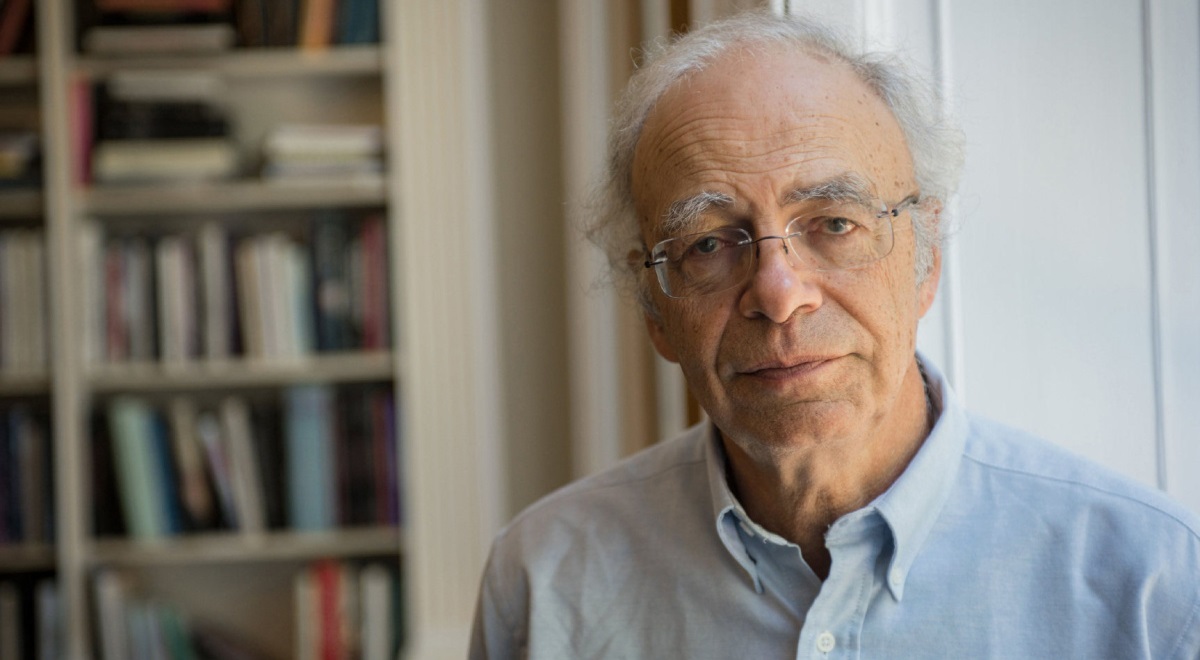
Australian philosopher Peter Singer is one of the most prominent animal rights advocates in the world.
Egalitarianism
The main advocate of egalitarianism when it comes to animal rights is Tom Regan. Regan argues that every living being is conscious at least to some extent and has value in itself, and therefore has a right to individual well-being regardless of its usefulness to others. In short, the life of every living being has intrinsic value. Here we already have a serious argument in favor of animal rights, but this one is also untenable. For example, an amoeba is also a living being, therefore we must respect the rights of amoebas. But amoebas cannot have real rights. The thesis itself sounds absurd. Also, there are many things that have intrinsic value. The painting Mona Lisa can be considered one of these things, but it, like the amoeba, cannot have rights.
From another perspective, humans can develop artificial intelligence that is rational, has free will, and is self-aware. This artificial intelligence is not a living being, but nevertheless, as something that can make decisions and be responsible for its actions, it can have rights. These examples are intended to show that intrinsic value and the fact that a being is biologically alive do not automatically imply that it has rights. To be a rights-holder requires the aforementioned consciousness, rationality, free will, and the ability to make decisions and be responsible for them.
Children, mentally retarded and mentally ill people
To a large extent, these groups do not have the aforementioned characteristics, but they are nevertheless rights-holders. Many animal rights activists would wrongly call this a form of speciesism and hypocrisy. These groups of people have rights because they are also inherently conscious, rational, and have the ability to make decisions and be responsible for them. The problem is that either something prevents them from doing so optimally, or they have not yet fully developed this function. There is a significant and significant difference between these qualities being completely absent (in the case of animals) and something (some disease) preventing them from being exercised (in the case of humans).
Why animal cruelty is wrong
What activists fail to realize is that even if children, the mentally retarded, and the mentally ill do not have the same rights as animals, it would still be wrong to inflict unnecessary violence on them for a number of reasons. The first and most obvious reason is that these creatures are important to their loved ones and owners. Being harmed causes emotional pain to those who are rational and aware. These cases can also be seen as a violation of the principle of non-aggression.
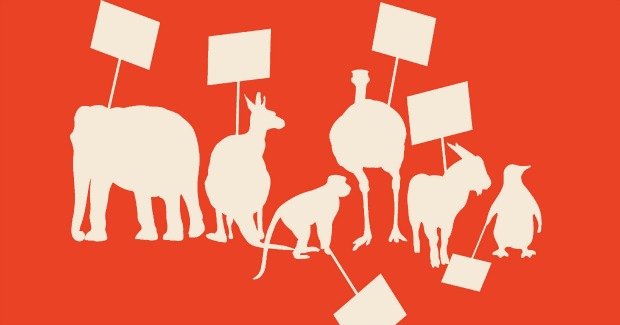
Although they don't have the same rights as humans, unprovoked violence against animals is not right.
Also, individuals who exercise unprovoked violence, even against animals, often pose a threat to others. Their behavior can escalate and they can violate the rights of someone else. These are obvious reasons why violence in any form cannot be tolerated and encouraged, even if the object of violence has no rights.
Animals have largely benefited from being treated as private property. It is absolutely true that there are industries that are not known for the most humane approaches to animal treatment. In such cases, the responsibility lies with us as consumers who stimulate (or do not stimulate) these industries. Leaving that aside, animals treated as private property are given access to shelter, food, water and a veterinarian (at a minimum). Left alone, these animals would not have these living conditions. There are many pets that even live more comfortably than most people. Stories of endangered species that cease to be so thanks to the fact that they have become private property and people have an interest in them are not unknown.
Different species of animals, children and people with mental disabilities still have different degrees of awareness. Although this degree of awareness is not enough to guarantee them rights, it is still not assignable and should not be ignored. In many cases in our relationships with animals we can obtain consent on whether to exercise a certain action towards them. Entering into our role as rational beings, we humans should take this into account and not exercise unnecessary aggression.
In conclusion – no, animals do not have rights and a cow's milk is not her private property. The rhetoric of rights cannot be used to explain why people should stop consuming animal products, buying natural furs and cosmetics tested on animals.
Използвана литература:
Epstein, A. Richard. (2005). Animals as Objects, or Subjects, of Rights. In: Cass R. Sunstein and Martha C. Nussbaum Animal Rights: Current Debates and New DirectionsAnimal Rights: Current Debates and New Directions. Oxford: Oxford University Press. 144-158.
Franklin, Julian H. "Peter Singer and Utilitarianism." In Animal Rights and Moral Philosophy, 1-12 .Columbia University Press, 2005 http://www.jstor.org/stable/10.7312/fran13422.5
Gruen, Lori, "The Moral Status of Animals", The Stanford Encyclopedia of Philosophy (Fall 2014 Edition), Edward N. Zalta (ed.), URL = <https://plato.stanford.edu/archives/fall2014/entries/moral-animal/>.
Ingemar Nordin. (2001). Animals don't have Rights: A Philosophical Study . Libertarian Alliance . Philosophical Notes No.62 , 1-15.
Jamieson, Dale. "Rights, Justice, and Duties to Provide Assistance: A Critique of Regan's Theory of Rights." Ethics 100, no. 2 (1990): 349-62. http://www.jstor.org/stable/2381001.
Machan, R. Tibor (2004). Putting Humans First: Why We Are Nature's Favorite. Oxford: Rowman & Littlefield Publishers.
Regan, T., 1985, “The Case for Animal Rights”, in P. Singer (ed.), In Defence of Animals, Oxford: Basil Blackwell





"Animals have largely benefited from being treated as private property.
Leaving that aside, animals treated as private property are given access to shelter, food, water, and a veterinarian (at a minimum)." - how would the author prefer to live, free, with the responsibility of providing her own shelter and food, or as a prisoner, where all of these things would be provided for her?
"Entering into our role as rational beings, we humans should take this into account and not exercise unnecessary aggression." - this is precisely the message of vegans - so what exactly do you disagree with?
"What activists miss is that even if children, the mentally retarded, and the mentally ill do not have the same rights as animals, it would be wrong to inflict unnecessary violence on them for a number of reasons. The first and most obvious reason is that these creatures are important to their loved ones and owners. Being harmed causes emotional pain to those who are rational and aware." - are we to understand that according to the author, these children and people would not deserve rights if they did not have aware loved ones???
Violence is inherent in low-intelligence societies. Violence directed against people and animals must be punished extremely severely. Society must react the moment it sees or experiences violence. PEOPLE DO NOT VIOLATE, DO NOT BULLY, DO NOT HURT, PEOPLE AND ANIMALS. EVERY LIVING BEING HAS THE RIGHT TO A FULL LIFE AND PROTECTION. THE QUICK REACTION OF SOCIETY AND LAW ENFORCEMENT AUTHORITIES WILL PREVENT ALL OF THIS.