 EKIP– Expert Club for Economics and Politics A Different Opinion
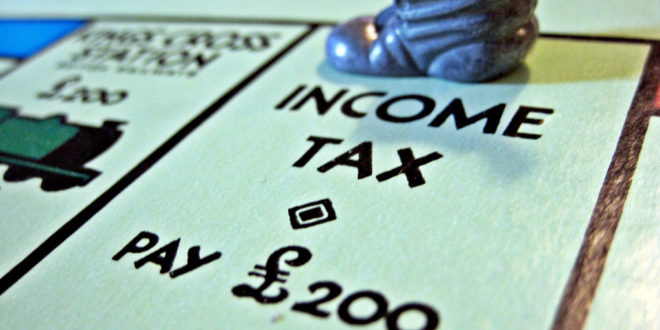
The national representative survey “Attitudes towards Tax Policy in Bulgaria” was recently published. It was prepared by the Market Links agency on behalf of the environmental association “Za Zemiata” and presents many curious facts about public opinion regarding the Bulgarian tax system. Since the topic has always been of primary interest to us, the authors at the Expert Club on Economics and Politics, I decided to make a brief summary and analysis of the results of the survey. The latter were presented to us by the association “Za Zemiata” at a special event on the topic.
Bulgarians believe the tax system creates economic inequality
Slightly more than half of the respondents believe that the tax system deepens economic inequality. This statement does not stand up to objective criticism, since despite the existence of the flat tax and VAT, employees and employers bear the majority of the tax burden. This is mainly due to the mandatory social security payments that employees and employers are required to make and which constitute a significant part of the actual tax burden.
It is precisely because of the presence of these payments that the Bulgarian tax and social security system contributes to the reduction of economic inequality, since workers who contribute money to the NSSI and NHIF subsidize the poorer ones, who on average benefit from their services more often. However, only 5.9% of respondents are of the opinion that the tax system reduces inequality. In second place in size (22.7%) is the group that believes that the tax system does not bring changes in the distribution of income. It is interesting to note that a relatively large share of respondents (20.7%) cannot assess the effects of the tax system on their income.
The public misunderstanding on this topic is probably due to the continued refusal of politicians, civil servants and many economists not to consider mandatory contributions as a tax. The popular myth, which seems to be accepted by most citizens, is that we all pay very low taxes (only 10%) on our income. The reality, of course, is that nearly 30% of workers' salaries are withheld in various ways, and the argument that only personal income tax should be considered a real tax remains more of a legal construct.
Bulgarians think the state is wasting their money
The vast majority of Bulgarians believe that the state is wasting taxpayers' money. Nearly three-quarters of those surveyed agree with the statement that the government is wasting the money it collects from taxes. The same number of people believe that the services they receive cost less than the taxes they pay.
The solution to this problem that finds the highest public support is increased citizen control over public spending. This involves direct (legal) intervention by citizens in making decisions about spending public funds. This measure is supported by 53.8% of respondents. However, almost all people (94.5%) have not taken advantage of existing tools for citizen participation and the majority (69.9%) would not like to do so.
This highlights the well-known problem with democratic citizen participation and public control over state institutions. Such control would achieve its goals only if the majority of citizens are willing to invest time and energy in active and purposeful control over the state. It is clear that most people are focused on pursuing personal goals – career, family, etc. In this sense, non-participation and unwillingness to participate are logical phenomena. In the situation that has arisen (both willingness and unwillingness to participate), we are faced with a potentially serious problem. If these popular control measures are implemented and there is no initiative on the part of citizens , the end result will be control over public finances by a relatively small group of well-organized citizen lobbies, which increases the corruption risk enormously.
Bulgarians want lower taxes
Nearly 70% of Bulgarian citizens believe that the tax burden in Bulgaria is too high. Indeed, a tax burden that varies between 40 and 50 percent is probably almost unbearable for most people, especially considering the quality of public services that the state provides. This fact, as well as the relatively small number of workers (2,075,658 in 2014), further reinforces the widespread dissatisfaction with the size of the rates. Interestingly, in parallel with the reduction in the size of taxes, most people support the restructuring of the tax system.
The main public impulse seems to be for businesses and the wealthier to shoulder a greater share of the tax burden in favor of the poor. Closing legal loopholes for tax avoidance, restrictions on offshore trade, and progressive taxation receive 78.6%, 63.8%, and 48.3% support, respectively. It is worth noting that only the positive effects of these measures dominate the public debate, with the negative ones rarely mentioned or discussed in depth. The latter is a particularly harmful measure, as it sends an extremely bad signal to investors, causing them to move their jobs out of Bulgaria, which ultimately hurts the poorest and least skilled workers.
Conclusion
There appears to be a public appetite for deep and meaningful tax reform. Citizens' demand suggests the development of three types of policies:
- Policies oriented towards stimulating free market initiative and increasing citizens' incomes by seriously reducing the tax burden. The restructuring of the NSSI and NHIF should be approached seriously, as contributions to these institutions add a lot to the tax burden, and good service is not offered in return.
- Policies to improve the efficiency of public spending by involving citizens in the decision-making process. However, this is realistic and achievable only through the prism of decentralization and increasing the role of municipalities in decision-making. The golden rule in public finances is that smaller administrative units spend taxpayers' money more efficiently and more transparently. To this we can add the fact that citizen control would be entrusted to too small a group of representatives if the current philosophy of centralized fiscal policy implementation is maintained. Last but not least, creating conditions for tax competition between individual Bulgarian municipalities would support economic growth.
- Policies to change the structure of taxation. The priority here should be to balance the interests of citizens and businesses, with the aim of simultaneously reducing the burden on the poor and preserving Bulgaria’s competitive advantage as an attractive tax destination for business. The latter, of course, excludes imposing restrictions on offshore zones, due to the structure of the global economy. However, these goals could be achieved by reducing or eliminating VAT on basic goods and services such as food, medicines and utilities.
Regardless of what combination of these policies you consider appropriate, one thing is certain - Bulgarian citizens have a strong desire for less and different state intervention in income redistribution.




25% of Americans do not know that the Earth revolves around the Sun - http://geograf.bg/bg/articles/15-Свят/55-Every fourth American does not know that the Earth revolves around the Sun
Facts are facts in the sense that there is nothing better than progressive corporate and family taxation, and tax waste is a separate topic, and true, which does not mean that a flat tax is the right solution, that is, there needs to be total transparency of budget spending, etc., etc.
Bulgarian citizens, that is, most citizens of the world, do not know what a state and social solidarity are, especially in healthcare, because 100% solidarity in healthcare is part of the Christian virtues.
The topic is big and I have explained it, I have given facts - https://www.facebook.com/atanas.shalapatov/posts/1742287312716162
On the one hand, it is a violation of the Constitution and the UN Charter, and from an economic point of view, when 2,500,000 Bulgarian citizens have an income below 296 BGN, there is no consumption, that is, the wheel of the economy does not turn - there is no GDP growth.