 EKIP– Expert Club for Economics and Politics A Different Opinion
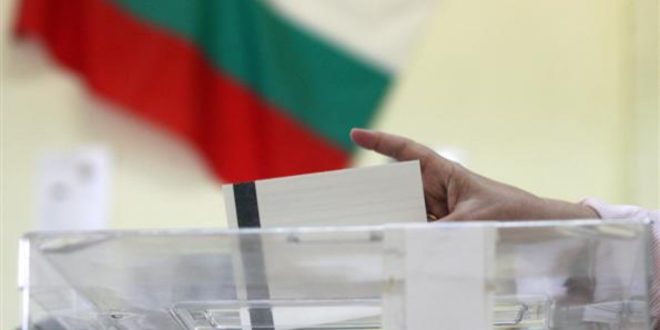
 On October 5, exactly one year ago, early parliamentary elections were held, bringing the current coalition government of Boyko Borisov to power. Anniversaries are usually a time for taking stock and analyzing what has been accomplished, and although the government was formally born on November 7, in Bulgaria the legislative and executive branches are not effectively separated, so the date of the elections is a good reference point.
To assess whether the work of the central government over the past year has been successful, we need to set clear criteria. Which government can be called successful? The simplest answer is the government that distances itself as much as possible from interference in the economy and the freedom of citizens. With the caveat that it is incorrect to talk about right-wing parties, politicians or governments, but rather about specific right-wing or left-wing policies (adopting, amending or repealing laws), in general, we can describe a good government by the following characteristics:
- It pursues policies related to tax reduction and elimination.
- Maintains sound fiscal discipline and strives for budget surpluses.
- It does not carry out reforms related to nationalization or strengthening state control over individual sectors of the economy.
- It is implementing reforms related to privatization and deregulation of state-dominated sectors.
- It reduces the size of the state administration, lays off civil servants and maximally eases the administrative burden on businesses.
However, Boyko Borisov's government has somehow escaped the liberal idea from its very inception. First of all, the composition of the coalition itself is contradictory. The combination of center-right (GERB), nominally right (RB), social democratic (ABV) and nationalist (PF) parties seems very unnatural. A coalition government between two right-wing and two left-wing parties is obviously based on a compromise in the name of stability, and not on a consensus for a certain fundamental political line (right or left).
Expectations from the elected officials
The new government was expected to carry out bold and radical reforms in the most problematic sectors in the country - education, healthcare, social security, energy, the judiciary, naturally all state-monopolized areas in need of privatization and deregulation, and in the case of the judiciary - reducing its dependence on the powerful of the day and reforming it in a way that would equally protect the property of citizens.
Surprisingly or not, Prime Minister Borisov ceded four of these critical ministries to his coalition partners. The reformers took over education, healthcare, and the judiciary, and the ABC took over the social ministry.
Reality
With the appointment of Ivaylo Kalfin as Minister of Social Affairs, it became clear that a right-wing reform would not happen in this area. What is worse, however, the minister undertook predictably left-wing reforms. Instead of focusing on demonopolizing the National Social Security Fund, deregulating private pension funds, and moving to a voluntary insurance model (which would be a right-wing reform), an attempt was made to nationalize private pension funds (an unprecedented left-wing policy for the last 25 years), and a plan was laid out for a gradual increase in the social security contribution to the National Social Security Fund by 2%, as well as an increase in the minimum wage. All of this, besides increasing the redistribution of resources by the state, will in no way guarantee reasonable pensions for future retirees (since the National Social Security Institute is a financial pyramid or "broken barrel", in slang, that has no chance of getting fixed), and will also create trouble for current workers, since the price of their labor is artificially (non-market) increased.
But while left-wing reforms are something expected from a socialist, the surprises from the Reformist Bloc were more unpleasant.
Reformism without reform
There was no talk of reform in the Ministry of Education. Minister Todor Tanev showed no desire to privatize elements of education, to eliminate unnecessary state standards (Matriculation), or to deregulate curricula. Instead, modest ideas emerged for introducing dual education, which will most likely be doomed to failure in the conditions of a state monopoly. Everything else was more of a cosmetic measure (introducing textbook guides), and some were even completely ridiculous and anachronistic (banning the use of mobile phones in class, introduced by GERB deputies). In addition to all this, the Ministry of Education and Finance, in a very populist manner, decided that millions of leva should be poured into the sector and teachers' salaries should be increased, which in no way will improve quality, but will only increase the redistribution of foreign money.
In the Ministry of Health, things are not much rosier. Great hopes were placed on Dr. Petar Moskov, a leading figure in the supposedly most right-wing party in Bulgaria, the DSB. The necessary reforms for healthcare – demonopolization of the NHIF, transition to a market model of voluntary health insurance, deregulation of the hospital and pharmaceutical sectors – were replaced with half-hearted left-wing measures, dressed up in high-flown words such as “the patient is at the center of the system.” Moskov categorically announced that market logic does not apply to medicine and it does not matter how many health funds there are. The minister proposed a law (which was subsequently adopted) to introduce a National Health Card (Central Planning) and divide health packages, but again within the framework of the monopolistic NHIF. Future residents received a small bonus, who would be allowed to sign a contract with the NHIF and receive payment for their work. Additionally, some openly leftist measures were proposed - a tax on harmful foods and strict regulations on pharmacies in the country, which completely buried hopes for meaningful reform in the sector. The only somewhat good proposal - that of privatization of state hospitals, was rejected by the GERB mandate holders.
The judicial reform remained known in the public sphere as a historical compromise. Hristo Ivanov's reform was half-heartedly adopted with the help of parties such as DPS, ABV and ATAKA (the majority in parliament reached a surprising 184 votes), which in itself casts doubt on the effectiveness of the amendment. A completely separate question is whether Minister Ivanov has addressed the real problems of the judicial system and whether this reform could solve them, even in its full form. You can read more on the issue here and here.
To these "achievements" of the government, we must add the persistent attempts of the Ministry of Finance to make it difficult for its taxpayers. Back in the winter, Minister Goranov showed a clear desire not to observe fiscal discipline and budget surpluses and requested permission from the National Assembly to issue 16 billion leva of state debt for the next 3 years. The deputies allowed it, and our state debt is now over 30% of GDP. Recently, it became clear that the Ministry of Finance wants to ruin one of the few positive things of the transition - the flat income tax, by giving municipalities the opportunity to increase it to 12%, if they wish. This proposal was frozen due to the upcoming elections, but others such as the "smartphone tax" or the "village garden tax" seem to be adopted.
At the same time, no measures are being taken to reduce the size of the overgrown state administration and ease the administrative burden on business. Nothing is being done to maximally liberalize the markets, deregulate the fuel trade, reduce VAT following the example of Romania, eliminate regulatory bodies such as the State Energy Regulatory Commission or the Commission for the Protection of Competition, which recently severely punished one of the achievements of the free market - the company Uber.
If we were to summarize the work of the government, it definitely cannot be described with the word “right”, let alone as “liberal”. Right-wing reforms are practically absent, except for some cosmetic ones, such as the abolition of the eight-hour workday, the formal abolition of the statute of limitations for the crimes of communism and the expressed desire to liberalize the energy market, which, however, at this stage remains only in the realm of wishes. At the same time, the key areas in need of radical reforms are either not being reformed, or are being reformed in a counterproductive (left) way. If we try to draw a positive conclusion from the balance sheet, at best it would be “It could have been worse”. But if we are realistic, the conclusion would be that despite the nominal party names, the government is in reality extremely left-wing, which is a serious threat to the economic development of the country.





The government of Mr. Boyko Borisov still does not consider that in the presence of a flawed monetary system, the achieved economic growth ensures the development of the potential for catastrophic economic crises - debt cancer - and is doomed to certain failure.
If the developing economic processes were full-fledged, the state would not increase its debts.
To escape from current degrading economic processes, it is necessary to end the state's mistake of using an unsuitable form of government for the Lev.
Note:
The debt cancer crisis is a problem debt with identifiable damage.