Turker Mollahassan November 30, 2021 Economy, Economic and fiscal policy
The date is 08.03.2019. The then businessman - Mr. Asen Vassilev, publicly claims that the effective tax on a salary of 3,000 leva in Bulgaria is nearly 50%. In this calculation, Mr. Asen Vassilev also adds the social security contributions due with the clear understanding that this money is being spent on "one big theft, garnished with ...
More » Georgi Vuldzhev November 29, 2021 Economy, Economic and fiscal policy
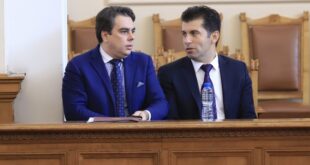
This weekend, the negotiations for a government between "We Continue the Change", "There Is Such a People", "Democratic Bulgaria" and the "Bulgarian Socialist Party" ended. Or at least the public part of them ended - the one that was broadcast live on the Internet. From what we saw, the negotiations generally went in relative harmony between the positions of the individual parties. Some …
More » Georgi Vuldzhev October 06, 2021 Economy, Economic and fiscal policy
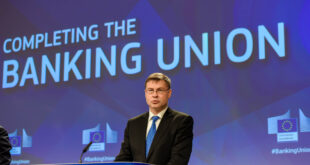
October 1 marked exactly one year since Bulgaria officially joined the EU Banking Union. The accession was accompanied by great fanfare from public experts, politicians, and of course the government of Boyko Borissov himself, who in April 2020 announced Bulgaria’s accession to the ERM-II exchange rate mechanism and the Banking Union …
More » Georgi Vuldzhev September 29, 2021 Analyses and opinions, Economic and fiscal policy
The Banking Union creates incentives for decapitalization and destabilization of our banking system. The Banking Union would most likely not help restructure local banks. Bulgaria no longer has its own bank resolution fund. In such a situation, the cost of bank bankruptcies falls through the budget onto Bulgarian taxpayers. On October 1, 2020…
More » Georgi Vuldzhev August 30, 2021 Economy, Economic and fiscal policy
About a month ago, the Bulgarian online media outlet “Factcheck.bg” published an article with the following title: “Bulgaria in the Eurozone: Between Misconceptions and Facts”. Under the guise of combating disinformation, the author of the article, Yordan Barzakov, claims to be debunking “myths” about the “negatives of eurozone membership”. The introductory paragraph of the text is eloquent: “The closer it gets …
More » Stefcho Stanev August 10, 2021 Economy, Economic and fiscal policy
My position against the adoption of the euro and the corresponding national plan is based on the following main arguments. 1. Keeping the national currency does not mean a worse economy. Sweden is a good example of this. - Sweden's economic growth since 2003 has been between 1.5% and 3%, i.e. higher than that of the eurozone. …
More » EKIP August 07, 2021 Analyses and opinions, Economic and fiscal policy
OPINION From: Expert Club for Economics and Politics (EKIP) Subject: Draft National Plan for the Introduction of the Euro in the Republic of Bulgaria DEAR LADIES AND GENTLEMEN, In connection with the published draft National Plan for the Introduction of the Euro in the Republic of Bulgaria (Plan), we express the following opinion on behalf of the Expert Club …
More » Pencho Penchev July 22, 2021 Economy, Economic and fiscal policy
"Waiting for Godot" is a popular play by Samuel Beckett in which nothing happens. Two tramps wait for a certain Godot who never comes. Waiting for someone and/or something that never comes is an apt metaphor for the relationship between rulers and society. Politicians and bureaucrats are …
More » Stoyan Panchev July 19, 2021 Economy, Economic and fiscal policy
Stoyan Panchev's interview with Trud newspaper: The early parliamentary elections were marked by low interest and minimal surprises in the results. No party won outright. No potential coalition was given enough room for action. Slavi Trifonov's party presented a draft cabinet, thus leaving potential partners …
More » Guest Author July 06, 2021 Economy, Economic and fiscal policy
Author: Stefan Antonov On July 10 (the day before the elections) it will be one year since Bulgaria and Croatia were admitted to the waiting room of the eurozone and the banking union. GERB's decision to push in this direction became a fact despite legitimate and well-founded concerns that the state was taking unacceptable risks. The period since its …
More »
 EKIP– Expert Club for Economics and Politics A Different Opinion