 EKIP– Expert Club for Economics and Politics A Different Opinion
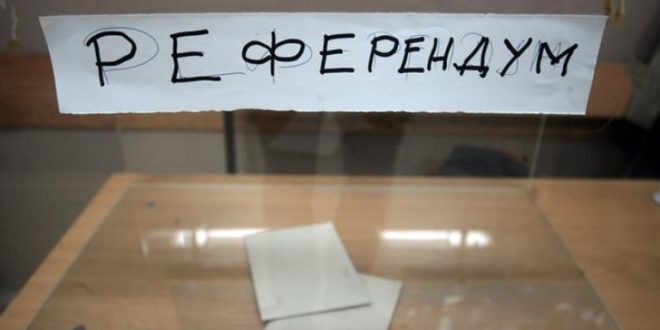
Part 1 of a series on local referendums against investment projects in Bulgaria - their causes and consequences:
Autumn has come and the topic of local referendums will become relevant again. This is not a forecast, but simply the logic of the social processes in our country over the past 2 years. And this is an occasion to look at two of the emblematic referendums that we witnessed in June this year – those in the municipalities of Stara Zagora and Tran. Both were defined as “emblematic”, both set themselves the goal of overcoming certain planned investments, and both emphasized environmental protection.
At first glance, there are a number of similarities between the two referendums: they aimed to mobilize civil society in defense of local causes; both defended green ideas and the quality of life of people in their respective regions; both wanted to show that citizens have all the quality information with which they can make a (rational) decision when voting. And to protect the people in whose name they are convened, as well as to oppose the authorities - central or local.
During the period, several more local uprisings against quarries for the extraction of inert or construction materials took place. But the conflict that has been simmering for a year is whether there will be a tungsten mine in Velingrad. Therefore, after some comparisons were made some time ago between the two referendums, it is time to dust off the facts and unspoken analyses.
Reason for local referendums. General chronology.
Local processes in both Stara Zagora and Tran led to proposals by the municipal mayors to hold local referendums on important issues for the communities there. The city of linden trees and a regional center with the energy heart of Bulgaria - the Maritsa-Iztok complex - had witnessed the start of construction activities in the Bedechka Park, which had been neglected for years. This initially activated a small group of citizens in its defense. The issue was discussed at several meetings of the Municipal Council. Thus, in the spring of 2017, the councilors decided to preserve the park and stop construction activities. However, the interests in the park (especially in its southern part) unexpectedly forced the mayor of the municipality to propose holding a local referendum with a question of whether the municipality could decide to compensate property owners in this area of the city and thus preserve the park as… a park. The visible side of the process until the referendum lasted about 6 months.
At the other end of the country, the depopulated municipality of Tran had been plunged into silence and tranquility for over 3 years since the announcement of the project to revive local gold mining by a subsidiary of the mining leader Assarel-Medet AD. But in the summer of 2016, after a series of on-site seminars and an “awakening” of the local population and part of the local municipal council, there was an “increased tension” in the municipality. Parts of otherwise confidential and non-final documents were unearthed, which led to the display of “evidence” against the future mine. The dissatisfaction (and ignorance) of the local people was expressed in a series of organized protests in front of the Municipality building and even in front of the Ministry of Environment and Water.
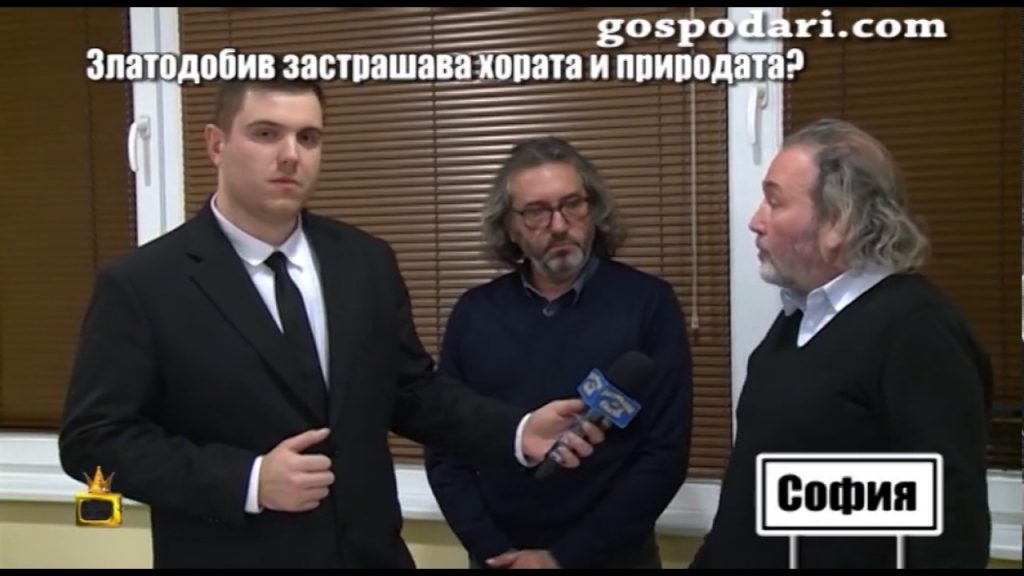
This led to a series of reports on “Masters of the Air” on Nova Television. The activists’ main accusation was that the future mine would endanger the health and lives of local residents. This argument was used to exert public pressure on local institutions during a period of weak central government (resigned government and caretaker cabinet – November 2016 – March 2017). Moreover, local institutions in Tran were weakened due to the accusation against the mayor of the municipality of running over a child in the yard of the local school (!) with his SUV. Until recently, a supporter of the idea of a powerful investor entering the municipality, in the fall of 2016 he completely changed his position. As a result, he proposed that “the people decide” the future of the mine in Tran. This combination of planned and accidental actions led to the idea of holding a local referendum against the intention to implement a 100 million investment in a gold mining project gaining popularity.
After the mayors submit proposals for holding local referendums, which the municipal councilors accept. In this way, they try to achieve many goals: to respect the "public will", to reduce the generated public pressure, to find a balance of opposing interests. The expectations are that through the people's vote, an answer will be given to the question of the future of one or another investment (neighborhood or park, mine or villas).
In essence, these "Solomonian" decisions are nothing more than an abdication of responsibility in following legally established procedures and processes and giving impetus to populist sentiments, outright manipulation and confrontation of individual groups in local communities.
Differences
We need to point out the differences because the supporters of local referendums felt intoxicated by the fact that local referendums were being held in a chain. Sliding on the surface of the external manifestations of the phenomena often leads to the construction of mass manipulations for the benefits of one or another social or political instrument. In other words, the supporters of local referendums fiercely cling to the thesis that the people are competent enough to pronounce on any issues, and political and socio-economic processes have led to a situation in which various active citizens can mobilize public energy and force or play together with municipalities in directing one or another project.
In 2017, Stara Zagora was recognized as the best city to live in the Darik Radio ranking. For years, the city has demonstrated ambition and desire to develop economically, socially and culturally. But its potential - especially against the backdrop of the uncertainty surrounding the Maritsa-Iztok energy complex and the stagnant construction business - seems to be running out. The need for fresh investments is starting to be felt. Until 5 years ago, the city enjoyed a nearly 10-year (2003-2013) period during which the large-scale rehabilitation of TPP-2 and TPP-3, as well as the construction of the new TPP "AES Galabovo", were implemented. They attracted a lot of fresh investments to the city - from services to apartment rentals for foreign experts.
But the city began to run out of good locations for new construction. Its planning does not allow the construction of new buildings without overbuilding, conflicts with existing sites and increased traffic. The only opportunities for the city's development are in the west (towards the village of Bogomilovo) or east (Bedechka Park). Investor interests in the park are extremely diverse and date back years, but the status of the park hinders them: significant names of local businessmen are associated with two retail chains (one with an already implemented, and the other with a frozen project). The history of the city remembers that through a series of changes in the purpose of the properties in the park, as well as through "convenient forgetting" of the restitution of properties in the park area in the 1970s, today a group of people claim the right to realize their investment intentions. There is nothing wrong with that, as long as the real facts are clarified about whether compensation has already been paid for certain properties and who the real owners are there.
Another difficulty facing their interests is the fact that "Bedechka" is a park, for which there is a decision of the General Assembly. Looking at the sketch of the park, and especially in its southern part, we see that it resembles a blanket with many patches. The implementation of the investment intentions would lead to the development (or even redevelopment) of this part of the city and to the realization of sales and probably - to an increase in the economic growth of Stara Zagora for at least 2-3 years [1].
In the western part of Bulgaria, near the Serbian border, is the municipality of Tran. It is the third largest municipality in our country and for years has had an aging and declining population, an extremely weak economy and almost zero prospects for development. The claim about the population and its structure is met with fierce resistance from local activists. Because, to be honest, I don't know which data about the population of Tran to accept as accurate. Those from the 2011 National Census indicate that 3,000 people live in the municipality, while those from the 2015 local elections indicate that there are already 4,038 people from Tran. An impressive achievement for a growth of 33% (over 1,000 people) in 4 years with a stagnant local economy, relying mainly on logging (legal and illegal), potatoes, employment in the local administration and few small businesses and with zero investments.
The investment announced in 2013 for the restoration of gold mining in the old gold mine "Zlata" and the implementation of underground mining in the area of Rui Peak using an underground method could lead to significant economic development for the Tran region. The socio-economic assessment made by "Denkstadt Bulgaria" shows that initially 110 people will be employed in the project, and at the peak of mining activities they will increase to over 750 people. In reality, these will be both local people and specialists from other municipalities, who will receive much better salaries than the current ones in the municipality. The cumulative effect of the mine will lead to the development of a number of accompanying businesses and to the brightening of the local economy. The benefits for the municipality are calculated at half of the concession fee, which would bring 1 million leva annually to the municipal budget. The total duration of the project is planned to be at least 20 years. Currently, the plans for the realization of the mine and hence the benefits for the municipality, the state, and the local community are postponed indefinitely because the result of the local referendum held on June 11, 2017 led to the withdrawal of the investor and the freezing of the project.
Who wants a local referendum and why?
The municipal councilors of Stara Zagora voted twice to preserve the park. But economic and political ties and pressure led to the proposal of Mayor Todorov to hold a local referendum to preserve "Bedechka" as a park with the issue of paying compensation to property owners. This led to a paradox - after all, there is a legal decision there by legally elected municipal councilors! Zaralii had experience with local referendums - in 2012, they voted to close the Zmeevo military training ground. The legality of the referendum was challenged and the Supreme Court declared it null and void, because the local community cannot express its opinion on issues of a national nature (the training ground is the property of the Ministry of Defense).
Mayor Todorov argued his proposal with the need to hear the opinion of the local community and take it into account - whether it wants another park (after Ayazmoto, Station Garden, City Garden and Alexander Stamboliyski Park), as well as the so-called New Artillery Park (whose terrain was donated by the Ministry of Defense to the Municipality). The activists from "Save Bedechka" were against the referendum - after all, there is a legal decision of the Municipal Council that "Bedechka" is a park.
On the other hand, the mayor of Tran proposed holding a local referendum with a question that was an exact copy of the question from the “successful” local referendum in the municipality of Radomir in 2014. Or so he was advised to do. Therefore, due to procedural shortcomings (intentional or not), the first attempt was thwarted after complaints from the investor, and the second was approved with an illegal and unconstitutional question. Mayor Nikolov’s argument aimed at reducing local tension, which was essentially caused by a small group of local residents. The most vocal opponents of the mine among them were two municipal councilors with a dubious reputation and audacious behavior. And the mayor himself was inactive.
To be continued...
[1] Although I am not aware of any economic calculations, the investments will be reflected in the overall picture of the state of the municipality. And this will be an argument “for the future” that the investors (if they unite) could use in the campaign against the park.





Awesome! Article by a lobbyist for the MG business 🙂 The part about the contribution of business to the budget of the Tran municipality and the "lightening" of local business is ultra-libertarian.
The article is boring and extremely unconvincing regarding the presented "libertarian" position. It does not mention the interests of the owners of land and properties in Transko at all. And somehow tangentially denies the right of citizens to associate in common causes, such as preserving the Bedechka Park... as if this is not a democratic practice, almost. But what can be expected from an author with such a biography and predestined worldview - not objectivity, in any case.
INTERESTING WHY DID YOU DELETE MY COMMENT, DISRESPECTED SIR?
As expected, the "CHALGA-MEDIATORS" crawled out again, who are working for another robbery of the Bulgarian people and the destruction of the little pure nature that is left in Bulgaria! The "MINING INVESTORS", who brought glory to Bulgaria through American action films that are filmed in the Bulgarian mining galleries and are their amazement and at the same time happiness that they can film in nature - "THE LABYRINTH OF DEATH", such a natural decor does not exist anywhere else in the world. Reading this yet another "custom analysis", any normal person would form the following group of questions to these mining and geological masters, namely: 1. Why, after so many years of operation, did the "ZLATA" mine not bring the people of Trn to the RENAISSANCE, but only hastened the death of 500 poisoned miners and from uranium mining polluted the land, which is only now shaking off its poisonous mold? 2. Why is the difference in unemployment between the Municipality of Breznik and the Municipality of Tran a minimal percentage, after the same greedy investor has long since spread his tentacles in the Municipality of Breznik? 3. Why, after thousands of tons of Bulgarian gold were exported from Chelopech, does the population not maintain the standard of living of Canadian citizens, who receive a monthly unconditional "BASIC INCOME" of 860 euros per month, but continue to live in misery? No, gentlemen, you will not be able to lie to the Bulgarian population any longer, despite the fact that you have once again embarked on an action like ticks, because before you enlightened them with your "helpful articles", they were aware that: 1. The REFERENDUM held on 11.06.2017 in the town of TRAN, according to the court's opinion, is LEGAL and "Euromax Services" EOOD and RIEW - Pernik must terminate their latest proposal "Regarding the revised terms of reference for the scope and content of the EIA report for an investment proposal "extraction and processing of earth's resources under Art. 2, para. 1 of the ZPB - metallic minerals - gold and silver ores from the "TRAN" deposit, which now also includes "URANUM MINERALIZATION" in the deposit, because with these actions you will once again explode public discontent and this time it may have unpredictable consequences? Personally, as a person connected in life with the Tran region, I am only interested in the fact that the water I drink does not contain uranium and the air I breathe is clean! I am not interested in the "COMMODITY EXCHANGE BOOM" in LONDON of URANIUM, I am not interested in its use in the arms business, I am only interested in the following ANALYSIS - "In 1987, as a result of the analysis of geological and geophysical materials from previously conducted revision and appraisal works, in the "ZLATA" deposit it was established that within the limits of the "Main Vein" eight uranium ore bodies were observed, at a depth of 120-150 meters from the surface, which gives grounds that with the development of uranium mineralization, according to estimated calculations, the following can be extracted: URANIUM (102 tons of metal), GOLD (1500 kg) and SILVER (5000 kg)! THIS CONCLUSION OF THE AUTHORS UNambiguously SUGGESTS THAT AT THE MOMENT THE GREAT DAWN IS FOR URANIUM, NOT SO MUCH ABOUT GOLD! In conclusion, I would like to remind you that "The presence of uranium mineralization and the extraction of gold from the "ZLATA" mine has proven to have led to contamination with URANIUM and RADIUM of the mine's drainage waters" and that, "The presence of uranium contamination of the drainage waters and adjacent territories has led to the designation of the "ZLATA" mine as a site under the RESOLUTION of the Council of Ministers No. 56 of 1994 for the closure of uranium mining and the state is investing a significant amount for RECLAMATION of the mine, which leads to a gradual decrease in pollution and later reaches the MPC." THEREFORE, DISRESPECTFUL "URANIUM MINERALS" WILL NEVER OPEN THE "ZLATA" MINE AGAIN!