Thomas Robert Malthus (1766-1834) was an English economist whose name is associated with an influential theory. He argued that if there are no limitations on resources, population increases in geometric progression. The doubling period is 25 years. Over the same period, food supplies increase in arithmetic progression. This results in a severe …
More »The Capitalist Roots of Modern Christmas
Author: B. K. Marcus, fee.org Excited men in colorful rags gathered in front of the best houses in the city and demanded to be let in. Some of them disguised themselves in pseudo-luxurious clothes, as a mockery of the unwelcome hosts, while others blackened their faces or were dressed as animals. If you try …
More »A different perspective on history
The history we are taught in school and presented to us by the daily media consists mostly of political events, processes and leaders. The course of world history is viewed through the entire series of political processes, including declarations, revolutions and elections. Thus, progress in it is measured through the prism of …
More »Why didn't the Seven Kingdoms in Game of Thrones undergo an industrial revolution?
Adam Ozimek, Forbes.com Note: This article is about the TV show Game of Thrones and contains spoilers. Westeros’ technological and economic development seems to have been frozen for a very long time. Bran the Builder built Winterfell and the Wall about 8,000 years ago, suggesting that the same medieval building technologies were in place back then. …
More »Child Labor and the Industrial Revolution in England
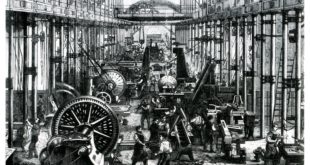
Lawrence Reid The decade after 1750 saw a huge economic shift in Britain. It was the era of the Industrial Revolution, marked by a colossal number of technical innovations, a huge increase in productivity, a renaissance of world trade, and a rapid increase in urban population. Historians and other analysts have struggled to interpret …
More »
EKIP– Expert Club for Economics and Politics A Different Opinion