 EKIP– Expert Club for Economics and Politics A Different Opinion
It is often discussed how Bulgaria (as well as other countries from the former socialist bloc) should adopt Western culture and methods of production. Unfortunately, the West, having quickly forgotten its lessons from the socialism of the last century, has with a cheerful and naive leap set off on the path towards the same system it spat out so vehemently.
The Western system, made up of an uneasy mixture of socialism and capitalism, holds together only because the ever-shrinking market sphere can still support the expanding socialist state.
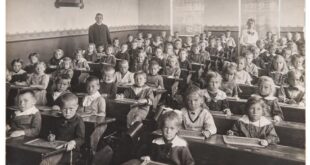
It is strange, for example, how the Americans, who boast (and are accused) of being the embodiment of capitalism, so zealously defend their purely socialist education system. Classrooms are full of bleary-eyed children forced to memorize meaningless facts that they will forget after the upcoming exam. Children of different levels of development are taught together - which means that the best students waste time on too-easy tasks, and students who need more help - do not get it. Regardless of their interests, children are forced to spend years studying subjects they will never need. The impartial data is also not favorable - although real spending per student has more than doubled since 1970, test scores have remained unchanged [1].
The West is not offering new models of education to a world that desperately needs them. Should we then, at least to avoid getting a stiff neck from constantly looking that way, look east? Considering that four of the five countries with the freest economies [2] are actually to the east of us, this is not unjustified. And when we dare to look, we might even catch a glimpse of what is happening in South Korea – and learn something.
South Korea is home to hagwons, private educational academies where parents send their children after school. They are so widespread that almost three-quarters of students participate in them. This after-school market is estimated to be worth $17 billion (25.1 billion leva) - the largest company in the industry is publicly traded, and the industry is so lucrative and promising that it is attracting serious foreign investors.
The economic laws of the market—supply and demand—set prices in Korea’s tens of thousands of hagwon. This allows the spontaneous system to find the right price for one of the most important resources in the education system—teacher labor. Kim Ki-hoon, one of the most famous and sought-after teachers, earns $4 million a year from the lessons he teaches—both traditional face-to-face and recorded online video lectures. 150,000 students watch his online lectures each year, which cost $4 an hour.
South Korea's free market system encourages teachers to put in more effort and strive to be innovative. They are more entrepreneurial and more willing to try new technologies in the educational process. As free agents, they are always on the lookout - hagwons ask their students to evaluate teachers. "How passionate is your teacher?" and "How well prepared is he?" are some of the questions they ask. Students (along with parents) choose their teachers themselves, judging by the feedback on their work. Those who do not get enough students are dropped from the game. At the same time, competition is always on the rise, attracting teachers from other hagwons who stand out the most and are most liked by the students.
In this highly competitive market, hagwons aggressively advertise their students’ achievements. For them, students and their parents are customers—and they must please them, knowing that dissatisfied customers may choose another provider. That’s why hagwons send text messages to parents when their children arrive at the academies in the afternoon and also regularly update them on their progress throughout the year. A 2010 survey found that students consistently rated their hagwon teachers higher than their public teachers. They were rated as better prepared and more dedicated; they were also more respectful of students’ opinions—regardless of their academic performance. The hagwon educational model has been so successful that Asian immigrants to America have taken it with them [3].
Is this system so infallible?
Some critics complain that the educational cycle, which is almost 24/7 for students, does not leave children time to develop on their own and allow their brains to rest. The competition among students aiming to be accepted into the most prestigious universities is ruthless.
Sometimes the Korean system focuses on quantity over quality - emphasizing memorization of facts. These two effects are certainly influenced by the undoubtedly different culture, which highly values education as a status symbol and amplifies these problems. Fortunately, a situation in which students study "too much" is not a problem in Bulgaria at the moment. It is still true that students have an artificially high workload during the day in South Korea - after all, the state obliges them to go to school even if they attend hagwon, which means they have to go to the classroom twice a day.
Unfortunately, Korean social planners have decided that they know how much children need to learn better than families themselves. Accordingly, the government in Seoul has taken to imposing a curfew at 10 p.m., after which it is illegal for hagwons to be open. Gangs of state agents roam the night looking for groups teaching illegally [4]. If this sounds like an Orwellian horror story to the reader, he is not alone. Some hagwons try to get around the law by claiming to be self-study libraries after 10 p.m. If the agents find them and suspect that—God forbid!—they are teaching students who have stayed behind (with their parents’ permission), they “release” the students—“The hagwon broke the law, not you,” they reassure them—“you can go home.”
It would be a sin to end the article without quoting a Kenyan parent on the subject of education: “If you go to the market and they offer you free fruit and vegetables, they will be spoiled. If you want fresh fruit and vegetables, you will have to pay for them.” [7]
For more information on the free education system, including how it functioned before state intervention and how private schools in the poorest countries serve the poorest children (even though a "free" state option exists), see [6].
This article is based on “The $4 Million Teacher,” by Amanda Ripley - http://online.wsj.com/article/SB10001424127887324635904578639780253571520.html?mod=WSJ_hpp_LEFTTopStories
Notes
[1]http://www.heritage.org/research/reports/2008/09/does-spending-more-on-education-improve-academic-achievement?query=does+spending+more+on+education+improve+academic+achievement
[2] http://www.heritage.org/index/ranking
[3] „Cram Schools: Immigrants' Tools for Success,“ Ashley Dunn, http://www.nytimes.com/1995/01/28/nyregion/cram-schools-immigrants-tools-for-success.html
[4] „Teacher, Leave Those Kids Alonе,“ Amanda Ripley, http://www.time.com/time/magazine/article/0,9171,2094427,00.html
[5] It should be noted here that even if education were a pure "common good" (in the strict economic sense) - which would be the most uncomfortable situation for free market advocates - then, as Jane Shaw says in "Education - A Bad Common Good?", "there is nothing in the theory of the common good that says the state should operate schools." The least that opponents of libertarianism should support is a voucher system.
[6] http://thelibertyhq.org/learn/index.php?listID=9
[7] „Private Schools in the Poorest Countries,“ James Tooley, - http://www.cato.org/policy-report/septemberoctober-2005/private-schools-poorest-countries




From the whole thing, I realized that their education system is the shittiest in the world. But that's normal. Yellow people are expected to be stubborn, to work hard and not complain, and if possible, to think less.