 EKIP– Expert Club for Economics and Politics A Different Opinion
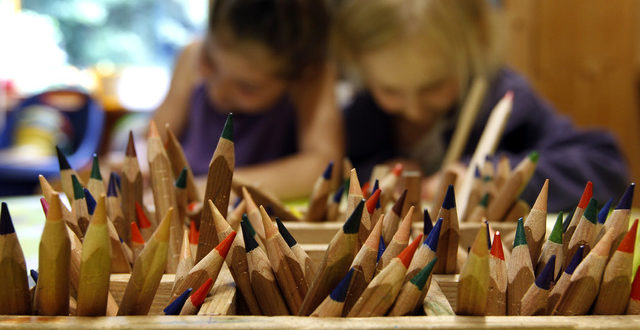
This text is inspired by the journalistic coverage of the successes achieved by a homeschooled boy from Smolensk. And more specifically, by the conversation in the studio of the morning block on bTV between the host Genka Shikerova and the guests, who represent, on the one hand, the Ministry of Education and, on the other, a group of parents who are fans of democratic learning.
Tatyana Predova from the Ministry of Education, Culture and Sports began the interview by stating that she would not agree with the fact that school education is degrading (previously stated by the mother of the homeschooled boy) and also with the fact that the state has a monopoly on the system. The two theses in one statement are strongly connected – it is completely natural for there to be a plurality of opinions about whether a school, system, methodology is good or not, but it is precisely the denied (but unfortunately existing) state monopoly that does not allow parents and their children to satisfy their personal preferences. That is, the important opinion is that of the one who is at the top of the pyramid, in the Ministry of Education, Culture and Sports – the others do not know/understand.
This is followed by the promotion of the thesis by Ms. Predova that the monopoly on the educational process is “part of statehood”, “a commitment made to the world”, etc. This is false in many aspects – there is no international document in which such a position is regulated ( not even in the cited Art. 28 of the Convention on the Rights of the Child ) – there is a good set of countries that have signed the UN document with excellently developed home and free education. But even if there were a “convention on total bureaucratic control over child education”, this does not mean that any Bulgarian parent would make a commitment to the world to follow it. The fact that politicians sign something does not mean that I do it too.
This can be further explored by asking whether someone (whether a parent or not) actually has to make commitments to the world – whatever the word commitment means in this case. Either way, we have a typical example of the so-called logical fallacy of appeal to authority, often used to cover up a lack of other arguments. Perhaps the second host, Konstantin Karadjov, also covers up a lack of arguments by including that according to the constitution, schooling is mandatory – without specifying why the constitution should decide how a parent should look after their child.
The representative of the Ministry of National Education and Science continues her presentation by saying that she has received reports of “badly formed” homeschoolers, in which the state should intervene. It would be extremely interesting to think about the question of what justifies reporting that someone’s child is not “formed” according to certain standards and therefore needs intervention. Even the Orwellian language of such a statement should lead to the question – who are you to interfere in someone’s formation.
Of course, Ms. Predova admits that state education is not perfect and that we should strive for something better. It just seems that such an aspiration is not allowed to parents and their children – one has to wait for the favor of the political and bureaucratic apparatus. And even better, as the lady-official herself says, to pour some more money (100 million leva additional for 2014) of the taxpayer into the system. Because it is not personal entrepreneurial initiative and parental interest and love that lead to finding good solutions, but wise bureaucratic thought, backed up with foreign money.
The last golden line from the state representative is that “a public consensus must be reached to improve education”. It is strange that such a thing needs to be written, but it is not society that has the right to decide how, where, when, how much and what a student will study. A large number of Bulgarian parents have reached an internal (family?) consensus that the education system only causes them damage and they do not want to participate in it, forbidding them from following their opinion with actions is as logical as for society to decide whether Ms. Predova can eat meat or what to watch on TV. In this sense, “public consensus” is a chimera, if only because part of society (represented by these parents) does not want to agree with the other part [1].
Towards the end of the article, the host Genka Shikerova is worried about the idea that with the abolition of the state monopoly over the forms and methods of obtaining education, everyone will have the opportunity to choose the learning methodology that best suits their interests and capabilities. For her, it is not normal for a mother to want the child to know three languages, the guest from the democratic education project answers perfectly: "That is your opinion."
This brings us to the crux of a big problem, and not only in education - there are still many people in the media, schools, companies, on the street, on airplanes, who not only do not recognize other people's opinions, but want to forcefully impose theirs, using some kind of coercion. Maybe we don't need "more morality in politics" [2], but fewer wanna-be dictators on the road and on the road?
[1] He doesn't want to stop them from finding solutions for themselves either. I've even seen them help
[2] I'm still curious to know what this means.



inspired - interesting thought, what does it mean 🙂
In my opinion, there should be no homeschoolers.
Who will give them a diploma?
And what exactly are they going to do with this diploma?
Predova is right about at least one thing: education is part of statehood. What do we do if every Taliban teaches his child the stupidities without him having the opportunity to see or hear another point of view? There are examples of such indoctrination everywhere in the world. And what will happen in a multicultural (and therefore religiously diverse) country like Bulgaria, where we have both extreme Islamism, extreme (anti-secular) evangelism, and extreme Orthodoxy? Dear homeschoolers, you forget why and how the idea of Caesar-papism appeared. But the European peoples remember, because 1/3 of the population of Europe died in these religious wars. Don't experiment with the traditional value of Bulgarians like education. Yes, you are paid by overseas donors, but keep in mind where you are.