EKIP– Expert Club for Economics and Politics A Different Opinion
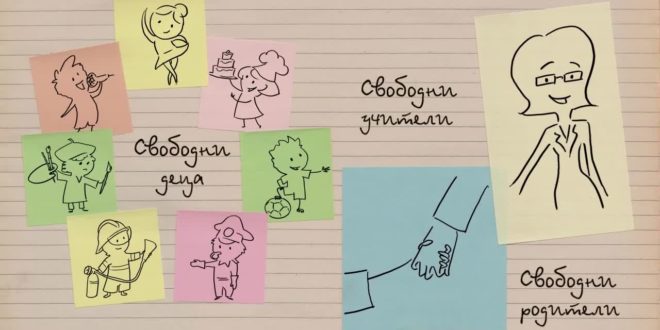
 Това е съкратена версия на изнесения от Даниел Василев доклад по време на Първата среща за свободно образование, организирана от Националната мрежа на родителите.
When comparing economic indicators – such as GDP per capita and labor productivity – of Bulgaria and a Western country, especially non-economists, rarely relate their magnitude to education in the two countries. Even less often is the comparison made of the extent to which the two education systems are subject to state control – i.e., how free they are.
Therefore, I will present a comparative characteristic of education in England and Bulgaria. The goal is to demonstrate to what extent the two systems are subject to state regulation and where parents, teachers, entrepreneurs and, of course, children can freely and voluntarily interact so that the individual needs of each are met in the most beneficial way for the participants in the educational process. They will be assessed according to several key criteria. These are: the right to establish private or alternative forms of education and a legal framework for this; access to alternative forms of education; certification of the acquired educational degree and graduation.
Right to establish private schools
In theory, Bulgarian legislation allows the establishment of private kindergartens, primary, secondary and higher education institutions. In Article 9, paragraph 1 of the Law on Public Education we read: “Every citizen exercises his right to education in a school of his choice and type of education in accordance with his personal preferences and capabilities.” This part of the law sounds extremely liberal. If we were to consider only this part, education in Bulgaria would be extremely free.
In practice, however, even private schools are required to adhere to the ministry's curriculum requirements and plans. Article 16 of the same law states: “State educational requirements refer to: 1. preschool education and training; 2. the level of education, the general educational minimum and the curriculum; 3. the content of the curriculum; 4. the acquisition of the literary Bulgarian language; 5. the assessment system; 6. vocational education and training; 7. the acquisition of qualifications in professions; 8. (amended - State Gazette, issue 90 of 2002) the education of children and students with special educational needs and/or with chronic diseases; 9. textbooks and teaching aids; 10. documents for the public education system; 11. extracurricular and extracurricular activities; 12. teacher qualifications and qualifications; 13. the material and technical base; 14. health care; 15. safe conditions of education, training and work; 16. scientific, information and library services; 17. the annual maintenance of children and students in state and municipal kindergartens, schools and service units; 18. the rationing and payment of labor in the public education system; 19. (new - SG, issue 90 of 2002) inspection of the public education system.” De facto, there is something like “Ford’s freedom” – everyone has the right to choose whatever color car they want, as long as it is black; every child has the right to be educated “in a school and type of education of their choice according to their personal preferences and capabilities”, as long as they meet state requirements. In this way, alternative forms of education are in fact prohibited in our country and legal access to them is suspended.
In England, things are quite different. English legislation briefly but clearly resolves the issue of alternative forms of education. Any of them is allowed. Of course, if a private institution wishes to adhere to the national educational program of the Ministry of Education, it is free to do so. But otherwise there are no restrictions on the subjects that a child can study in a private school or at home, nor on the period in which these subjects are taught. This is in sharp contrast to the system monopolized by the Ministry of Education, where Bulgaria, with its central plans, completely controls exactly when and what is taught.
Access to alternative forms of education
Thus, while in Bulgaria access to alternative forms of education is extremely limited, English students and their parents have access to a huge variety of alternative forms of education and everyone can receive education that meets their individual needs. Private institutions are not limited to elite secondary schools. In addition to the already mentioned home education, there are other alternative forms in England, some of which I will discuss below:
- Waldorf schools (also called “Steiner”) teach according to the methods of the Austrian philosopher Rudolf Steiner. According to the Austrian’s philosophy, children go through three stages and, respectively, must go through three educational stages: early childhood, which lasts until about 7 years of age, primary education (7–14 years), and secondary education (14–21 years). During these three stages, the emphasis is on different skills in children. Steiner believes that at an early age, the focus should be on the development of motor skills and learning through games. During the second phase, social communication, functional literacy, and artistic skills are improved. The third educational period emphasizes ideas and idealism.
In reality, however, Waldorf schools offer education for 12 years; that is, students can receive primary and secondary education there. They are not required to follow the national educational program. The curriculum is built around the philosophical concept of multiple intelligences. During their education, children study an extremely wide range of subjects, some of which can only be studied in this type of school. There is a strong emphasis on the arts.
- As their name suggests, democratic schools emphasize teaching methods based on democratic values and directly based on the principles of democracy. Schools are governed by boards that include children, parents, and teachers. Each of them has a voice in decision-making. The curriculum is oriented towards the needs of the children, not a centrally imposed plan that they must comply with.
According to the philosophy of democratic schools, not only is attendance voluntary, but so is the choice of lectures – children are free to attend any of the subjects taught. Students do not follow a predetermined chronological progression in their knowledge of a given subject, but progress according to their needs. As with the previous type of educational institution, democratic schools place a strong emphasis on socialization and the arts, and usually there are rooms in the schools that are always open, and in which children are free to engage in creative activities of their choice. Democratic schools also educate students from 5-7 to 15-18 years of age (each school determines the age limit for its graduates).
- Of course, home education is also among the alternative forms of education. In practice, it is implemented in an extremely wide variety of forms, which makes it the most flexible way of learning. The number of children receiving education at home is between 20 and 100,000, and, according to organizations of people involved in home education, their number is growing. Parents or private teachers are not obliged to follow the plans of the English Ministry of Education. The only thing that those who wish to educate their children in this way need to do is to notify the authorities that their child is educated at home, which makes this form of learning extremely accessible. As a result of the increased demand, more and more online platforms are being created to assist parents in the education of their children.
Certification of the acquired educational degree and graduation
The Bulgarian Ministry of Education can only recognize as valid diplomas issued by it, and only to people who have completed the degrees listed in the Law on the Level of Education, the General Educational Minimum and the Curriculum; i.e. it is legally impossible to issue a legitimate diploma for a completed educational degree to a child who studied according to a methodology different from that adopted by the MES. The only exception could be a case in which an individual who has graduated from a certified school in another country validates his or her diploma at the MES.
While in Bulgaria the only state-recognized diplomas are those issued by the country itself, in England graduation is much more liberal. Any educational institution can issue diplomas for a completed degree or a course passed. The document certifying completed secondary education and qualifications acquired over the years is the General Certificate of Secondary Education, which is divided into different levels. It is issued by private institutions (5 in number), with each student choosing the age at which they take it, as well as the subjects in which they appear. It is interesting to note that traditionally the records for the youngest age of a child who passed the certificate exams were home-schooled. The record is currently held by Aaron Fernandes, who took the math exam with 100% at the age of five.
Since 1998, in England, parents who educate their children have had the right to issue them certificates certifying what subjects they have been taught. They are not subject to state control or certification, they only need to be notarized. Although they do not cancel the need for a General Certificate for Secondary Education exam, in cases where the child wants to continue their education at university, they are a valid document for employers. This is another sharp contrast with the Bulgarian education system, where it is unthinkable for a parent to evaluate a child without the control of the Ministry of Education.
The experience of England, and the very idea that individuals should have a choice in how and whether to educate themselves, also lead to the logical conclusion that the educational process should be completely liberalized. The state has no reason to regulate education to the extent that it is regulated in Bulgaria; on the contrary, any regulation is a violation of individual rights. As Professor Ludwig von Mises says: “This is the only solution: the state, the government, the laws should in no way take care of schools and education. Public funds should not be used for such purposes. The upbringing and education of youth should be left entirely to parents and private organizations.”